 Save Pin
 I discovered this dish on a Tuesday afternoon when I was overthinking a dinner for friends. I had too many ingredients scattered across the counter and kept rearranging them, moving things left and right until I stepped back and noticed something clicking into place. There was a quietness to it, a kind of visual conversation happening on the board. That's when I realized the point wasn't about complexity or impressive techniques, but about creating a moment where people would pause before eating.
My neighbor brought their kid over once while I was setting this up, and the child just stood there watching me place each item, completely mesmerized by the pattern. No screens, no fuss, just geometry and food. They asked why I was making it so even on both sides, and I had to think about how to explain that the balance was kind of the point. By the time dinner happened, that kid had already tasted half the board just sneaking pieces while we prepped.
Ingredients
- Fresh Cucumber: Eight thin slices that should be crisp and cool straight from the fridge, providing a clean palate base on both sides of your board.
- Baby Carrots: Eight whole ones because they're already a perfect size and their natural sweetness balances the sharp cheese without any fussing.
- Radishes, Halved: Eight halves for their peppery bite and that gorgeous pink-white contrast that makes the board look alive.
- Goat Cheese: Sixty grams shaped into small, equal rounds that sit like little clouds in the arrangement.
- Gluten-Free Crackers: Eight sturdy ones that won't crumble under the other ingredients but still give enough texture to anchor everything.
- Roasted Almonds: Thirty grams total, already salted if you want that hint of salt cutting through the richness.
- Seedless Red Grapes: Eight whole ones for their sweetness and that jewel-like quality that catches the light.
- Fresh Herbs: Chives or dill, just sprigs for the final garnish and a whisper of aromatic freshness.
Tired of Takeout? 🥡
Get 10 meals you can make faster than delivery arrives. Seriously.
One email. No spam. Unsubscribe anytime.
Instructions
- Choose Your Canvas:
- Find a long wooden or slate board, at least sixty centimeters, and set it on a table where people can actually see it from all angles. The surface matters because everything you place on it becomes part of the visual story.
- Build the First Pile:
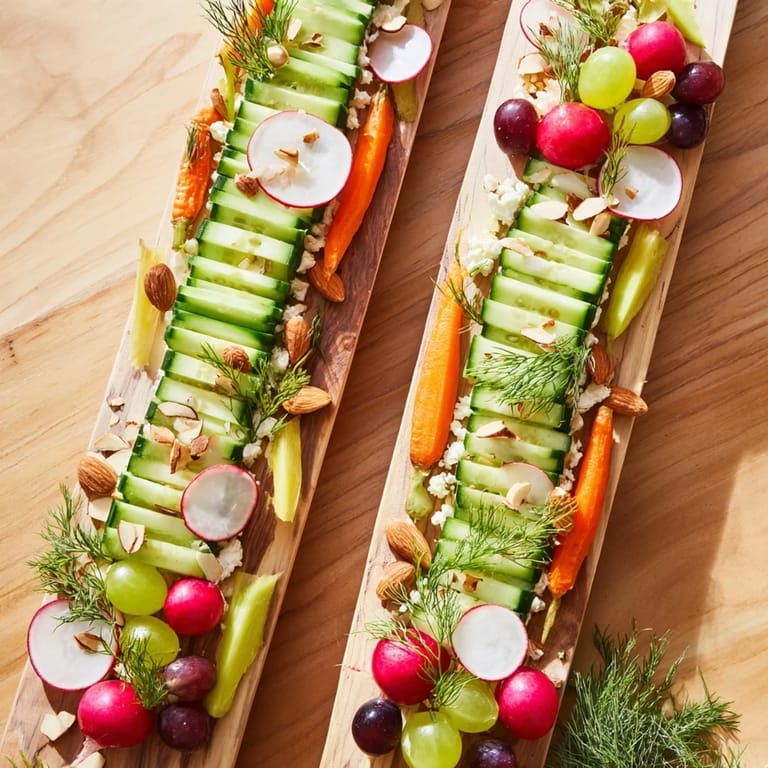
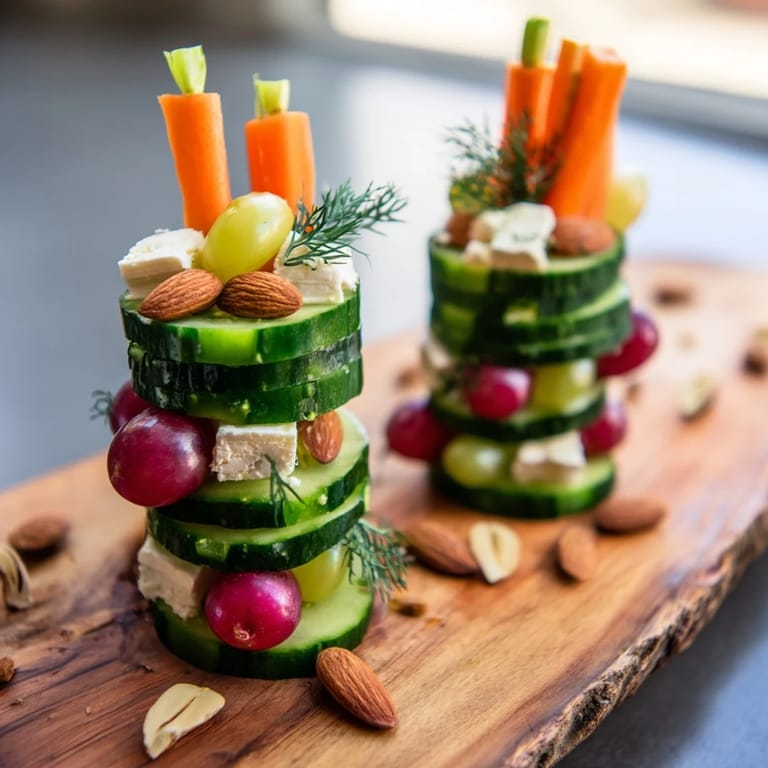
- At one end of the board, start stacking: lay down your cucumber slices first as a base, then layer in crackers, carrots standing upright, radish halves fanned slightly, your grapes clustered, a portion of goat cheese nestled in the middle, and finally half the almonds scattered across. Think of it like you're creating a small edible landscape.
- Mirror the Opposite End:
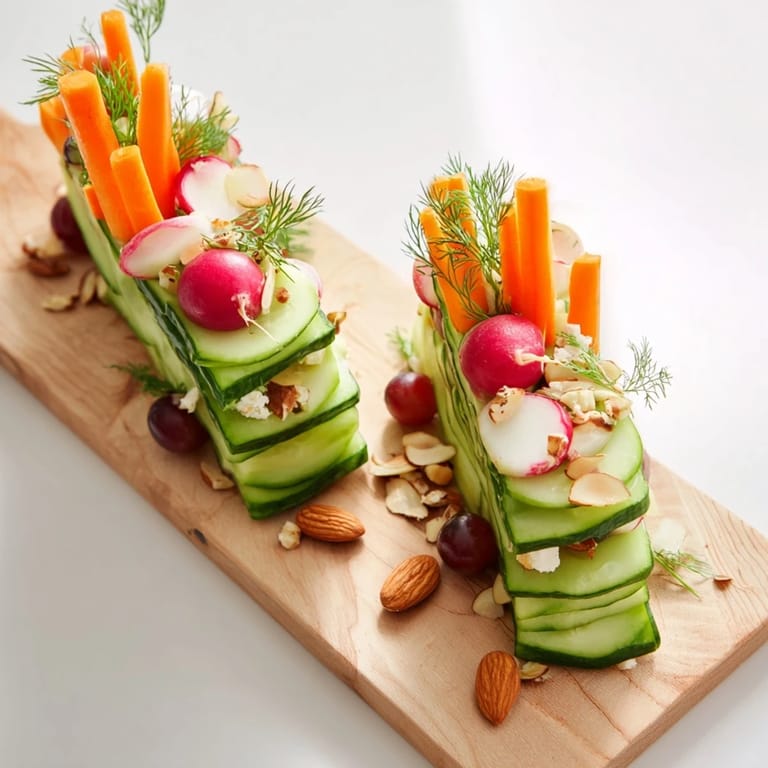
- Take the remaining ingredients and recreate that exact same pile at the far end of the board, using the same arrangement order and proportions. This is the meditation part, where precision becomes almost meditative.
- Leave Space:
- The empty space down the center is not empty, it's intentional. That void is what makes the balance feel balanced.
- Finish with Herbs:
- Tuck fresh herb sprigs onto each pile for color, aroma, and that final touch that says someone cared about the details.
- Serve and Savor:
- Bring it to the table and let people sit with it for a moment before the eating begins. The presentation is part of the meal, not decoration.
 Save Pin
 The first time I served this, someone at the table went completely quiet, just staring at it. Then they said it made them think about how we usually just grab food without looking at it, and this forced them to actually pay attention. That's when I understood it wasn't just a pretty plate, it was a way of asking people to slow down and be present.
The Meaning Behind the Mirror
There's something about symmetry that speaks to our brains in a way chaos doesn't. When you create two identical piles at opposite ends, you're not just arranging food, you're creating a kind of visual argument for harmony. The emptiness between them isn't wasted space, it's breathing room. It's what makes the arrangement feel intentional instead of crowded.
Pairing and Timing
This works best right before you want to eat it, fresh and crisp and exactly as you arranged it. If you're pairing it with something to drink, a crisp white wine like Sauvignon Blanc will echo the brightness of the vegetables and not fight the delicate cheese. The timing is quick enough that you can prep it while people are settling down, so they walk in to find it already waiting on the table, which somehow feels more intentional than assembling it in front of them.
Making It Your Own
The frame is fixed, but what goes inside can change with the seasons and what's in your life. Spring might bring fresh peas and lighter greens, autumn might call for roasted beets and heartier nuts. The principle stays the same: two equal, thoughtful piles separated by intention. The beauty of this dish is that it teaches you about balance by asking you to create it.
- Seasonal vegetables work just as well as long as you can arrange them symmetrically and they stay crisp.
- For a vegan version, plant-based cheese rounds will give you the same creamy anchor point without the dairy.
- The board itself becomes part of the meal, so choose one that feels right to you and your table.
 Save Pin
 This dish is about remembering that sometimes the most impressive thing you can offer is attention to detail and a moment of pause. Serve it when you want people to really see what they're eating.
Cooking Questions & Answers
- → What is the best type of board to use?
A long wooden or slate board, at least 60 cm in length, works best to showcase the symmetry and presentation.
- → Can the goat cheese be substituted?
Yes, plant-based cheese can be used to create a vegan-friendly variation without compromising texture.
- → How should the ingredients be arranged?
Place half of each ingredient in a neat pile at one end, then mirror the arrangement exactly at the opposite end to create balance.
- → What garnishes enhance the platter?
Fresh herbs such as chives and dill add color, aroma, and a final touch of freshness to each pile.
- → Is this suitable for gluten-free diets?
Yes, using certified gluten-free crackers ensures the platter remains gluten-free. Always check labels for allergens.