 Save Pin
 There's something about the smell of hojicha that stops me mid-afternoon—that toasted, almost nutty aroma that fills the kitchen before anything else happens. I discovered this pudding on a quiet Tuesday when I had guests coming over and wanted something that felt special but didn't demand hours in the kitchen. The first time I made it, I was nervous about the custard, worried I'd scramble the eggs or end up with something grainy instead of silky, but something about the gentle heat and patient stirring turned it into this velvety dream in a glass.
My neighbor tasted this after a dinner party and asked if I'd bought it from a Japanese bakery, which honestly made my whole week. That moment of someone recognizing something as special, as worthy of a pastry shop, changed how I thought about simple desserts. Now whenever I make it, I think about that surprised look on her face.
Ingredients
- Whole milk: Use the best quality you can find—it's the foundation of everything, and cheaper milk can taste thin and hollow in a custard like this.
- Heavy cream: This is what turns custard into something luxurious; don't skip it or substitute.
- Hojicha loose leaf tea: The roasting process gives hojicha its warm, slightly smoky personality that powder sometimes misses—loose leaves steep more evenly.
- Granulated sugar: Keep it simple; any fancy sugars will just muddy the delicate flavor.
- Large eggs: Room temperature eggs whisk smoother and incorporate better, though I'll admit I often forget to pull mine out in advance.
- Vanilla extract: A small measure that quietly rounds out the earthiness without announcing itself.
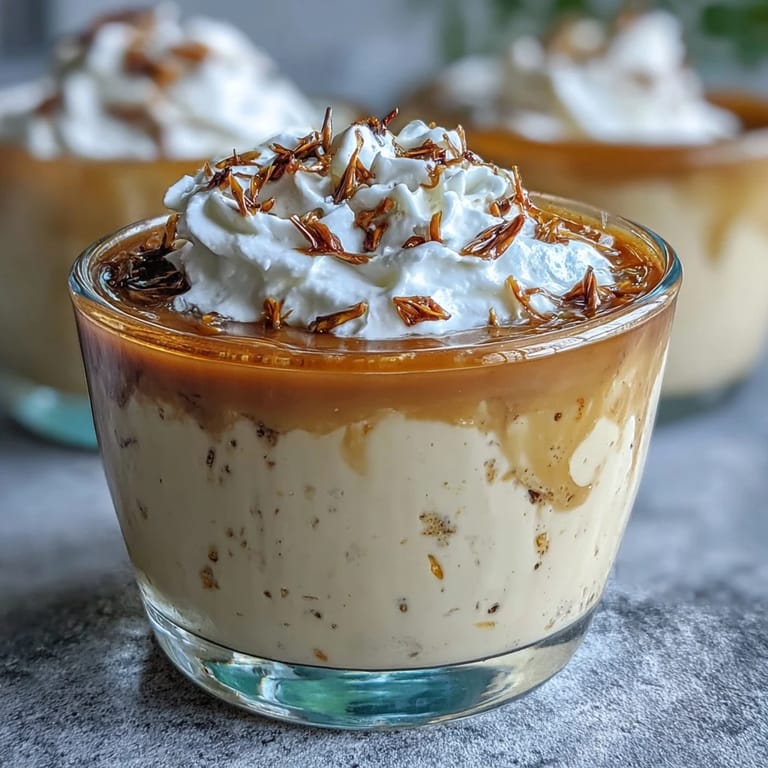
- Whipped cream and roasted tea leaves for garnish: These are optional but honestly, they transform the pudding from everyday to something you'd Instagram.
Tired of Takeout? 🥡
Get 10 meals you can make faster than delivery arrives. Seriously.
One email. No spam. Unsubscribe anytime.
Instructions
- Warm the cream base:
- In a saucepan, combine milk and heavy cream over medium heat until you see wisps of steam rising—not quite bubbling, but definitely awake. Listen for the moment when it shifts from cold silence to a gentle, almost imperceptible sound.
- Steep the hojicha:
- Pull the pan off heat and add your tea leaves, letting them unfurl and release their toasted warmth into the cream. Five to seven minutes is the sweet spot; longer and it becomes bitter and sullen.
- Prepare the egg mixture:
- Whisk sugar and eggs together in a clean bowl until the mixture turns pale and slightly fluffy, which takes longer than you'd think but is worth the arm workout. You're essentially creating tiny air pockets that will catch the heat gently.
- Temper the eggs:
- This is the nervous part, but it's easier than it feels—slowly pour the warm hojicha cream into the eggs while whisking constantly, as if you're coaxing a shy animal to trust you. The whisking prevents the eggs from curdling into scrambled bits.
- Add vanilla and strain:
- Stir in vanilla extract, then pour everything through a fine sieve into a clean saucepan to catch any cooked egg bits that might have snuck in. This step feels fussy but guarantees that silky texture everyone will notice.
- Cook the custard:
- Set the heat to low and stir constantly with a spatula, watching as the mixture slowly thickens—this takes about five to seven minutes and requires patience but not panic. When a line drawn through the custard on the back of the spoon holds briefly before flowing together, you're done.
- Set in serving vessels:
- Pour into glasses or ramekins while still warm, and let them cool completely before refrigerating—rushing this step teaches you nothing good. Two hours in the fridge is when the magic fully sets.
 Save Pin
 My mother tried this and said it reminded her of something she'd had in Kyoto decades ago, which was such a gift—to make someone taste a memory they thought was gone. Food like this, quiet and understated, has a way of reaching people in ways louder desserts never will.
The Beauty of Hojicha
Hojicha is roasted green tea, which means it's been given a second life on high heat, transforming bright vegetal notes into something earthier and almost cocoa-like. This is what makes it perfect for custards and creams—it doesn't compete, it complements. The roasting also lowers the caffeine, so this pudding won't keep anyone awake despite containing actual tea.
Why Custard Matters
A proper custard made with eggs and milk cooked low and slow is different from a mousse or a pudding made with cornstarch, and the difference matters. Eggs create something with body and richness that feels more substantial, more intentional. There's a reason this technique has endured for centuries—it just works.
Making It Your Own
Once you've made this once and felt comfortable with the custard base, you can pivot in interesting directions. The framework is forgiving as long as you respect the heat and the timing. Some people swear by adding a pinch of sea salt to deepen the hojicha, others float fresh berries on top, and a friend of mine drizzles honey and black sesame oil just before serving.
- If you can't find loose hojicha tea, hojicha powder works beautifully—just whisk two teaspoons directly into the milk mixture instead of steeping.
- For a vegan version, swap the milk and cream for coconut milk and coconut cream, replace eggs with two tablespoons of cornstarch whisked into the mixture, and add it toward the end while cooking.
- This pudding actually tastes better the next day when flavors have settled and deepened, so make it ahead without guilt.
 Save Pin
 This pudding exists in that rare space where something simple becomes memorable, where a few quality ingredients and careful attention transform into an experience. Make it for someone you want to impress quietly.
Cooking Questions & Answers
- → What makes hojicha different from other green teas?
Hojicha is roasted green tea leaves, which gives it a reddish-brown color and distinct toasty, caramel-like flavor. The roasting process reduces caffeine and creates earthy notes that pair beautifully with creamy desserts.
- → Can I make this dairy-free?
Yes, substitute whole milk and heavy cream with coconut milk and plant-based cream. Replace eggs with 2 tablespoons of cornstarch for thickening. The result will have a slightly different texture but still delicious.
- → How long does hojicha custard keep in the refrigerator?
Properly stored in an airtight container or covered with plastic wrap, hojicha custard keeps for 3-4 days in the refrigerator. The texture may become slightly denser over time but remains enjoyable.
- → Why does the custard need to strain twice?
The first straining removes tea leaves after steeping. The second strain through a fine sieve before final cooking removes any cooked egg bits, ensuring perfectly smooth, silky texture throughout the custard.
- → Can I use hojicha powder instead of loose leaf?
Absolutely. Use 2 teaspoons of hojicha powder and whisk it directly into the warm milk mixture. No need to strain—simply proceed with combining with the egg mixture for an even more intense flavor.