 Save Pin
 Last summer, a friend brought back a tin of hojicha from Tokyo, and I was immediately struck by its toasty, almost caramel-like aroma—nothing like the sharp green tea I'd always assumed all Japanese tea tasted like. I started experimenting, brewing it in everything, until one afternoon while making tiramisu for a dinner party, it hit me: what if I married these two worlds? The result was so unexpectedly perfect that I've made it dozens of times since, each batch reminding me why some of the best dishes happen by accident.
I brought this to a potluck at my neighbor's house on a rainy October evening, and watched a usually reserved colleague take a second spoonful and actually close their eyes. That moment—when a dessert stops being just dessert and becomes a small conversation starter—is exactly why I keep making this.
Ingredients
- Hojicha loose leaf tea: Don't skip the loose leaf if you can find it; the flavor is more complex than bagged tea, and you'll taste the difference in every spoonful.
- Mascarpone cheese: Soften it at room temperature for at least 30 minutes before using, otherwise you'll end up with lumps that no amount of folding can fix.
- Heavy cream: Keep it cold right up until whipping, and stop the moment you see stiff peaks—overbeat and you're making butter instead.
- Egg yolks: Use the freshest eggs you can find, and if raw eggs concern you, the double boiler method brings them to a safe temperature.
- Ladyfinger biscuits: Quality matters here; thinner, more delicate ladyfingers absorb the syrup beautifully without turning to mush.
- Cocoa or hojicha powder for dusting: A fine mesh strainer makes this job effortless and gives you an even, professional-looking finish.
Tired of Takeout? 🥡
Get 10 meals you can make faster than delivery arrives. Seriously.
One email. No spam. Unsubscribe anytime.
Instructions
- Brew the hojicha syrup:
- Bring water to a rolling boil and pour it over your hojicha tea—you'll see it bloom instantly, releasing that wonderful toasted aroma. Let it steep for exactly 5 minutes (not longer, or it becomes bitter), then strain and stir in sugar while the liquid is still hot so it dissolves completely.
- Create the silky egg base:
- Set your heatproof bowl over simmering water and whisk the egg yolks and sugar together, watching the mixture transform from pale yellow to thick and ribbon-like as you whisk. This takes about 5 to 7 minutes, and you'll know it's ready when the whisk leaves a trail that holds for a second before disappearing.
- Build the cream:
- Whip your cold heavy cream to stiff peaks—listen for the sound of the whisk changing pitch, and stop the second you see firm peaks standing up. In a separate bowl, gently beat the mascarpone with vanilla until smooth, then fold everything together in the order given, using the lightest hand possible to keep all that air you just whipped in.
- Assemble with intention:
- Quickly dip each ladyfinger into the cooled hojicha syrup—in and out in about a second, no longer—then layer them in your dish. The goal is moistness, not sogginess.
- Layer and build:
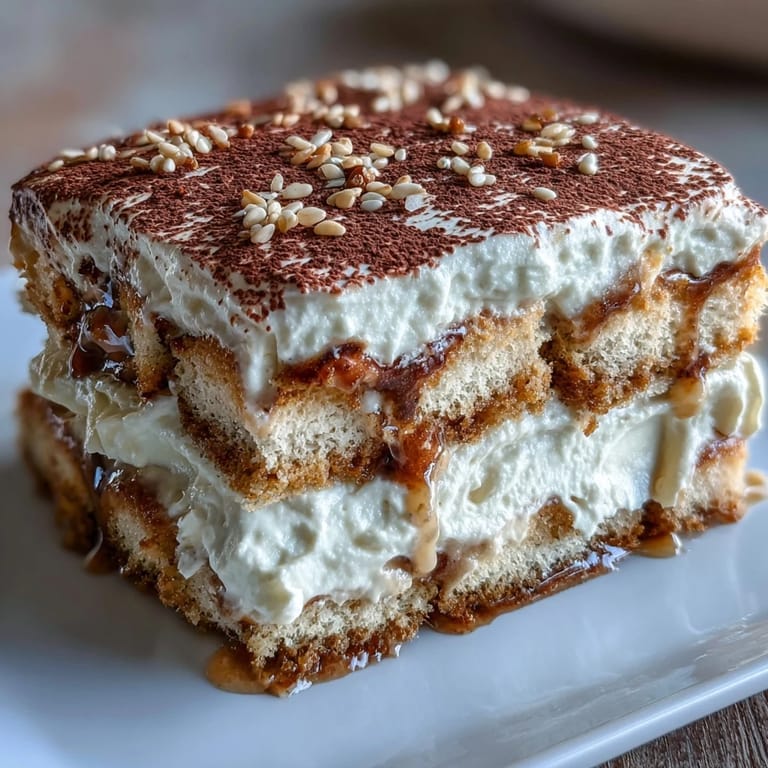
- Spread half your mascarpone cream over the first layer of ladyfingers, then repeat with dipped ladyfingers and the remaining cream, creating two beautiful layers.
- Let time do the work:
- Cover and refrigerate for at least 4 hours, though overnight is ideal—the flavors meld and the texture becomes almost impossibly creamy as everything settles.
- Finish with a flourish:
- Right before serving, dust generously with cocoa powder or hojicha powder using a fine strainer, creating that final elegant touch.
 Save Pin
 My partner surprised me on our anniversary by recreating this dessert from memory—the hojicha syrup was a bit too strong and the layers were slightly lopsided, but that effort, that care, made it the most meaningful tiramisu I've ever eaten. Food really does become something more when it carries intention.
The Magic of Hojicha in Desserts
Hojicha is roasted green tea, and that roasting process is everything—it mellows the tea's natural astringency and brings out warm, almost woody notes that feel like autumn in a cup. Unlike delicate green tea, hojicha doesn't get bitter easily, so it plays beautifully with rich, creamy desserts without overpowering them. The first time I used it in a dessert, I was actually nervous it might taste too strong, but instead it adds this sophisticated backdrop that lets the mascarpone shine while adding an unexpected layer of intrigue.
Timing and Temperature Considerations
This dessert rewards planning—everything needs to be cool before assembly, so I brew the hojicha syrup first and let it sit while I make the cream, which means by the time I'm ready to dip ladyfingers, everything is perfectly chilled. Temperature matters everywhere here: cold cream whips faster and holds its peaks longer, room-temperature mascarpone folds in smoothly without resistance, and a just-warm egg base cools quickly without breaking the texture. I've learned to work in this order every single time, and it's never failed me.
Customization and Variations
Once you've made this once, you'll start imagining your own versions—that's the beauty of understanding how each component works. Some nights I add 2 tablespoons of coffee liqueur to the syrup for a deeper complexity, while other times I keep it alcohol-free and pure. You can also swap matcha powder for hojicha if you prefer something brighter and grassier, though it will taste completely different and equally delicious.
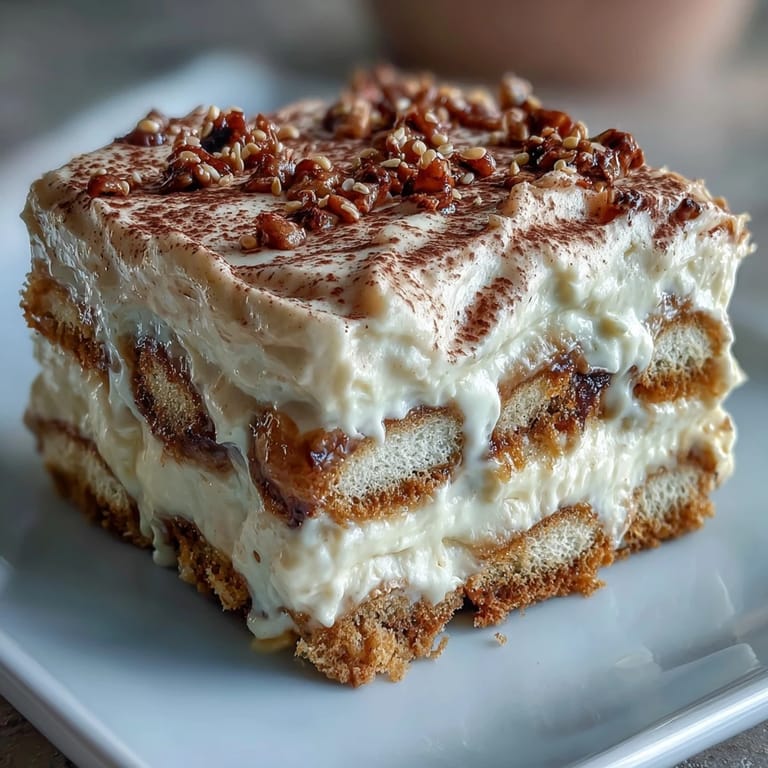
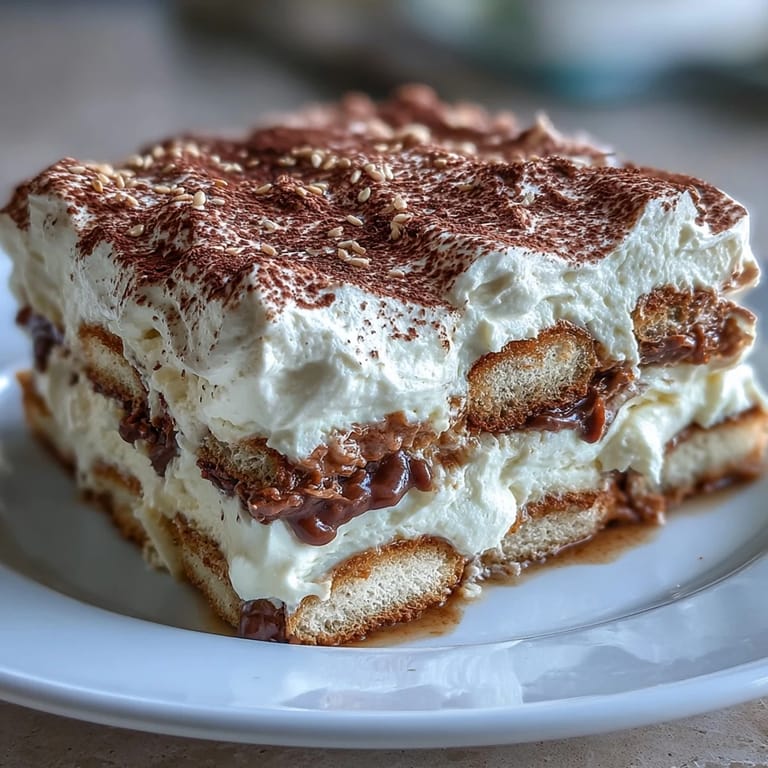
- Toast sesame seeds lightly in a dry pan and sprinkle them over the top before dusting with powder for a nutty finish.
- Crushed pistachios or hazelnuts add wonderful texture and an unexpected flavor pairing with hojicha.
- Make it gluten-free by using certified gluten-free ladyfingers—the assembly stays exactly the same.
 Save Pin
 This dessert has become my go-to when I want to impress without stress—it's elegant enough for dinner parties but forgiving enough for everyday cravings. There's something deeply satisfying about serving something that looks fancy but required nothing more than patience and care.
Cooking Questions & Answers
- → What does hojicha taste like in tiramisu?
Hojicha brings toasty, earthy notes with subtle caramel undertones. The roasted green tea flavor complements the rich mascarpone cream beautifully, creating a more complex profile than traditional coffee versions.
- → Can I make this ahead of time?
Absolutely. This actually tastes better after chilling overnight, allowing flavors to meld and the texture to set properly. It keeps well in the refrigerator for 2-3 days when covered tightly.
- → Why is there no cooking time listed?
The egg yolks are gently heated over simmering water to pasteurize them and create a stable base for the cream. This isn't considered traditional cooking since no baking or stovetop cooking is required for the final dessert.
- → Can I substitute the ladyfingers?
Yes. While traditional savoiardi work best, you can use sponge cake cut into strips, pound cake slices, or even gluten-free ladyfingers. Just avoid overly soft cakes that might disintegrate when dipped in syrup.
- → Is this suitable for vegetarians?
Yes, this version contains no gelatin or other animal products beyond dairy and eggs. The creamy texture comes entirely from whipped cream and mascarpone, making it naturally vegetarian-friendly.
- → How do I prevent ladyfingers from getting soggy?
The key is quick dipping—just 1-2 seconds per side. Ladyfingers should absorb moisture without becoming saturated. If they feel heavy or dripping wet, you're dipping too long. They'll continue softening as they chill.