 Save Pin
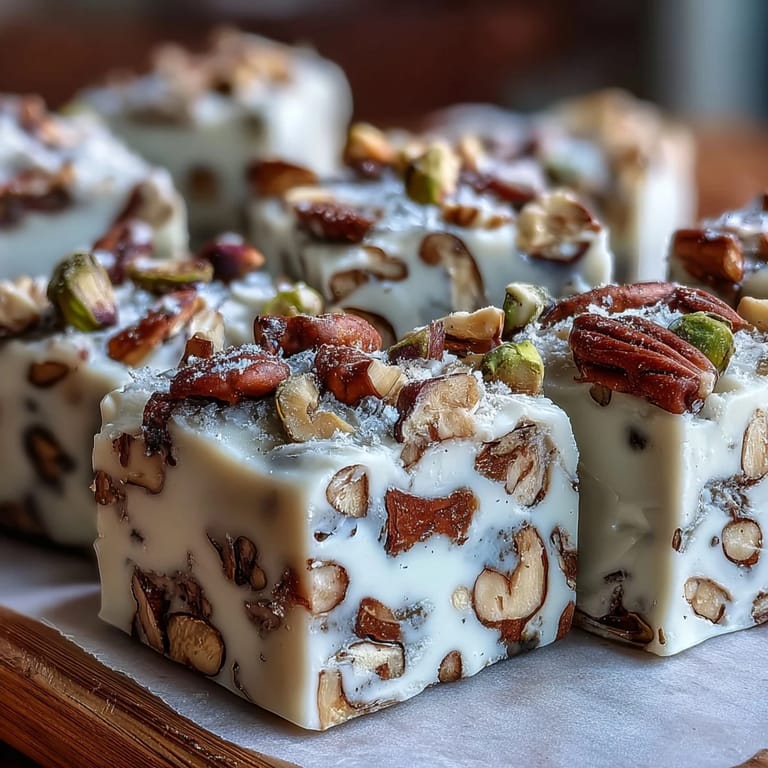
 My neighbor gifted me a box of hojicha nougat from a small Tokyo confectioner, and I was immediately struck by how the earthy, toasted tea flavor transformed something as simple as whipped egg whites and honey into pure elegance. The candy melted on my tongue with an unexpected richness, and I found myself wondering if I could recreate that magic in my own kitchen. After some experimentation and a few sticky mishaps, I discovered that the secret lies in patience—both with the sugar syrup and with the folding technique. Now, whenever I make a batch, the aroma of toasted nuts and hojicha fills my kitchen with this quiet, sophisticated warmth that makes the effort feel worthwhile.
Last winter, I made three batches for a tea-tasting event, and watching people's faces light up when they tasted the hojicha nougat—that moment when they realized it was tea flavored—reminded me why I love cooking for others. One woman told me it tasted like autumn, and I think that's exactly right, because hojicha has that comforting, slightly smoky quality that makes you feel like you're wrapped in something warm.
Ingredients
- Roasted almonds: 100 g roughly chopped—their subtle bitterness balances the sweet candy base and adds a satisfying crunch that keeps every bite interesting.
- Roasted pistachios: 50 g roughly chopped—these bring a slight brininess and color that makes the nougat feel more refined than if you used only almonds.
- Honey: 120 g—this adds moisture and a delicate floral sweetness that granulated sugar alone cannot achieve, so don't skip it.
- Granulated sugar: 200 g—the backbone of your candy, creating the structure that holds everything together once it's cooked to the hard crack stage.
- Water: 80 ml—helps dissolve the sugar evenly before the mixture boils, ensuring a smooth, glossy syrup with no crystalline bits.
- Fine sea salt: 1/2 tsp—a pinch brings out the earthiness of the hojicha and prevents the candy from tasting one-dimensionally sweet.
- Egg whites: 2 large, room temperature—these are crucial because cold eggs won't whip properly, and room-temperature ones create the light, fluffy texture that makes nougat so delicate.
- Cream of tartar: 1/4 tsp—this stabilizes the egg whites so they hold their peaks and don't deflate when the hot syrup is poured in.
- Hojicha powder: 2 tbsp—the star ingredient with its roasted, slightly smoky flavor that tastes like toasted green tea leaves steeped in tradition.
- Vanilla extract: 1 tsp—a quiet background player that rounds out the flavor and prevents the tea from tasting too austere.
- Unsalted butter: 30 g softened—adds a silky mouthfeel and richness that makes the nougat melt rather than stick to your teeth.
- Edible wafer paper: optional—if using, it prevents sticking and makes the finished nougat look polished, but parchment paper works just as well.
Tired of Takeout? 🥡
Get 10 meals you can make faster than delivery arrives. Seriously.
One email. No spam. Unsubscribe anytime.
Instructions
- Prepare your pan with care:
- Line a 20x20 cm baking pan with parchment or wafer paper, making sure the corners are smooth and the paper sits flat—this small step prevents frustrated peeling later.
- Toast the nuts until fragrant:
- In a dry skillet over medium heat, warm the almonds and pistachios for 2–3 minutes, stirring occasionally until you smell that toasted richness. This awakens their flavor and keeps them from tasting pale or raw against the sweet candy.
- Cook the syrup to the exact temperature:
- Combine honey, sugar, water, and salt in a saucepan, stirring gently over medium heat until the sugar dissolves completely. Once it stops looking grainy, stop stirring, increase the heat, and let it boil undisturbed until a candy thermometer reads 140°C (285°F)—this hard crack stage is non-negotiable.
- Whip the egg whites while the syrup cooks:
- In a stand mixer, beat the room-temperature egg whites with cream of tartar on medium-high speed until soft peaks form—you want pillowy mounds that barely hold their shape. This usually takes 3–4 minutes, and the timing works perfectly if you start once the syrup begins boiling.
- Pour the syrup in a thin, steady stream:
- When the syrup hits 140°C, immediately reduce the mixer to low speed and pour it in a slow, thin thread into the beaten egg whites while they spin. Pouring too fast risks scrambling the eggs, so patience here is the difference between silky nougat and grainy disappointment.
- Beat until glossy and thick:
- Once all the syrup is in, increase the mixer speed to high and beat for exactly 5 minutes—the mixture will go from shiny and loose to pale, thick, and voluminous as it cools slightly and the air incorporates. You'll see it transform into something that looks almost like pale mousse.
- Fold in the hojicha powder and vanilla:
- Add the hojicha powder and vanilla extract, then beat on low speed just until you see no streaks of powder—over-mixing here can deflate your carefully whipped egg whites. The mixture should smell deeply of roasted tea now, with a hint of vanilla underneath.
- Gently fold in butter and nuts:
- Using a rubber spatula, fold the softened butter into the nougat with broad, gentle strokes until no white streaks remain, then carefully fold in the toasted nuts, trying to keep as much air in the mixture as possible. This folding step feels almost meditative if you stay calm and trust the process.
- Spread quickly into the prepared pan:
- Working swiftly because the nougat sets as it cools, pour and spread the mixture evenly into your lined pan using an offset spatula or the back of a spoon. If you're using wafer paper on top, lay it down now and smooth it gently.
- Let it set at room temperature:
- Resist the urge to refrigerate—let the nougat sit undisturbed at room temperature for at least 30 minutes until it feels firm to the touch. This slow cooling gives it the perfect texture: not too hard, not too soft.
- Cut with a sharp, oiled knife:
- Once firm, turn the nougat out onto a cutting board and cut it into bite-sized pieces with a sharp knife that you've lightly oiled or wiped with a damp cloth—this prevents sticking and gives you clean edges. Work steadily and don't second-guess the cuts.
- Wrap individually to protect:
- Wrap each piece in small squares of parchment or cellophane paper to prevent them from sticking together during storage. This step makes the nougat feel like a real gift and keeps the texture perfect for days.
 Save Pin
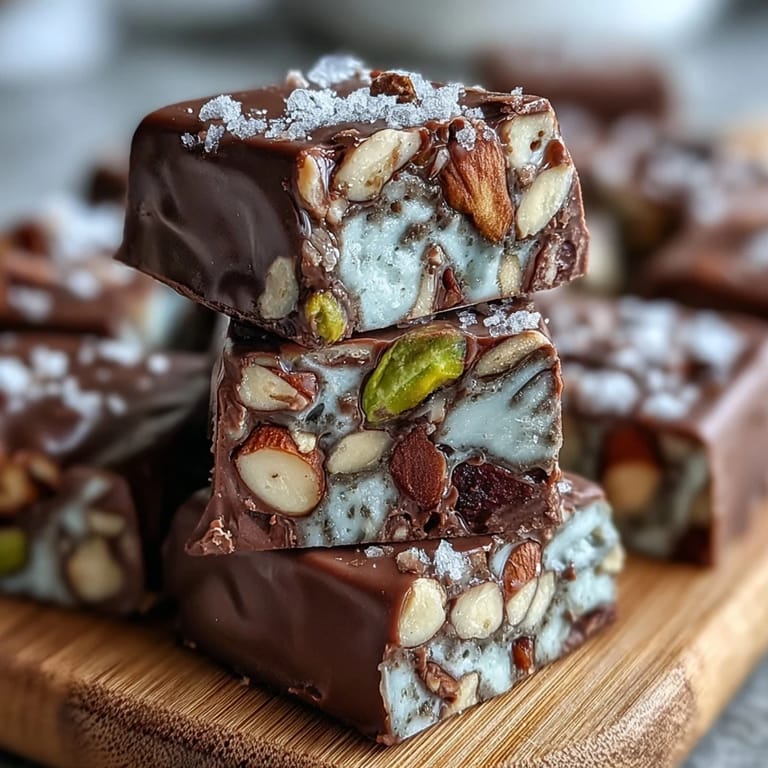
 There's a particular satisfaction in wrapping each piece of finished nougat and knowing that you've created something delicate and beautiful entirely by hand, without relying on strange additives or mysterious processes. I think that's when this recipe stopped being just candy and became something I genuinely wanted to share with people I care about.
Why Room Temperature Matters More Than You Think
The first time I rushed and used egg whites straight from the refrigerator, the mixture barely whipped and my nougat turned out dense and fudgy instead of light and airy. Now I always pull eggs out at least 30 minutes before I start cooking, and it makes such a difference that I wonder why more candy recipes don't emphasize this. Cold eggs just don't have the same elastic quality, and temperature is one of those invisible factors that separates good nougat from the kind that melts on your tongue.
The Hojicha Powder Makes All the Difference
I experimented once with regular green tea powder out of curiosity, and while it worked technically, it lacked the roasted depth that makes this recipe special. Hojicha's darker, toasted character gives the nougat an almost autumnal quality—something you can't quite describe but somehow recognize. If you can't find hojicha powder at a specialty store, it's worth ordering online, because substituting it changes the whole character of the dish.
Storage and Serving Ideas
Kept in an airtight container at room temperature, these pieces stay fresh and perfectly textured for up to a week, though honestly they rarely last that long around my house. The flavor actually deepens subtly after a day or two as the hojicha flavor settles into the candy, so there's no rush to eat them immediately. I love serving them alongside a cup of warm hojicha tea or even a small pour of Japanese whisky, because the combination feels ceremonial in the best way.
- Wrap individual pieces in parchment or cellophane immediately after cutting to prevent them from sticking together.
- Store in an airtight container at room temperature, away from humidity and direct sunlight.
- Pair with hojicha tea, whisky, or coffee to let the roasted tea flavor shine even brighter.
 Save Pin
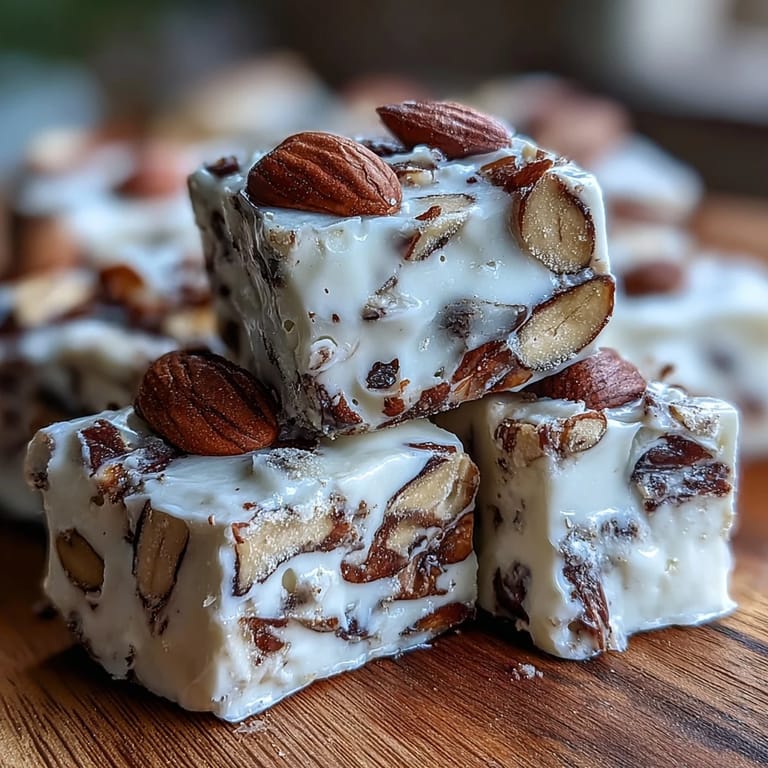
 Making hojicha nougat feels like creating something refined and Japanese-inspired right in your own kitchen, and once you master the technique, you'll find yourself making it for every occasion that calls for an elegant, personal gift. It's the kind of candy that reminds people that homemade desserts carry a different kind of sweetness than anything store-bought ever could.
Cooking Questions & Answers
- → What makes hojicha nougat different from regular nougat?
Hojicha nougat incorporates roasted Japanese green tea powder, lending deep earthy notes and a reddish-brown hue unlike traditional vanilla versions. The tea's naturally roasted character complements the honey sweetness and toasted nuts beautifully.
- → Can I substitute other nuts in this confection?
Absolutely. While almonds and pistachios provide lovely color and flavor contrast, cashews, hazelnuts, or walnuts work equally well. Ensure nuts are roasted before adding for optimal texture and taste.
- → How do I know when the sugar syrup reaches the correct temperature?
A candy thermometer is essential here. The syrup must reach exactly 140°C (285°F) - the soft-crack stage. At this temperature, the syrup will create firm yet chewy nougat. Without proper temperature, the texture may be too sticky or hard.
- → Why must I pour the hot syrup slowly into the egg whites?
Slow streaming while the mixer runs prevents the eggs from cooking prematurely and ensures even incorporation. This gradual method creates a stable, glossy meringue that can hold the nuts and set properly without collapsing.
- → How should I store the finished pieces?
Keep in an airtight container at room temperature for up to one week. Individual wrapping in parchment or cellophane prevents pieces from sticking together. Avoid refrigeration as it can make the texture overly hard.
- → Is this suitable for special dietary needs?
This confection is naturally gluten-free when using certified gluten-free ingredients. It's vegetarian but contains eggs, dairy, and nuts, making it unsuitable for vegan or nut-free diets. Always verify ingredient labels for allergen concerns.