 Save Pin
 I was standing in my tiny kitchen on a Tuesday night, staring at a packet of instant ramen and a bag of frozen peas, when I realized convenience doesn't have to mean compromise. The peas tumbled into the bubbling broth with a satisfying hiss, their bright green color transforming what could have been another forgettable meal into something that actually made me smile. That simple addition became my gateway to turning cheap pantry staples into bowls that felt nourishing and intentional. Now, every time I hear those frozen peas hit the hot liquid, I think about how small changes can shift an entire evening.
I made this for my roommate after a long shift, and she paused mid-bite to ask if I'd secretly learned to cook. The truth was just garlic, sesame oil, and frozen vegetables, but the way the broth smelled as it simmered made the whole apartment feel warmer. We sat on the couch with our bowls, slurping noodles and laughing about how something this easy had no right to taste this good. That night, instant ramen stopped being a guilty shortcut and became something I was genuinely excited to eat.
Ingredients
- Instant ramen noodles: The foundation of this dish, and you can use the seasoning packets or skip them entirely depending on how much control you want over the saltiness.
- Frozen peas: These little green gems add natural sweetness and a tender bite that balances the chewiness of the noodles perfectly.
- Frozen mixed vegetables: Carrots, corn, and green beans bring color and variety without any chopping, and they cook directly from frozen.
- Green onions: Their mild sharpness and bright finish make every spoonful feel more vibrant and intentional.
- Garlic: Just two cloves bloomed in sesame oil create a fragrant base that elevates the entire broth.
- Vegetable broth: Using low-sodium broth instead of plain water gives you a richer, more layered flavor you can actually taste.
- Soy sauce: A splash deepens the umami and ties all the ingredients together with a savory backbone.
- Sesame oil: A small amount goes a long way, adding nutty warmth and a silky mouthfeel to the broth.
- Eggs: Soft-boiled or poached, they turn this into a full meal with creamy yolks that swirl into the soup.
- Toasted sesame seeds: They add a subtle crunch and a toasted flavor that makes the bowl feel finished and special.
- Chili flakes or sriracha: A little heat wakes up your palate and makes each slurp more exciting.
Tired of Takeout? 🥡
Get 10 meals you can make faster than delivery arrives. Seriously.
One email. No spam. Unsubscribe anytime.
Instructions
- Bloom the garlic:
- Heat the sesame oil in a medium saucepan over medium heat, then add the minced garlic and let it sizzle for about 30 seconds until your kitchen smells incredible. Don't let it brown or it will turn bitter.
- Build the broth:
- Pour in the vegetable broth and soy sauce, then bring everything to a gentle boil. This is where the savory base comes together.
- Add the vegetables:
- Toss in the frozen peas and mixed vegetables straight from the freezer, then let them simmer for 2 to 3 minutes until heated through. They'll thaw quickly and release a bit of natural sweetness into the broth.
- Cook the noodles:
- Drop in the ramen noodles and cook for 2 to 3 minutes, stirring gently to separate them. They should be just tender, not mushy.
- Finish and season:
- Stir in half the sliced green onions, then taste the broth and add more soy sauce if you want it saltier. This is your last chance to adjust before serving.
- Serve and garnish:
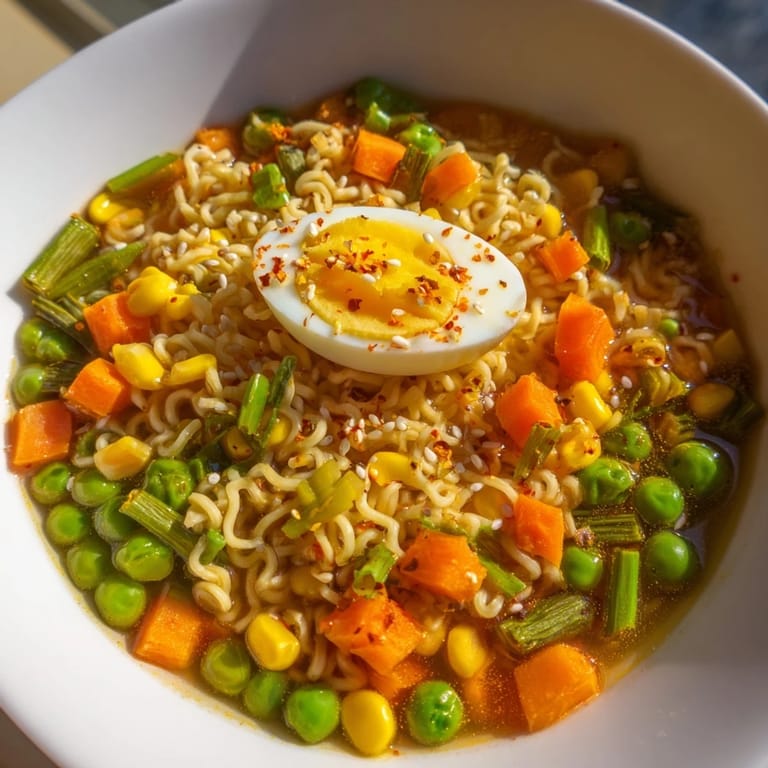
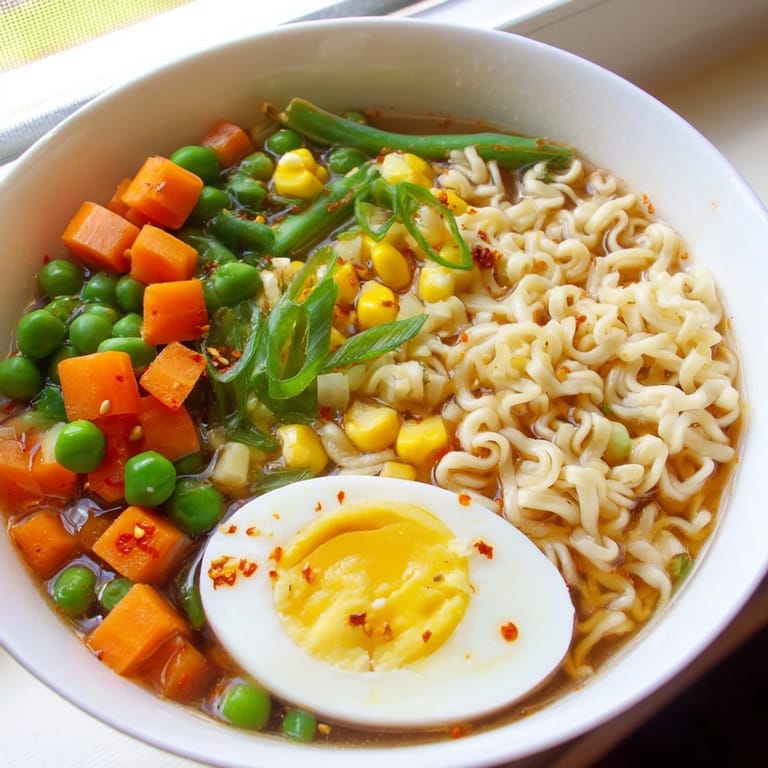
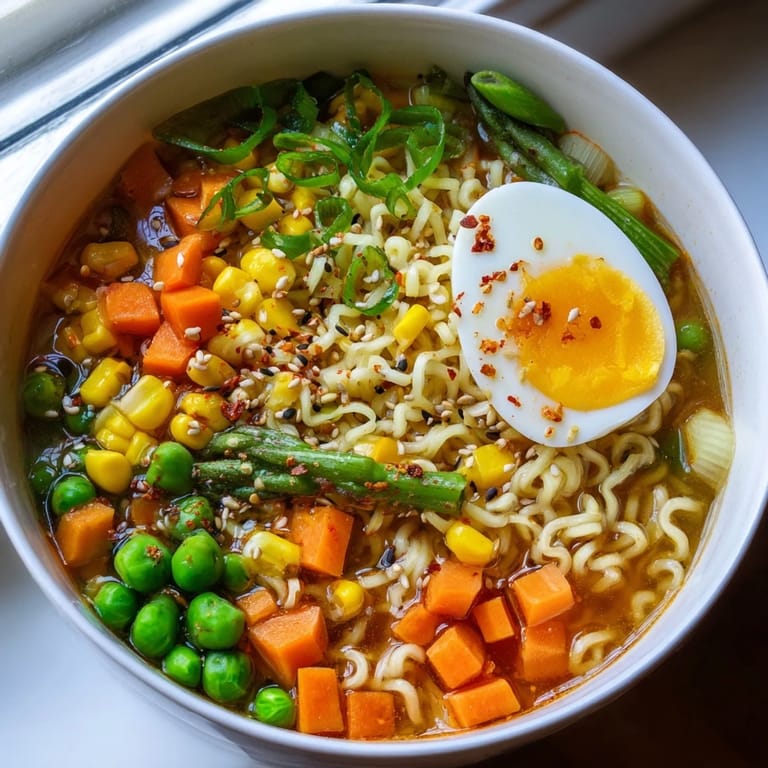
- Divide the ramen and vegetables between two bowls, then top each with a soft-boiled egg, the remaining green onions, sesame seeds, and a sprinkle of chili flakes or a drizzle of sriracha. Serve immediately while everything is hot and the egg yolk is still runny.
 Save Pin
 One rainy Saturday, I made this for myself and realized halfway through that I was humming while I stirred the pot. It wasn't just the warm broth or the bright vegetables, it was the act of taking care of myself with something simple and intentional. I've made this bowl dozens of times since, and it still feels like a small act of kindness I can give myself in 15 minutes.
Making It Your Own
This recipe is endlessly flexible, so treat it like a template rather than a strict rulebook. Swap the frozen peas for edamame or baby spinach if that's what you have, or toss in shredded rotisserie chicken or crispy tofu for extra protein. I've even added a spoonful of miso paste to the broth on nights when I wanted something deeper and earthier, and it worked beautifully.
Perfecting the Soft-Boiled Egg
The egg can make or break this bowl, and getting that jammy yolk is easier than you think. Bring a small pot of water to a boil, gently lower in the eggs, then cook for exactly 6 and a half minutes before transferring them to an ice bath. Once they're cool enough to handle, peel them carefully and slice in half just before serving so the yolk stays glossy and intact.
Storage and Reheating Tips
If you're planning to make this ahead, store the broth, vegetables, and noodles separately in the fridge for up to two days. Reheat the broth and vegetables together on the stove, then add the noodles just before serving so they don't turn to mush. The eggs are best made fresh, but you can soft-boil them in advance and store them in the fridge for up to three days.
- Keep the toppings like green onions, sesame seeds, and chili flakes in small containers so you can add them right before eating.
- If the noodles have absorbed too much liquid, add a splash of extra broth or water when reheating to loosen everything up.
- For meal prep, portion everything into individual containers and reheat one bowl at a time for quick lunches or dinners.
 Save Pin
 This bowl has become my go-to when I need something fast, warm, and genuinely satisfying. I hope it becomes that for you too.
Cooking Questions & Answers
- → Can I use fresh vegetables instead of frozen?
Yes, fresh peas or mixed vegetables work well; adjust cooking time to ensure they become tender without losing texture.
- → How do I make this dish vegan?
Simply omit the eggs and use vegetable-based noodles and broth to maintain a plant-based meal.
- → What alternatives can I use for soy sauce?
Tamari is a great gluten-free substitute and maintains the savory depth without soy allergens.
- → How can I add protein to this dish?
Incorporate tofu, shredded chicken, or other preferred protein sources for a heartier option.
- → What spices complement the flavors here?
Chili flakes or sriracha add a nice heat, while sesame seeds enhance nuttiness; both brighten the dish.