 Save Pin
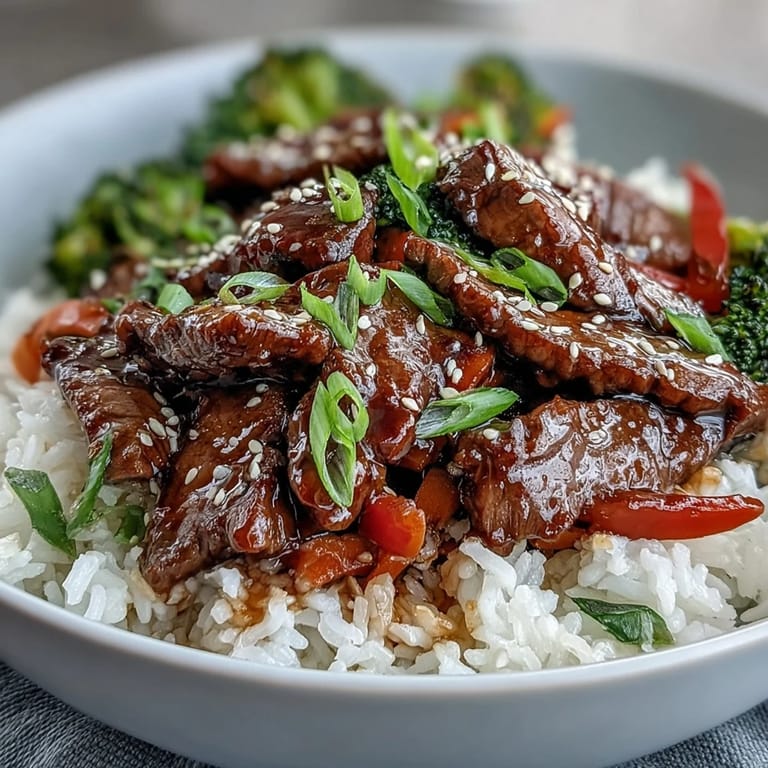
 There's something about the sizzle of beef hitting a hot wok that still makes me pause mid-conversation, even after cooking this dish dozens of times. My neighbor introduced me to teriyaki bowls on a rainy Tuesday when she brought one over, and I was immediately struck by how the glossy sauce clung to each slice of beef like it belonged there. What seemed intimidating at first turned out to be wonderfully straightforward, and now it's become my go-to when I want something that feels both comforting and a little bit special without spending hours in the kitchen.
I made this for my partner after a particularly stressful week at work, and watching their face light up when they tasted it felt like the best kind of small victory. They kept asking what made it taste so good, and honestly, it was just the care that went into layering the flavors and not rushing the sauce. That's when I realized this bowl had become less about feeding someone and more about showing up for them through food.
Ingredients
- Flank steak or sirloin, thinly sliced: The thinness is your secret weapon here, letting the beef cook through in mere minutes while staying tender; ask the butcher to slice it for you if you're not confident with the knife.
- Cornstarch for beef: This creates a subtle silky coating that helps the meat hold onto the sauce and prevents it from drying out during the quick cooking.
- Vegetable oil: Use something neutral and high-heat tolerant like canola or vegetable oil so the beef can sear properly without burning.
- Soy sauce: The backbone of your sauce, and honestly worth buying the good stuff if you can because you'll taste the difference immediately.
- Mirin: This sweet rice wine is what makes the sauce glossy and deep, not cloying; it's the ingredient that separates homemade from mediocre.
- Honey or brown sugar: Adds depth and helps create that beautiful shine on the finished dish.
- Rice vinegar: Brings a gentle brightness that keeps the sauce from feeling too heavy or one-note.
- Fresh garlic and ginger: These aren't optional flavor additions, they're what make the sauce taste alive and fresh rather than bottled.
- Cornstarch slurry: Mix it with water before whisking into the hot sauce to avoid lumps and get that silky thickening without flour.
- Carrots, bell pepper, and broccoli: Keep them cut to roughly similar sizes so they cook evenly; overcooked vegetables will make the whole bowl feel sad.
- Spring onions: Save some for raw garnish on top to add a sharp, fresh contrast to all that richness.
- Sesame seeds: A small handful makes an enormous difference in texture and adds a subtle toasted note.
- Cooked rice: Use it warm and fluffy as your foundation; cold rice will absorb the sauce differently and won't have the same effect.
Tired of Takeout? 🥡
Get 10 meals you can make faster than delivery arrives. Seriously.
One email. No spam. Unsubscribe anytime.
Instructions
- Build your sauce first:
- Combine soy sauce, mirin, honey, rice vinegar, garlic, and ginger in a small saucepan and bring it to a simmer over medium heat. You'll notice the mixture becomes fragrant and slightly deeper in color as it heats through. Mix your cornstarch slurry in a small bowl, then whisk it into the simmering sauce and let it bubble gently for 2 to 3 minutes until it thickens into a glossy coating.
- Prepare the beef:
- Toss your sliced beef with cornstarch in a bowl until every piece is lightly dusted; this step matters more than you might think because it's what helps the meat develop that silky texture. Don't skip it or rush it, just get it evenly coated.
- Sear the beef:
- Heat your oil in a large skillet or wok over high heat until it shimmers and moves easily across the surface. Add the beef in a single layer and let it sit for 30 seconds before stirring, which builds those golden-brown edges everyone fights over. Stir-fry for just 2 to 3 minutes total until the beef is browned on the outside and cooked through, then transfer it to a clean plate.
- Cook the vegetables:
- Without wiping out the skillet, add your carrots, bell pepper, and broccoli to the remaining oil and stir-fry for 3 to 4 minutes until they have a little color but still have some snap to them. You want them tender but not sad and mushy.
- Bring it all together:
- Return the beef to the skillet with the vegetables, pour in your teriyaki sauce, and toss everything together for about 1 minute until the sauce coats everything evenly and everything is heated through. This is the satisfying moment where all your separate components become one dish.
- Plate and garnish:
- Spoon hot rice into bowls, top with the beef and vegetable mixture and sauce, then scatter fresh spring onions and sesame seeds on top. Those fresh garnishes are what make it feel finished and intentional.
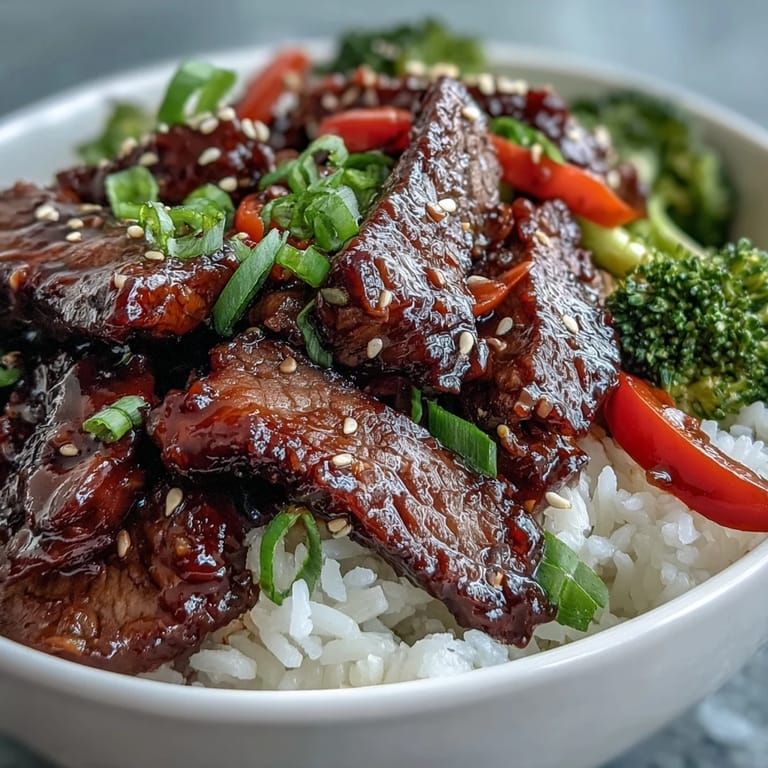 Save Pin
 There was a moment a few months ago when my young niece tried this for the first time and ate it so quickly I thought something was wrong, only to realize she was just genuinely happy. She asked if I could teach her how to make it someday, and suddenly this simple bowl became something I wanted to pass on, the way recipes do.
Getting the Sauce Right
The sauce is where everything lives in this dish, so it deserves your attention. The balance between salty, sweet, and tangy needs to be tasted as you go, and if you find your sauce tastes a little flat, a splash more rice vinegar will brighten it up immediately. Some people like their sauce thicker and more clinging, while others prefer it a bit looser to soak into the rice, so adjust your cornstarch slurry accordingly based on what you prefer.
Vegetable Variations and Timing
The vegetables here are more of a suggestion than a rule, and I've made this bowl successfully with whatever was in my crisper drawer on any given week. The key is thinking about cooking time and not mixing delicate vegetables like spinach or snap peas with hard vegetables like broccoli without adjusting when you add them. Mushrooms, edamame, and water chestnuts all work beautifully if you stagger their cooking so everything finishes at the same moment.
Make It Your Own
This recipe is genuinely welcoming to substitutions and experiments, which is part of why it's stayed in my regular rotation. Chicken breast works just as well as beef and often feels lighter, while tofu brings its own kind of satisfying heartiness to the bowl. If you need to keep it gluten-free, swap the regular soy sauce for tamari and you've got a version that works for different dietary needs without tasting like a compromise.
- Chicken cooks faster than beef, so watch it carefully and pull it from the pan at the first sign of white throughout the meat.
- Tofu should be pressed and cut into cubes or slices, then pan-fried separately until golden before joining everything else so it doesn't fall apart.
- You can also make a vegetarian version using pressed chickpeas or cashews for that satisfying texture if you're cooking for mixed diets.
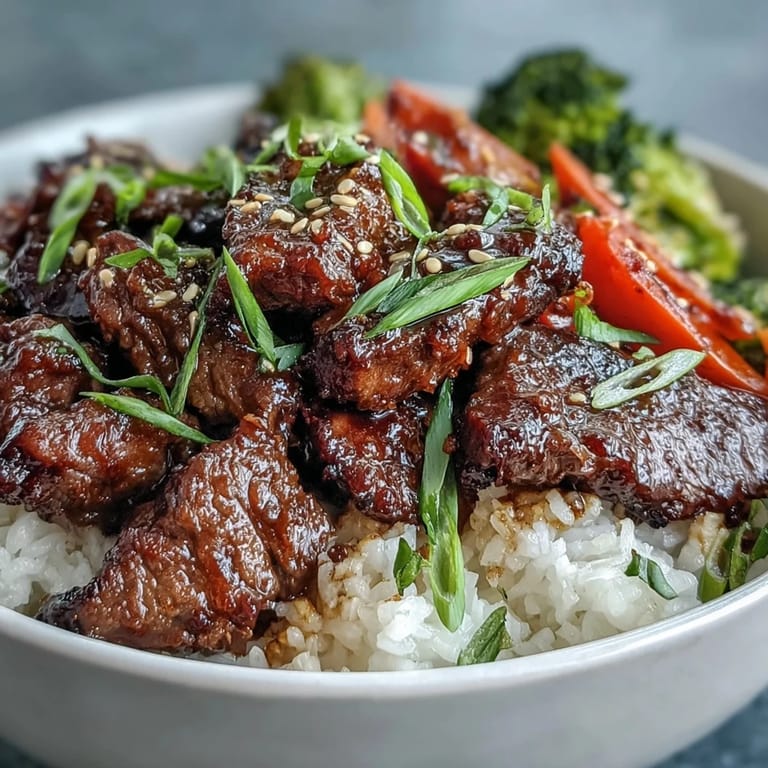 Save Pin
 This bowl has become my reliable answer to the question of what to cook when I want something that tastes thoughtful but doesn't demand hours of my time. It's the kind of dish that reminds you that restaurant-quality food lives closer than you think.
Cooking Questions & Answers
- → What cut of beef works best for this bowl?
Flank steak or sirloin are ideal choices because they're lean and take well to quick stir-frying. Slice the beef thinly against the grain for maximum tenderness. You can also use skirt steak or ribeye if preferred.
- → Can I make the teriyaki sauce ahead of time?
Yes, the teriyaki sauce can be prepared up to a week in advance and stored in an airtight container in the refrigerator. Reheat gently before using, adding a splash of water if it has thickened too much.
- → How do I get the sauce to coat the beef evenly?
Tossing the sliced beef in cornstarch before cooking creates a light coating that helps the teriyaki sauce cling to the meat. When adding the sauce back to the skillet, toss everything quickly over high heat for just one minute to coat evenly without overcooking the beef.
- → What vegetables can I substitute?
Snap peas, edamame, mushrooms, zucchini, or baby corn work wonderfully in this bowl. Aim for vegetables that cook quickly and maintain some crunch when stir-fried for the best texture contrast.
- → Is this dish gluten-free?
Traditional teriyaki sauce contains soy sauce which typically includes wheat. To make this gluten-free, substitute regular soy sauce with tamari or a certified gluten-free soy sauce alternative. All other ingredients naturally fit a gluten-free diet.
- → Can I use brown rice instead of white?
Brown rice works beautifully and adds nutty flavor plus extra fiber. Just note that brown rice typically takes longer to cook—about 45 minutes compared to 20 for white rice—so plan accordingly or use pre-cooked rice.