 Save Pin
 My coworker came back from Seoul with this obsession about Korean bowls that changed how I think about weeknight dinners. She'd describe the way the warm beef mingles with cool pickled vegetables, and I'd catch myself staring at nothing, imagining it. One Tuesday after work, I finally stopped imagining and started cooking, and the first bite made me understand why she couldn't stop talking about it. The balance of salty, sweet, tangy, and savory felt like a small revelation happening on my tongue.
I made this for my partner on a random Thursday when they'd had a brutal day, and watching their expression shift from exhausted to genuinely happy felt like the best kitchen magic I could perform. They barely spoke until the bowl was empty, which tells you everything. Since then, it's become our go-to when we want something that feels indulgent but doesn't derail us, comfort food that doesn't require three days of planning.
Ingredients
- Lean ground beef (500 g): The backbone here, and leaning toward lean keeps things from getting greasy while still delivering richness and satisfying protein.
- Soy sauce (2 tablespoons): Your umami anchor—swap for tamari if you're navigating gluten-free, and honestly the difference is nearly imperceptible.
- Toasted sesame oil (1 tablespoon): The difference between good and unforgettable; toasted oil has this deeper, nuttier personality that regular sesame oil doesn't touch.
- Brown sugar (1 tablespoon): A whisper of sweetness that balances the savory and salty notes without making anything taste dessert-like.
- Fresh ginger and garlic: These two create the aromatic foundation—grating the ginger fresh releases oils that jarred versions can't quite capture.
- Gochujang (1 teaspoon, optional): Korean chili paste that brings gentle heat and fermented complexity, though sriracha works if that's what lives in your pantry.
- Green onions: Added at the end so they keep their sharpness and don't get lost in the heat.
- Sesame seeds: Toasted seeds if you can find them, for that nuttier flavor and the subtle crunch.
- Rice base (4 cups cooked): Jasmine rice is my preference because its floral notes echo the sesame, though cauliflower rice transforms this into a low-carb powerhouse.
- Quick pickled vegetables: Carrot, cucumber, and radish—the vegetables matter less than their freshness and the acid that brings everything alive.
- Rice vinegar, sugar, salt for pickling: These three create the brine that tastes bright without being aggressive.
Tired of Takeout? 🥡
Get 10 meals you can make faster than delivery arrives. Seriously.
One email. No spam. Unsubscribe anytime.
Instructions
- Start your pickle early:
- Combine rice vinegar, sugar, and salt in a bowl and stir until the sugar and salt completely dissolve. Add your julienned carrot, sliced cucumber, and radish, then toss everything together. Let it sit for at least fifteen minutes while you handle the beef—the vegetables will gradually soften and absorb all that tangy flavor.
- Get your rice warming:
- If you haven't already cooked it, start your jasmine or cauliflower rice according to package directions. You want it warm and ready to go by the time the beef is done.
- Brown the beef with intention:
- Heat a large skillet over medium-high until it's genuinely hot, then add your ground beef. As it cooks, break it up constantly with a spoon so you end up with small, evenly cooked pieces rather than large clumps. This takes about five to seven minutes, and you'll know it's done when the pink disappears completely.
- Drain if needed:
- Depending on how lean your beef is, there might be a little liquid pooled in the bottom. Tilt the skillet and use a spoon to push the meat to one side and drain if necessary.
- Build the sauce:
- Pour in your soy sauce, sesame oil, brown sugar, ginger, garlic, and gochujang if you're using it. Stir everything together and let it cook for two to three minutes, letting the kitchen fill with this incredible savory-sweet aroma.
- Finish with brightness:
- Remove from heat and stir in your sliced green onions and sesame seeds. This is when the dish shifts from good to something you'll crave.
- Assemble with care:
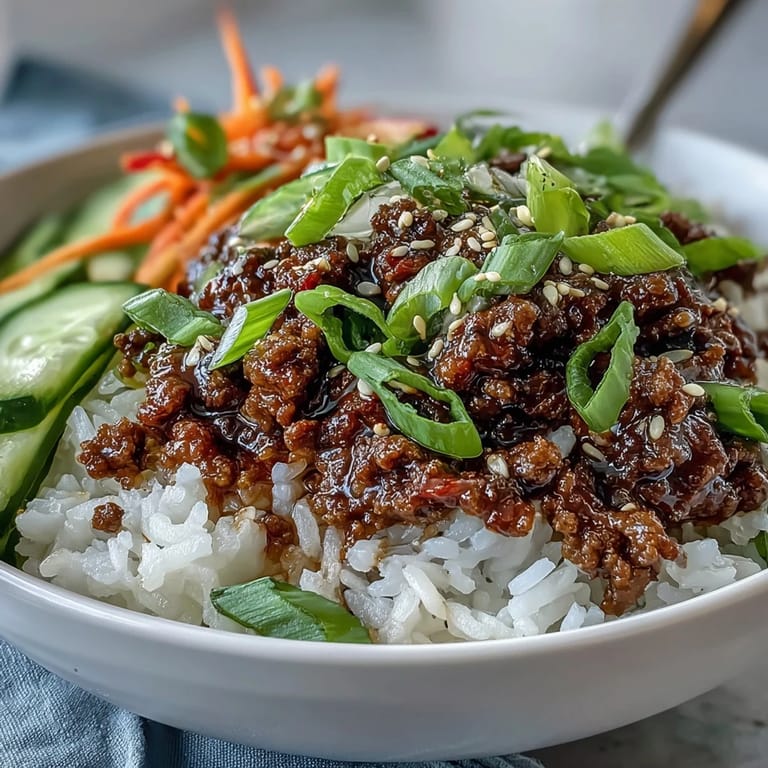
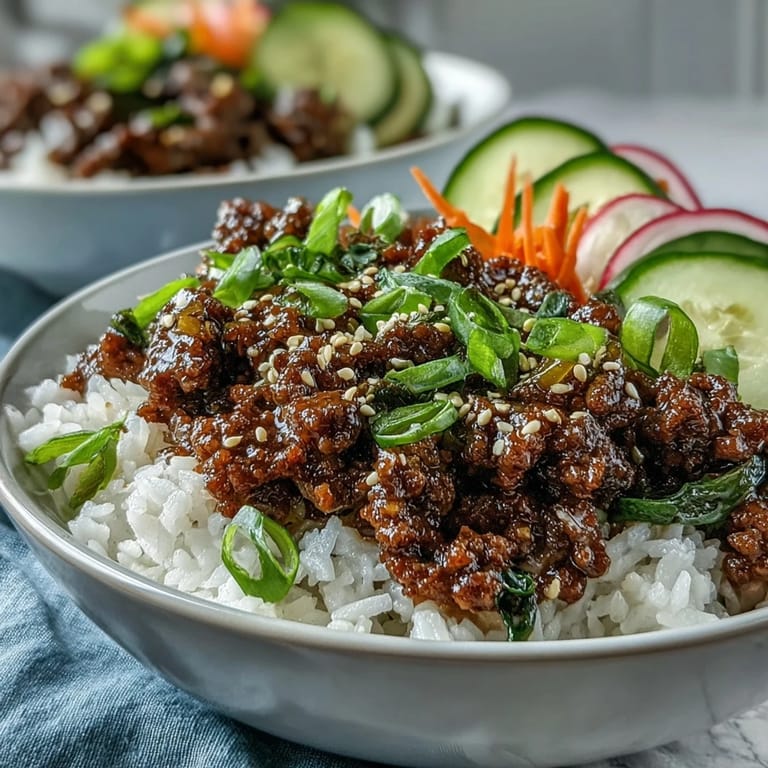
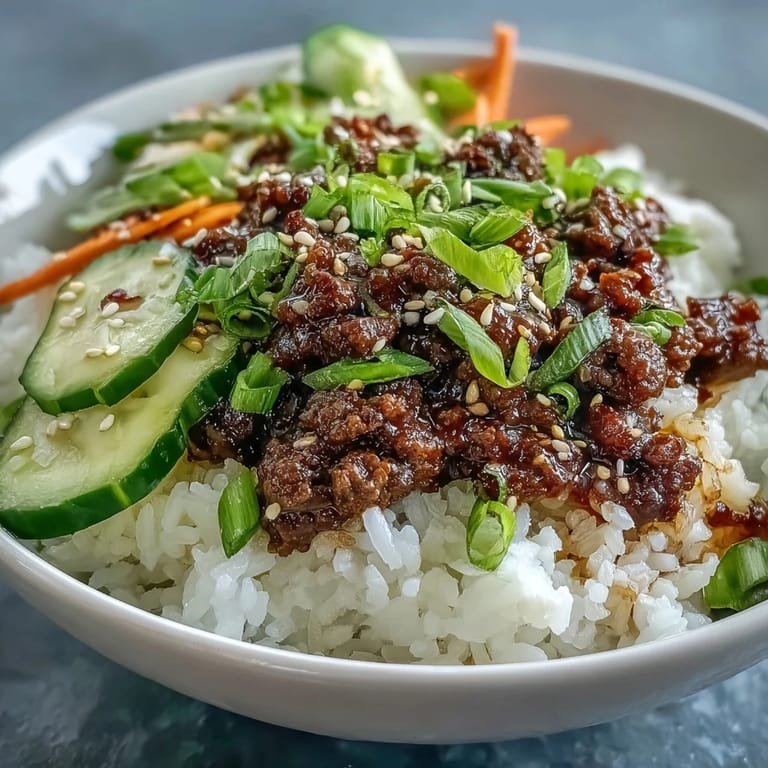
- Divide your warm rice among bowls, top with a generous portion of the seasoned beef, and pile on those pickled vegetables. Garnish with a few more green onions and sesame seeds, then serve immediately while the contrast between temperatures and textures is still dramatic.
 Save Pin
 My sister brought her new roommate over for dinner last month, and watching them experience this bowl together reminded me that good food creates these small moments of connection. The roommate ended up asking for the recipe before dessert, and now I've started a chain reaction of people making this in their own kitchens.
Customizing Your Bowl
The beauty of this bowl is how it bends to what you have and what you need. If you're avoiding carbs, cauliflower rice honestly tastes better here than in most applications because the bold beef sauce doesn't require rice to anchor it. Ground turkey works beautifully if beef isn't in your kitchen, though you might need to add a touch more sesame oil since turkey is leaner. For vegetarians, crumbled tofu or tempeh soaks up the sauce just as well as beef, giving you that protein-forward satisfying bite.
The Pickle Factor
People often overlook the pickled vegetables thinking they're optional garnish, but they're actually the thing that makes your palate reset between bites and keeps the bowl from feeling one-note. The acid cuts through the richness of the beef sauce, the slight sweetness of the vinegar echoes the brown sugar in the meat, and that cool temperature provides relief. You can prep the pickle up to a day ahead and keep it in the fridge, which means you're really just cooking the beef and rice when you're hungry.
The Little Details That Matter
Fresh ginger truly does taste different from jarred when you're grating it right into hot beef—the aromatic oils are still alive and volatile. I learned this when I grabbed a jar in a hurry and made the bowl taste slightly muted, and now I keep a piece of ginger in a small container specifically for this reason. The sesame oil should smell fragrant and slightly toasted when you open the bottle, and if it smells rancid or flat, that's your sign it's been sitting too long and needs replacing.
- Consider adding a fried egg on top for extra richness and protein if you want to push this toward comfort-food territory.
- If you're cooking for people with varying spice tolerances, skip the gochujang or sriracha from the main batch and let people stir in their own heat at the table.
- Leftover beef actually reheats beautifully the next day, though I'd add fresh pickled vegetables rather than reheating them.
 Save Pin
 This bowl has quietly become the thing I make when I want to feel capable and generous without spending hours in the kitchen. It's the kind of dish that tastes like you care while respecting your own time.
Cooking Questions & Answers
- → Can I make this bowl spicy?
Yes, add gochujang Korean chili paste or sriracha while cooking the beef. Start with 1 teaspoon and adjust to your preferred heat level.
- → How long do the pickled vegetables last?
The quick pickled vegetables keep well in the refrigerator for up to one week in an airtight container. They actually develop more flavor after a day or two.
- → Can I use ground turkey instead of beef?
Absolutely. Ground turkey or chicken both work well as lighter alternatives. You may want to add an extra teaspoon of sesame oil since poultry is less fatty than beef.
- → Is cauliflower rice a good substitute?
Cauliflower rice makes an excellent low-carb base that still absorbs the savory beef juices. One large cauliflower head riced equals about 4 cups cooked.
- → What other vegetables can I pickle?
Try thinly sliced red onion, bell peppers, or daikon radish. The quick pickling liquid works with any crisp vegetable that can be thinly sliced.