 Save Pin
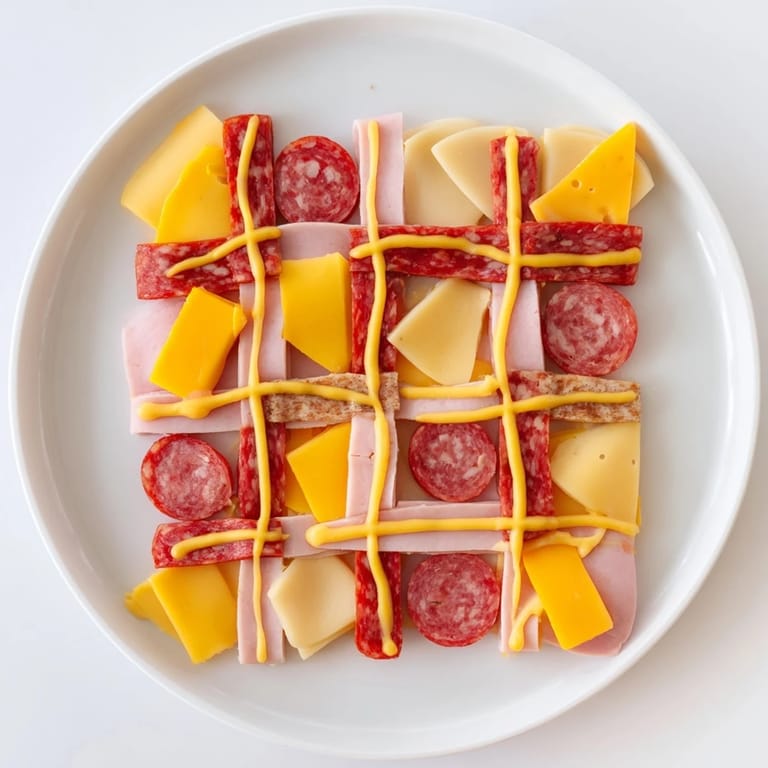
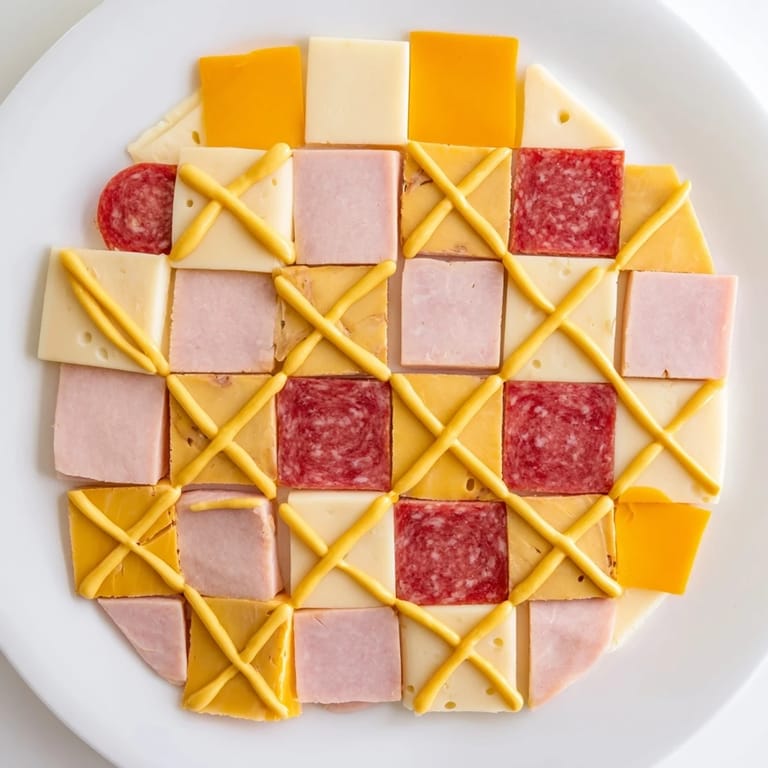
 There's something magical about the moment a platter comes together and suddenly becomes art. I'll never forget watching my friend's face light up when she saw this board for the first time—she actually gasped, thinking I'd spent hours on it. What she didn't know was that this patchwork quilt took barely twenty minutes, but looked like I'd been planning it all week. That's when I realized the best entertaining doesn't require stress, just a little creativity and the right ingredients arranged like a game.
I made this the night before a small dinner party when I realized I'd forgotten to plan an appetizer. Instead of panicking, I walked to the deli counter, grabbed whatever looked beautiful, and started cutting squares like I was designing something. My partner wandered into the kitchen halfway through and said, "You're making it look like quilting," and suddenly the whole thing had a name and a reason to exist beyond just being snacks on a board.
Ingredients
- Smoked turkey breast, 100 g sliced: The lean, subtle player that keeps things from feeling too heavy—choose real smoked meat, not the pre-packaged kind if you can help it.
- Salami, 100 g sliced: The paprika-forward backbone that gives this board its personality and a whisper of spice.
- Ham, 100 g sliced: Sweet and familiar, it's the bridge between the boldness of salami and the richness of cheese.
- Swiss cheese, 100 g sliced: Those little holes catch the light and make every square look intentional; plus the nuttiness plays beautifully with mustard.
- Sharp cheddar, 100 g sliced: Brings warmth and a slight tang that keeps your palate engaged through multiple bites.
- Provolone, 100 g sliced: Slightly creamy and buttery, it rounds out the cheese trio and adds another layer of sophistication.
- Whole grain mustard, 2 tbsp: The texture and visible seeds make it feel rustic; it's your "thread" with personality.
- Dijon mustard, 2 tbsp: Sharper and more refined, it creates visual contrast and keeps the mustard lines from all looking the same.
- Fresh parsley or chives, optional: A final brush of green makes people believe you actually tried, and it costs nothing but a snip.
Tired of Takeout? 🥡
Get 10 meals you can make faster than delivery arrives. Seriously.
One email. No spam. Unsubscribe anytime.
Instructions
- Cut everything into perfect little squares:
- Use a sharp knife and a steady hand to cut all your meats and cheeses into 2-inch squares—uniformity is what makes this feel intentional rather than thrown together. The trick is to take your time here; it's the only step that matters for how polished it looks.
- Arrange your patchwork pattern:
- Lay them out on your platter like you're solving a puzzle, alternating meats and cheeses so no two similar items sit next to each other. Step back and look at it from across the room to see if the colors and textures balance, then adjust until it feels right.
- Draw your mustard lines:
- Load your squeeze bottle or piping bag and draw lines between the squares like you're stitching a quilt—some horizontal, some vertical, crisscrossing in whatever pattern feels natural. The lines don't need to be perfect; a little wobble actually adds to the handmade charm.
- Add a whisper of green:
- Sprinkle finely chopped parsley or chives across the top if you have it, focusing on a few areas rather than covering everything. This final step takes thirty seconds and makes the whole thing look like a finished dish rather than ingredients on a board.
- Serve while it's fresh:
- Bring it out within an hour so the flavors are bright and the cheeses haven't started sweating—place toothpicks nearby and let people graze.
 Save Pin
 The real moment this dish became special for me was when someone asked if I could make it for their office party. I realized then that it wasn't just pretty—it was actually solve-your-entertaining-problem pretty, and people genuinely wanted it. Now whenever I see someone pull out their phone to photograph a board I've made, I think about how the simplest ideas often become the ones people remember.
Why This Works as Your Secret Weapon
This recipe exists in that beautiful space between "looks like I spent hours" and "took twenty minutes." It's gluten-free and low-carb by nature, which means you're not compromising on flavor for dietary preferences—the meats and cheeses are the stars anyway. The mustard isn't just flavor; it's your storytelling device, the detail that turns a meat and cheese board into something that feels designed rather than assembled.
The Art of Strategic Arrangement
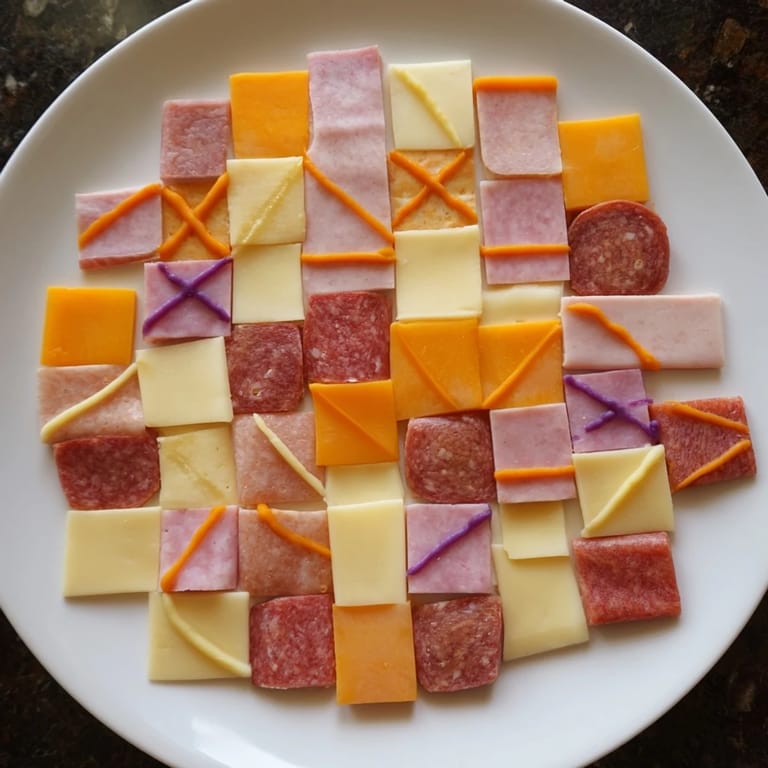
Patterning matters more than most people think when you're trying to make something feel intentional. I used to just toss things on a board and hope it looked nice, but the moment I started thinking about color flow and alternation, even simple ingredients looked curated. The checkerboard pattern isn't just about looks—it also ensures that every bite someone takes includes a mix of flavors and textures rather than three slices of the same salami.
Elevating the Simple Entertaining Moment
What I love most about this dish is that it erases the line between casual and elegant without requiring you to be either a skilled cook or someone who spent the afternoon prepping. You can make it alone, or invite someone into the kitchen while you're working and make it a small moment together. The mustard details are where the personality lives—don't rush them, and don't worry if your lines aren't gallery-perfect.
- Serve it on a wooden board or slate if you have it, because the backdrop absolutely affects how people perceive the food.
- Keep the toothpicks nearby but don't make them the focus; let people discover them as they start eating.
- Make extra mustard lines beyond what you think you need, because the visual of the threading is half the appeal.
 Save Pin
 This little board taught me that the best entertaining happens when you stop trying to impress and start thinking about what makes people smile. Serve it, watch faces light up, and enjoy the three seconds before everyone descends and it becomes delicious chaos.
Cooking Questions & Answers
- → How should the meats and cheeses be prepared for this dish?
Slice all meats and cheeses into uniform 2-inch squares to create a neat patchwork look when arranged on the serving platter.
- → What types of mustard are used in this arrangement?
Both whole grain and Dijon mustard are used to stitch the squares, adding tangy flavor and visual contrast.
- → Can herbs be added to enhance the presentation?
Fresh parsley or chives can be finely chopped and sprinkled on top to add a pop of color and freshness.
- → Is this dish suitable for special diets?
It works well for gluten-free and low-carb preferences given the selection of meats and cheeses without bread components.
- → What are some suggested accompaniments to serve with this platter?
Serving with sliced baguette, crackers, or pairing with crisp white wine or light beer complements the flavors nicely.