 Save Pin
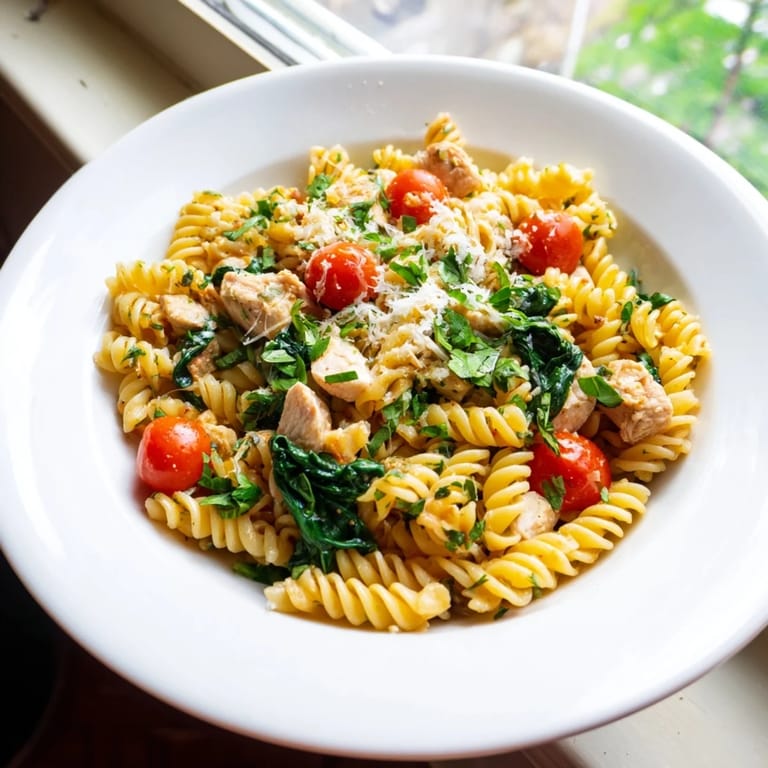
 There's something magical about the moment when you realize you can throw everything into one pan and walk away for twenty minutes while dinner practically cooks itself. I stumbled onto this lemon herb pasta chicken on a Tuesday when I had exactly three things going for me: hungry kids, limited patience, and a lemon sitting on the counter practically begging to be used. What started as a desperate attempt to avoid doing multiple dishes became the meal I now make when I want to feel like I've got my life together, even on the chaotic nights when I absolutely don't.
I made this for my sister when she was going through a rough patch, and she actually asked for the recipe halfway through eating, which almost never happens. The way the lemon cut through the richness, how the spinach wilted right into everything—it felt like the kind of dish that says I'm taking care of you without being fussy about it. She's made it at least twice a month since then.
Ingredients
- Boneless, skinless chicken breasts (2, about 400 g): Cut into bite-sized pieces so they cook through quickly and soak up all those lovely pan flavors.
- Penne or fusilli pasta (300 g): Use whatever shape you love; I prefer penne because it traps the broth and lemon juice like tiny flavor vessels.
- Olive oil (2 tablespoons): Good quality matters here since it's one of the main flavor players, not just a cooking medium.
- Garlic cloves (3), minced: Don't skip the mincing step; it distributes the garlic throughout the broth instead of leaving chunks.
- Small onion, finely chopped: This becomes almost invisible as it caramelizes, adding sweetness that balances the lemon.
- Lemon (1), zest and juice: The zest goes in early to infuse the broth, while the juice is your final seasoning adjustment.
- Cherry tomatoes (150 g): Halve them so they release their juice into the pan and don't overpower with chunks.
- Baby spinach (60 g): Fresh spinach wilts down to almost nothing, so don't be shy with the amount.
- Fresh parsley (2 tablespoons): Adds color and a mild herbal note; save some for garnish if you're feeling fancy.
- Fresh basil (1 tablespoon): Tear it with your hands at the end to preserve its delicate flavor.
- Dried oregano and thyme (1 teaspoon each): These are sturdy enough to survive the broth and build a Mediterranean foundation.
- Low-sodium chicken broth (900 ml): Use the low-sodium version so you control the salt level as you taste.
- Parmesan cheese (40 g), plus extra: Freshly grated is non-negotiable; the pre-grated stuff won't melt as smoothly.
- Salt and black pepper: Taste constantly; you'll need more than you think because the broth absorbs seasoning.
Tired of Takeout? 🥡
Get 10 meals you can make faster than delivery arrives. Seriously.
One email. No spam. Unsubscribe anytime.
Instructions
- Get your pan hot and sear the chicken:
- Heat olive oil in a large, deep skillet over medium-high heat until it shimmers slightly. Add the chicken pieces, season with salt and pepper, and cook for 3 to 4 minutes until the outside is golden but the inside is still raw—you're just building flavor here, not cooking through. Transfer to a plate while you build the base.
- Create the flavor foundation with aromatics:
- In the same pan, add the chopped onion and minced garlic, stirring for about 2 minutes until you can smell that sweet, toasted garlic aroma and the onion turns translucent. This is the moment that separates good pan dishes from forgettable ones.
- Build the broth base with pasta and seasonings:
- Add the uncooked pasta directly to the pan along with the chicken broth, lemon zest, lemon juice, oregano, and thyme. Stir everything together so the pasta doesn't clump, then bring to a rolling boil—you want to see it actively bubbling, not just steaming.
- Simmer and let pasta start cooking:
- Reduce heat to medium-low, cover the pan, and let it simmer for about 8 minutes, stirring occasionally so the pasta cooks evenly and doesn't stick. The kitchen will smell incredible at this point; resist the urge to keep peeking because you'll let heat escape.
- Return the chicken and add brightness:
- Slide the reserved chicken back into the pan along with the halved cherry tomatoes and cook uncovered for another 7 to 8 minutes. You're looking for the pasta to be just tender (al dente, not mushy) and most of the liquid to be absorbed—there should be barely any broth left pooling on the bottom.
- Finish with greens, herbs, and cheese:
- Stir in the baby spinach, fresh parsley, and basil, then immediately sprinkle the grated Parmesan over everything. Let it sit for 1 to 2 minutes so the spinach wilts and the cheese melts into the warmth—don't overcook or the herbs will lose their brightness.
- Taste and adjust to your preference:
- Give it a taste and adjust with additional salt, pepper, or a squeeze of lemon juice if you want more brightness. Remember that the Parmesan adds its own salty note, so go easy at first.
- Plate and serve with pride:
- Divide among bowls, top with extra Parmesan and a small handful of fresh herbs, and serve while everything is hot and the flavors are singing together.
 Save Pin
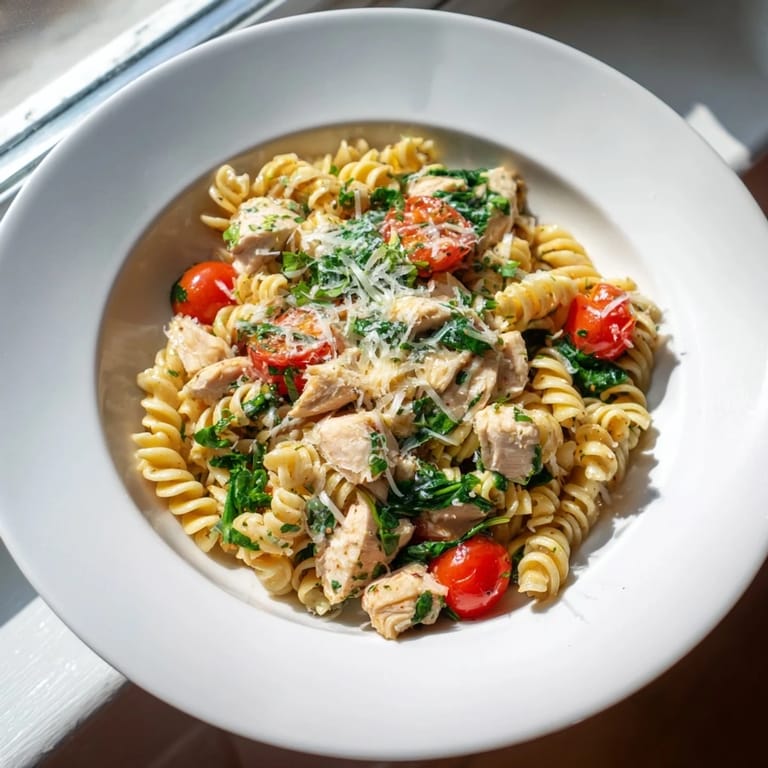
 My eight-year-old asked for seconds without complaining about vegetables, which in our house counts as a certified miracle. That's when I knew this wasn't just a quick dinner solution—it was actually something special.
Why One-Pan Meals Changed My Cooking Life
The beauty of cooking everything together in one pan isn't just about cleanup, though that's definitely a perk. When pasta cooks directly in broth instead of water, it absorbs all those flavors and becomes this tender, flavorful thing that plain pasta could never be. It's like the difference between listening to a song on low volume and turning it up to actually hear all the details.
The Lemon Magic You Didn't Know You Needed
Lemon is one of those ingredients that makes people think you're a better cook than you actually are. The zest goes in at the beginning so the oils infuse the entire dish, while the fresh juice at the end acts like a brightness knob, lifting everything and making flavors pop. I learned this the hard way by squeezing lemon in at the start once and wondering why nothing tasted as vibrant—timing matters.
Customizing This Dish for Your Crowd
The recipe as written feeds four people generously, but it's incredibly flexible depending on what you have or what you're in the mood for. I've made it with turkey when chicken was on sale, swapped in orzo when I was out of penne, and once even used vegetable broth and extra spinach when I wanted something lighter. The structure stays the same; the details are your playground.
- Try adding sun-dried tomatoes, artichoke hearts, or roasted red peppers if you want more texture and complexity.
- Fresh dill works beautifully if you're not a basil person, and it pairs especially well with lemon.
- Swap the Parmesan for feta if you want a tangier finish, though you might need slightly less salt.
 Save Pin
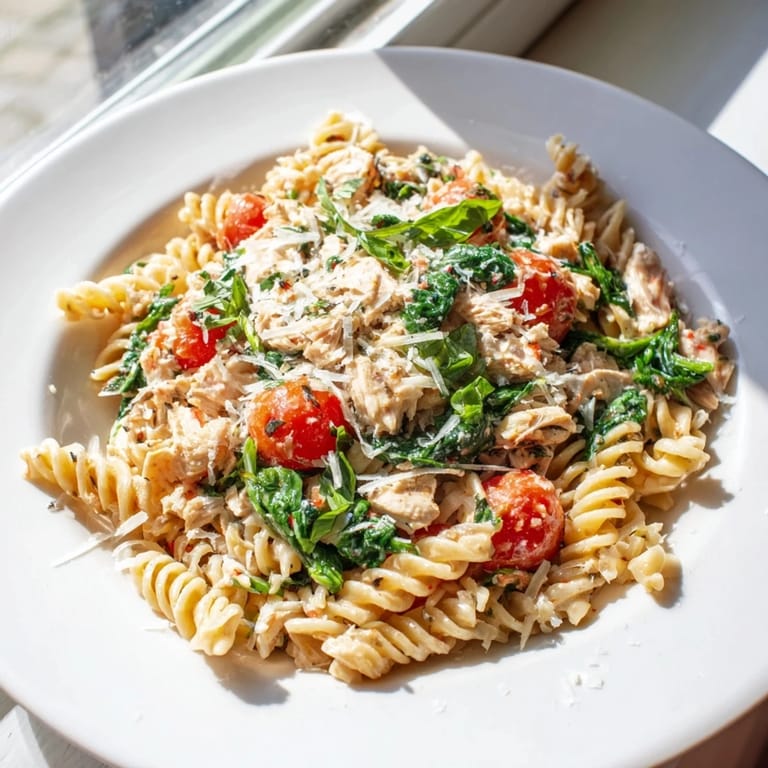
 This dish has quietly become the meal I reach for when I want to prove to myself that I can feed my family something delicious without turning the kitchen into a disaster zone. It's comfort food that doesn't feel heavy, weeknight cooking that tastes intentional, and proof that sometimes the simplest approach is exactly what you needed all along.
Cooking Questions & Answers
- → Can I use a different pasta shape?
Yes, any medium-sized pasta works well. Penne, fusilli, farfalle, or even orzo absorb the broth beautifully. Avoid tiny shapes like ditalini as they cook too quickly.
- → How do I prevent overcooked pasta?
Stir occasionally and check doneness around 8-10 minutes. The pasta continues cooking as the liquid reduces. Aim for al dente—it should have slight resistance when bitten.
- → What if I don't have fresh herbs?
Dried herbs are already included in the ingredients. Add fresh basil or parsley at the end if available, but dried oregano and thyme provide excellent flavor on their own.
- → Can I make this ahead?
Best served fresh, but leftovers keep refrigerated for 3 days. Reheat gently with a splash of broth to restore moisture. The pasta may absorb excess liquid overnight.
- → What are good protein substitutes?
Turkey breast, shrimp, or firm tofu work wonderfully. Adjust cooking times—shrimp needs only 2-3 minutes, tofu requires gentle handling to avoid breaking apart.
- → How can I make this dairy-free?
Omit Parmesan or use a dairy-free alternative. The dish remains flavorful with lemon, herbs, and broth. Nutritional yeast adds savory depth if desired.