 Save Pin
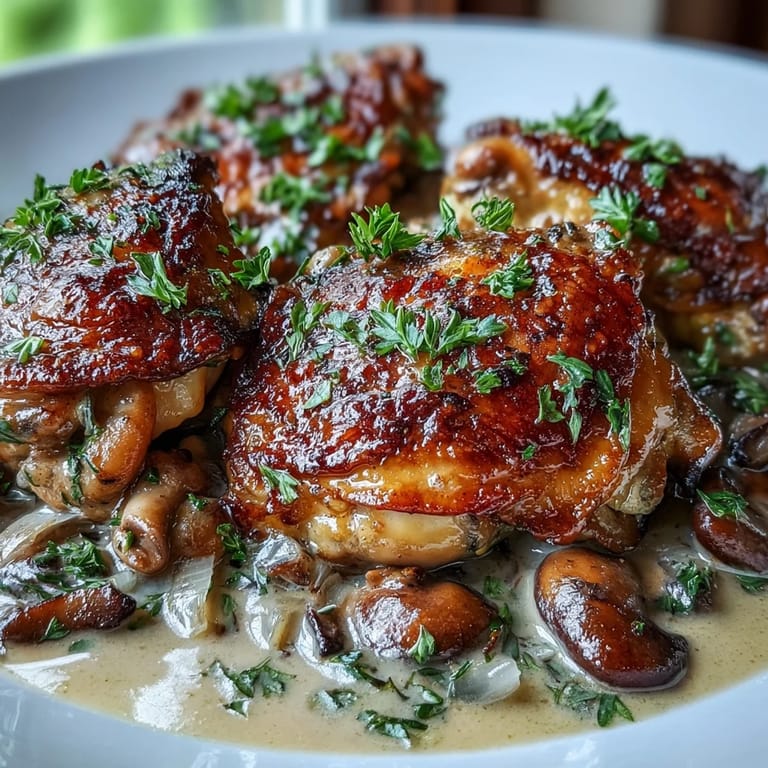
 The smell of rosé simmering with garlic and mushrooms hit me the moment I cracked open that bottle, and I knew this dish would be different from the heavy red-wine braises I grew up with. I was testing a lighter version of coq au vin on a warm spring evening when the thought of something rich felt wrong. The rosé gave everything a delicate blush and a brightness that made the whole pot sing. My friend tasted it straight from the spoon and said it felt like France in May, not deep winter.
I made this for a small dinner party once and plated it over buttery fingerling potatoes with a handful of parsley scattered on top. One guest, who claimed she only liked chicken grilled, went back for seconds and asked if I had the recipe written down anywhere. That night I realized this dish had a kind of quiet magic, the sort that wins people over without trying too hard. It became my go-to whenever I wanted to impress without the pressure of something overly fussy.
Ingredients
- Bone-in, skin-on chicken pieces: Thighs and drumsticks stay juicy and hold up beautifully to long braising, plus the bones add body to the sauce.
- Dry rosé wine: Choose something you would actually drink, not cooking wine, the flavor becomes the backbone of the whole dish.
- Olive oil: A good fruity olive oil helps the chicken brown evenly and adds a subtle richness to the base.
- Onion, garlic, carrots, leek: These aromatics build sweetness and depth as they soften into the wine.
- Cremini or button mushrooms: Quartered mushrooms soak up the sauce and add earthy contrast to the bright wine.
- Tomato paste: Just a spoonful deepens the color and adds a hint of umami without making the sauce taste like tomato.
- All-purpose flour: Optional but helpful if you want a thicker, more velvety sauce that clings to each piece.
- Heavy cream: This is what transforms the braising liquid into something luscious and restaurant-worthy.
- Bay leaf, thyme, rosemary: Classic French herbs that perfume the pot as everything simmers together.
- Fresh parsley: A bright green finish that cuts through the richness and makes the plate look alive.
Tired of Takeout? 🥡
Get 10 meals you can make faster than delivery arrives. Seriously.
One email. No spam. Unsubscribe anytime.
Instructions
- Season and prep the chicken:
- Pat each piece completely dry with paper towels so the skin can crisp up when it hits the hot oil. Season generously with salt and pepper on all sides.
- Brown the chicken:
- Heat olive oil in a large Dutch oven over medium-high heat until shimmering, then brown the chicken in batches without crowding the pot, about 5 minutes per batch until the skin is golden. Transfer to a plate and set aside.
- Sauté the aromatics:
- In the same pot with all those beautiful browned bits, add onions, carrots, and leek, stirring occasionally until they soften and start to caramelize, about 4 to 5 minutes. Toss in the mushrooms and cook another 3 minutes until they release their moisture.
- Build the flavor base:
- Stir in the minced garlic and cook for 1 minute until fragrant, then add the tomato paste and let it cook for another minute, stirring constantly so it darkens slightly and loses its raw edge.
- Thicken with flour:
- If using flour, sprinkle it over the vegetables and stir well to coat everything evenly. This will help thicken the sauce as it simmers.
- Deglaze and braise:
- Pour in the rosé wine and use a wooden spoon to scrape up all the caramelized bits stuck to the bottom of the pot. Nestle the browned chicken back in, add the bay leaf, thyme, and rosemary, then bring everything to a gentle simmer, cover, and reduce heat to low for 45 minutes until the chicken is fall-apart tender.
- Finish with cream:
- Remove the bay leaf and herb sprigs, stir in the heavy cream, and let the sauce simmer uncovered for 5 to 10 minutes until it thickens slightly and turns glossy. Taste and adjust seasoning with more salt and pepper if needed.
- Serve and garnish:
- Spoon the chicken and sauce onto plates or a serving platter and scatter fresh chopped parsley over the top. Serve immediately while everything is hot and fragrant.
 Save Pin
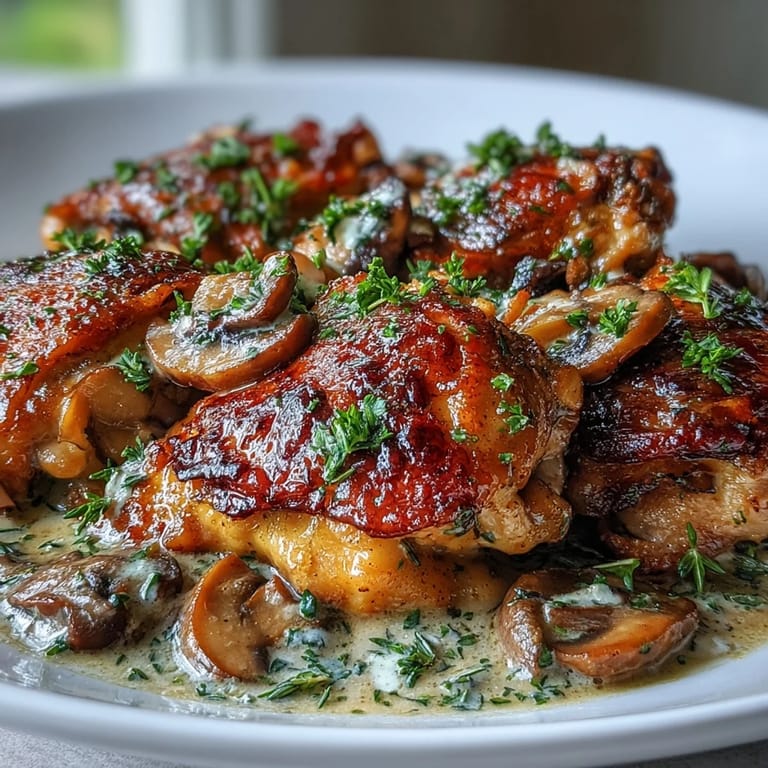
 One rainy Saturday I served this with a crusty baguette and a simple green salad, and my partner declared it one of the best meals I had ever made. We sat at the table longer than usual, sopping up every bit of that pink sauce with torn bread, talking about nothing and everything. It was one of those nights where the food made the moment feel bigger than it was, and I have chased that feeling in the kitchen ever since.
Pairing Suggestions
This dish begs for something starchy and buttery to soak up all that creamy rosé sauce. I love serving it over smashed fingerling potatoes or a pile of buttered egg noodles, but crusty bread or even a simple rice pilaf works beautifully. A crisp green salad with a sharp vinaigrette on the side cuts through the richness and keeps the meal feeling balanced and fresh.
Make-Ahead and Storage
This braise actually tastes better the next day after all the flavors have had time to settle and marry in the fridge. Let it cool completely, then store it in an airtight container for up to three days and reheat gently on the stovetop with a splash of wine or stock to loosen the sauce. You can also freeze it for up to two months, though the cream may separate slightly when reheated, just whisk it back together over low heat and it will come back to life.
Variations and Swaps
If you want a richer, more traditional flavor, swap half the rosé for chicken stock and add a splash of cognac or brandy when you deglaze the pot. For a lighter version, use half-and-half or crème fraîche instead of heavy cream, it will still be creamy but not quite as indulgent. You can also toss in pearl onions, bacon lardons, or even a handful of fresh tarragon at the end for a different spin on the classic flavors.
- Try white wine instead of rosé for an even lighter, more delicate sauce.
- Add a pinch of saffron threads with the cream for a luxurious golden hue and subtle floral note.
- Swap chicken for rabbit or pork shoulder if you want to experiment with different proteins that love a slow braise.
 Save Pin
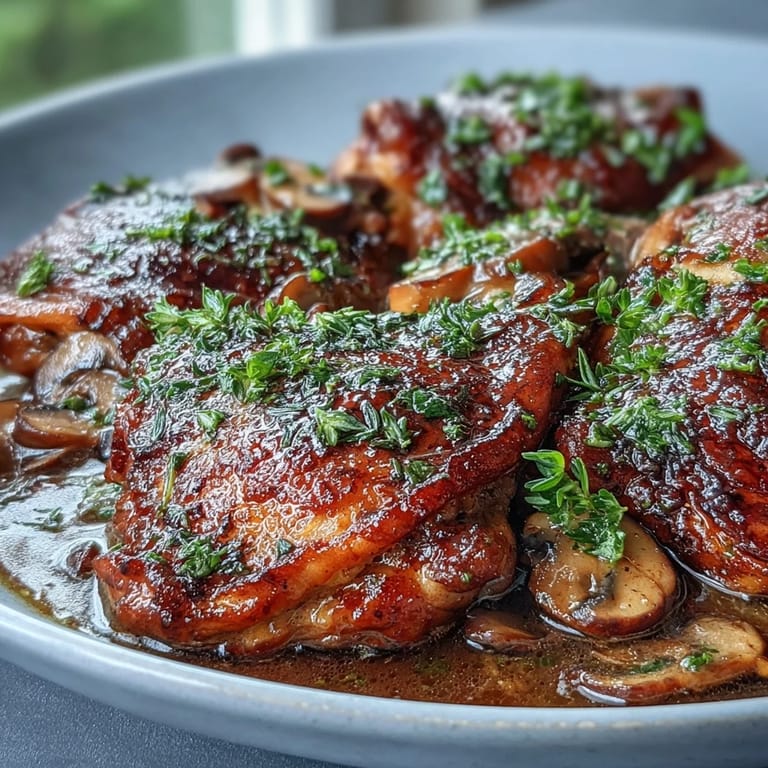
 This dish has become my answer to the question of what to cook when you want something special but approachable, elegant but not precious. I hope it finds a place in your rotation the way it has in mine.
Cooking Questions & Answers
- → Can I use chicken breasts instead of thighs and drumsticks?
Yes, but reduce cooking time to 30-35 minutes as breasts cook faster and can dry out. Bone-in, skin-on pieces work best for maintaining moisture and flavor during braising.
- → What type of rosé wine should I use?
Choose a dry rosé wine that you would enjoy drinking. Avoid sweet or overly fruity varieties. A Provence-style rosé or dry Spanish rosado works wonderfully for this dish.
- → Can I make this dish ahead of time?
Absolutely. Prepare through step 7, cool completely, and refrigerate up to 2 days. Reheat gently, then add cream and finish as directed. The flavors deepen beautifully overnight.
- → How can I thicken the sauce without flour?
Simply simmer the sauce uncovered longer to reduce and concentrate. Alternatively, remove the chicken and reduce the liquid by half before adding cream for a naturally thickened sauce.
- → What can I substitute for heavy cream?
Crème fraîche adds tangy richness, while half-and-half creates a lighter sauce. For dairy-free, use full-fat coconut cream, though the flavor profile will shift slightly.
- → Can I add bacon or pancetta to this dish?
Yes, render 4 oz diced bacon or pancetta before browning the chicken. Use the fat for browning and add the crispy bits back with the vegetables for extra depth and smokiness.