 Save Pin
 My first encounter with Czech goulash and crispy potato strips happened on a gray November afternoon in Prague, when a friend's grandmother wordlessly set a steaming bowl in front of me—no fuss, no explanation needed. The paprika-scented steam alone made me understand why this dish had survived centuries and borders. Years later, I finally asked her for the method, and what struck me wasn't just the technique but how she described it: not as a recipe, but as a rhythm. That rhythm is what I've tried to capture here.
I remember cooking this for my partner on a night when the kitchen felt too quiet, and somehow the smell of caraway seeds blooming in hot oil changed the whole mood of the house. By the time those potato strips hit the hot oil, we were both laughing at how much noise they made, and it felt like the dish itself was announcing dinner. That crackling sound became my favorite part—proof that something ordinary was transforming into something golden.
Ingredients
- Beef chuck, cut into 2.5 cm cubes (800 g): This cut has enough marbling and connective tissue to become impossibly tender after two hours of braising, while cheaper cuts risk turning stringy or tough.
- Sweet Hungarian paprika (2 tbsp): The soul of the dish—use real Hungarian paprika, not the dusty supermarket version, or the sauce will taste flat and one-dimensional.
- Caraway seeds (1 tsp): These tiny seeds taste like they belong nowhere until they're toasted in hot oil, then suddenly everything makes sense.
- Onions, finely chopped (2 large): They should cook until golden and soft enough to dissolve into the sauce, not crispy or translucent.
- Garlic, minced (3 cloves): Added after the paprika to prevent burning, which would turn the whole pot bitter.
- Tomato paste (2 tbsp): This concentrates and deepens the sauce, but don't skip the brief cooking time or it tastes metallic.
- Beef broth (750 ml): Use homemade or good-quality stock—the goulash will taste as good as your broth allows.
- Bell pepper, diced (1): Added halfway through so it stays slightly firm instead of dissolving completely into the sauce.
- All-purpose flour or gluten-free flour (1 tbsp): Whisked into the hot meat and vegetables, this thickens the sauce without the cloudiness of cornstarch.
- Potatoes, peeled (4 large): Waxy varieties hold their shape better during frying, but starchy potatoes crisp more dramatically.
- Vegetable oil for frying (500 ml): Keep the oil temperature steady, or the strips will absorb grease instead of crisping up.
- Marjoram, salt, pepper, and bay leaf: These are the quiet notes that make the paprika sing without competing.
Tired of Takeout? 🥡
Get 10 meals you can make faster than delivery arrives. Seriously.
One email. No spam. Unsubscribe anytime.
Instructions
- Build your base:
- Heat oil in a heavy pot and let the onions turn golden and fragrant, which takes about eight minutes and shouldn't be rushed. This patience creates the foundation that everything else rests on.
- Bloom the spices:
- Once the garlic hits the pan with the caraway seeds and paprika, stir constantly for just one minute—you're waking up the spices, not burning them. The moment the paprika hits hot oil, its oils activate and transform.
- Sear the beef:
- Brown the meat on all sides for about five minutes, giving it color and creating fond on the bottom of the pot that will enrich the final sauce. Don't crowd the pan or the beef will steam instead of sear.
- Layer in flavor:
- Add tomato paste, marjoram, salt, pepper, and the bay leaf, then dust everything with flour and stir until the meat is coated. The flour will catch on the wet surfaces and begin thickening as it cooks.
- Build the sauce:
- Add the bell pepper and pour in beef broth, then bring to a boil before dropping the heat to low and covering the pot. This low simmer for 1.5 to 2 hours is where the magic happens—the beef becomes fork-tender and the sauce develops depth.
- Prepare the potatoes:
- While the goulash works, cut peeled potatoes into thin matchsticks using a mandoline, then rinse them in cold water and pat completely dry. Wet potatoes will splatter and steam instead of fry.
- Fry until golden:
- Heat oil to 180°C (350°F) and fry the potato strips in batches for three to four minutes until they're deep golden and make a satisfying crunch when you break one. Drain on paper towels and season immediately with salt.
- Final check:
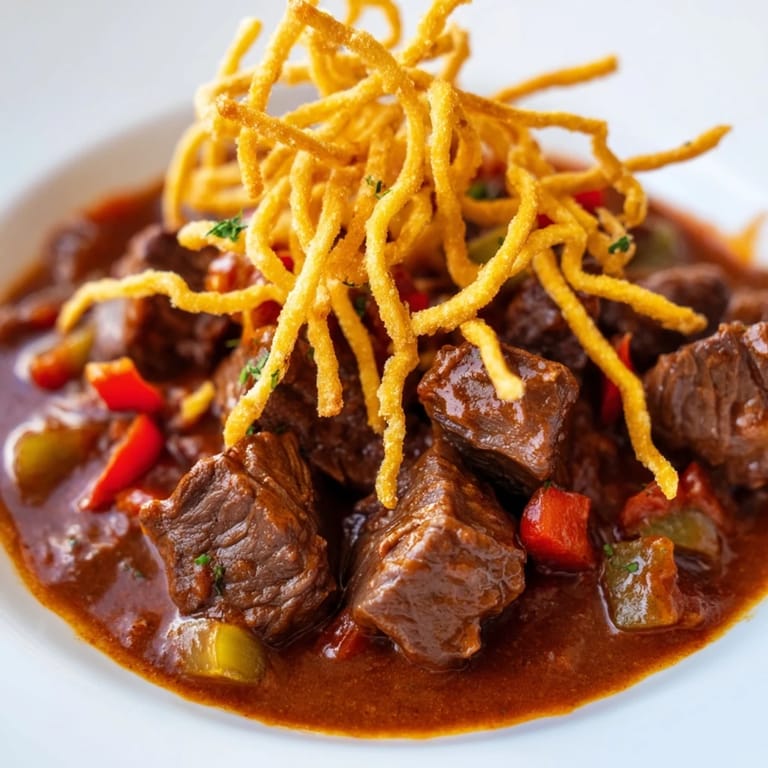
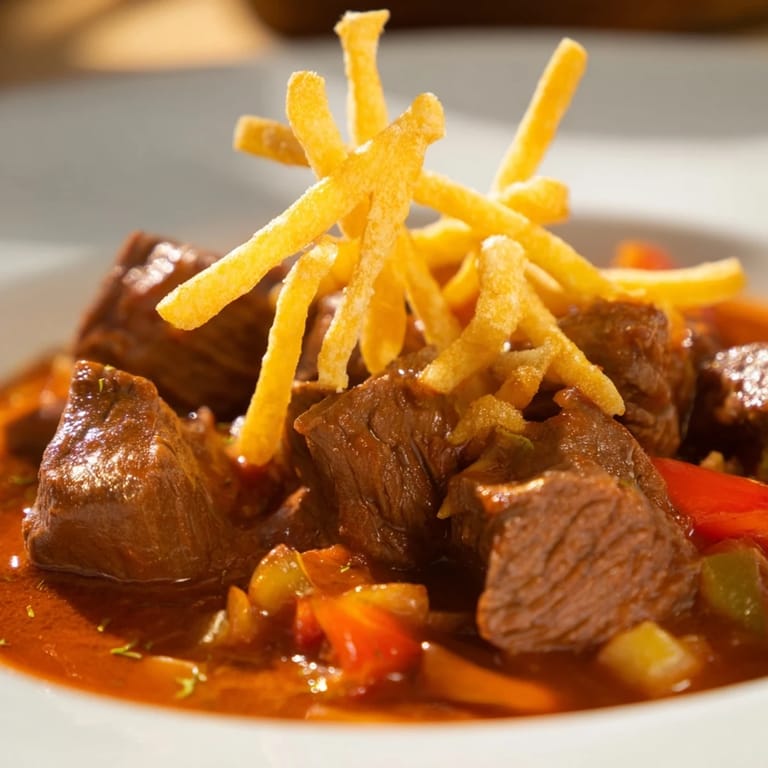
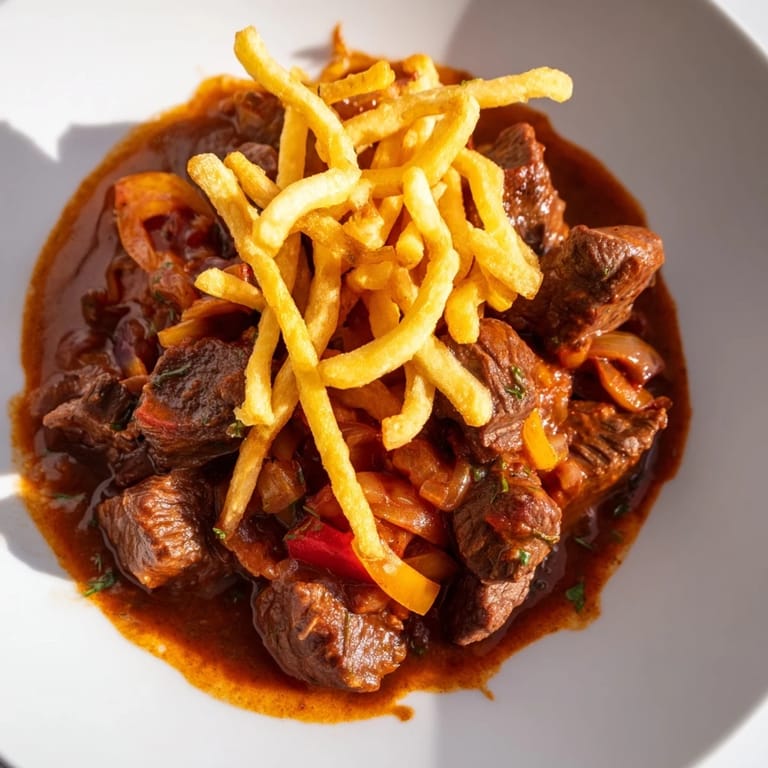
- Remove the bay leaf from the goulash, taste the sauce, and adjust the seasoning if needed—sometimes it needs a pinch more salt or a crack of fresh pepper to come alive. Serve the hot goulash in bowls topped with a generous handful of those crispy potato strips.
 Save Pin
 I learned the real magic of this dish one winter when my mother watched me cook it and said nothing until I tasted it with her, and then she mentioned quietly that she'd always thought goulash was lonely without the potato strips—that the crunch was the part that made you want another bowl. That observation changed how I understood the dish, and now every time I make it, I think about how texture and taste are having a conversation.
The Paprika Question
There's a moment early in cooking this dish when paprika transforms from a spice to an experience, and it happens only if you use real Hungarian paprika and add it to hot oil with enough garlic and caraway seeds already warming. The dusty supermarket paprika won't give you that deep, wine-like undertone that makes people ask what you did differently. I once made this with the wrong paprika and added more of it thinking it would help, and instead the whole pot tasted like sadness. Now I understand that good paprika is worth seeking out, and a little of the real thing goes further than a lot of the forgettable version.
Why the Beef Gets So Tender
Beef chuck contains collagen that, when braised low and slow for nearly two hours, transforms into gelatin and gives the sauce that silky, almost glassy finish. The acid in the tomato paste and the alcohol in the browning process help break down the connective tissue, while the low temperature prevents the meat from seizing up and toughening. This is why rushing the goulash by turning up the heat doesn't save time—it only hardens the meat and breaks the spell the slow cook creates.
The Potato Strip Mastery
Crispy potato strips require cold water rinses to remove excess starch, thorough drying to prevent splattering, and consistent oil temperature to prevent them from absorbing grease instead of crisping. The mandoline is faster but a very sharp knife works perfectly if you're careful and meditative about the cutting. Season the strips immediately after draining while they're still hot, so the salt sticks instead of sliding off, and eat them within a few minutes of frying—they're never better than when they're still crackling.
- If the oil temperature drops below 175°C while frying, remove the pan from heat for a minute to let it recover.
- Batch frying matters because overcrowding drops the oil temperature and creates sad, greasy strips instead of golden, crispy ones.
- Save any leftover potato strips for a late-night snack, or crumble them into a fresh salad the next day.
 Save Pin
 This dish has a way of becoming more than dinner—it becomes an excuse to gather people around a table and feed them something that tastes like it took more care than it actually did. That's the real gift of goulash.
Cooking Questions & Answers
- → What cut of beef is best for Czech goulash?
Beef chuck cut into cubes works best as it becomes tender and flavorful after slow cooking.
- → How do I get the potato strips crispy?
Cut potatoes into thin strips, rinse and dry well, then fry in hot oil until golden and crisp.
- → Can I make this dish gluten-free?
Yes, use gluten-free flour or omit flour for thickening to keep it gluten-free.
- → How long should the goulash simmer?
Simmer for 1.5 to 2 hours until beef is very tender and sauce thickens.
- → What spices add authentic flavor to this dish?
Sweet Hungarian paprika, caraway seeds, and marjoram create the classic flavor profile.
- → What are good serving suggestions?
Serve hot topped with crispy potato strips, optionally with sour cream and fresh parsley.