 Save Pin
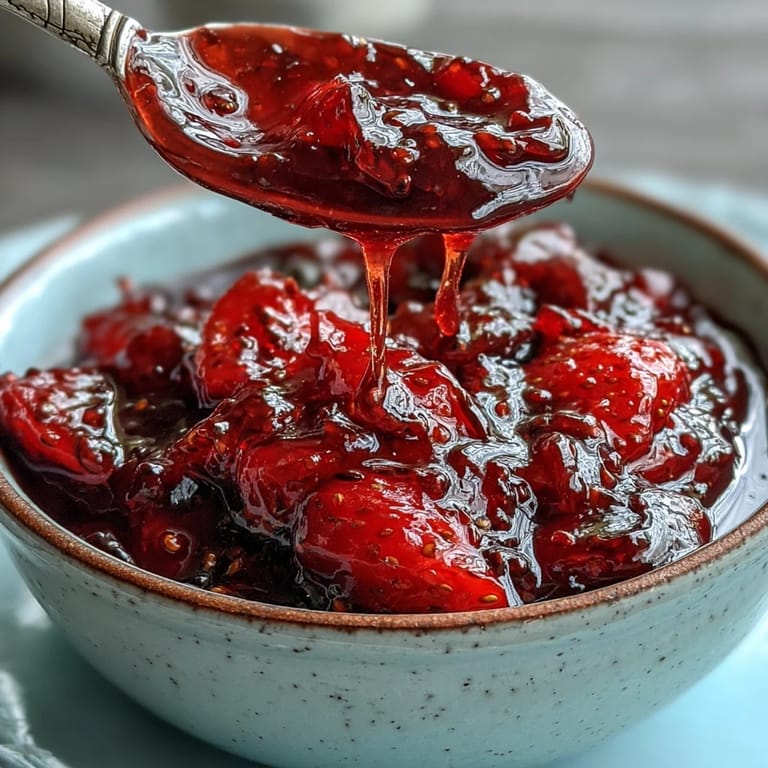
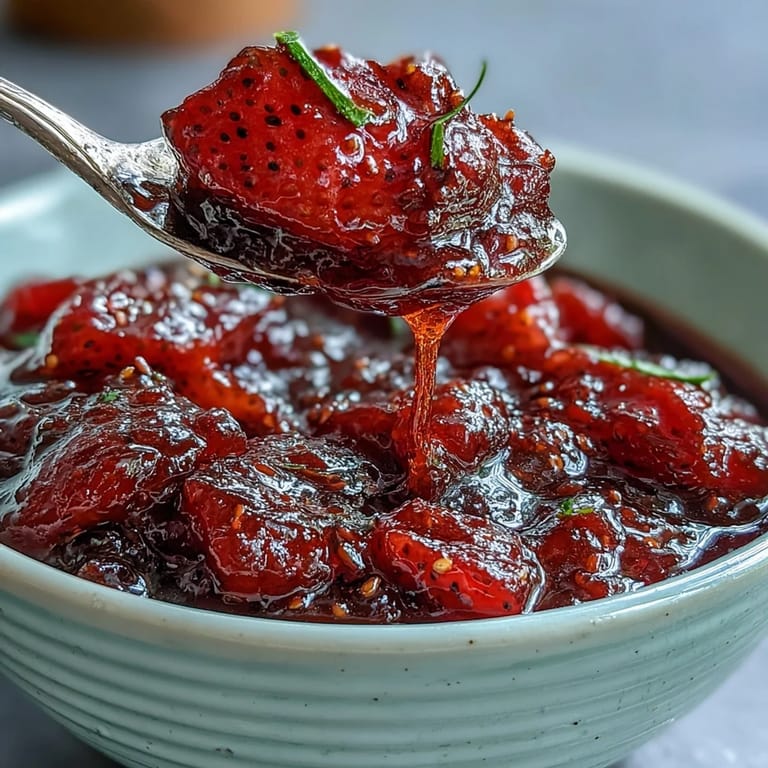
 As soon as I smell strawberries warming on the stove, I know the season has arrived. There’s a distinct quiet in my kitchen when I make this cottagecore strawberry jam—save for the gentle bubble of fruit and the tap of a wooden spoon against the pot. One spring, with rain tapping at the window and a pile of berries begging not to be wasted, I decided to experiment with just a handful of simple ingredients. The result felt like bottling sunshine and the pleasure of doing something by hand. There’s no feeling quite like spooning homemade jam onto warm toast and knowing it’s entirely your handiwork.
Last summer, I offered a still-warm jar to a friend who'd stopped by on her bike—the steam rose as I opened it and we smeared it onto thick slices of crusty bread on the porch. Her surprised laugh at the vanilla aroma reminded me how small, thoughtful touches make recipes memorable. Even my brother, who “doesn’t like jam,” now requests a jar whenever I see him.
Ingredients
- Fresh strawberries (500 g): Go for ripe, fragrant berries—they carry all the sweet intensity and the jam’s color and flavor depend on their quality. I always taste a berry before using it to check it’s not too tart.
- Granulated sugar (250 g): Don’t worry, this isn’t overly sweet; sugar helps the jam set as well as preserve it, and I’ve found weighing it out gives best results.
- Freshly squeezed lemon juice (2 tbsp): This brightens things up and helps the jam gel, so don’t skip it—bottled juice just doesn’t hit the same.
- Vanilla bean, split and scraped, or vanilla extract (optional): That whiff of vanilla rounds everything out, but sprinkle in the seeds, not the pod, if you want to keep the texture perfectly smooth.
Tired of Takeout? 🥡
Get 10 meals you can make faster than delivery arrives. Seriously.
One email. No spam. Unsubscribe anytime.
Instructions
- Prep the strawberries:
- Tip the hulled and halved strawberries into a heavy-bottomed saucepan, then gently mash about half of them with a potato masher, leaving chunks for a rustic feel.
- Add sugar and lemon:
- Pour in the sugar and lemon juice, stirring until everything glistens. Let it stand for 10 minutes—the berries will surrender their juice and the scent will start to bloom.
- Optional vanilla magic:
- If you’re feeling fancy, add the vanilla seeds and pod now for warmth and a subtle hint of sweetness.
- Bring to a simmer:
- Set the pan over medium heat and stir gently as the sugar dissolves. When it begins to bubble, skim off any pale foam trying to escape up the sides.
- Boil and thicken:
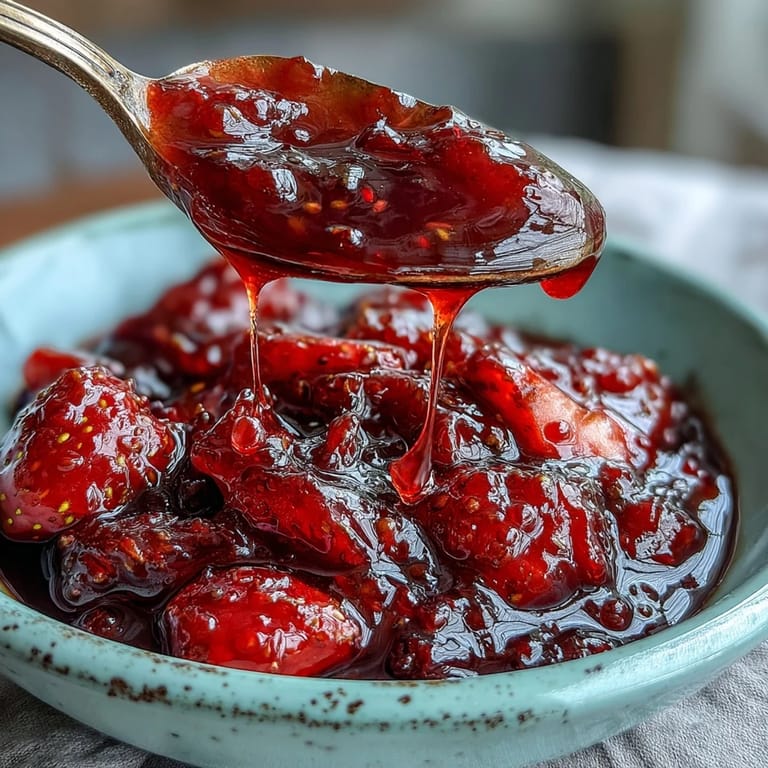
- Let the jam cook, stirring often, until it thickens and reaches 105°C (220°F) or passes the wrinkle test on a chilled plate. The color will glow and the kitchen will smell like a summer afternoon.
- Finish and jar:
- Take the jam off the heat, discard the vanilla pod, and let it settle for 5 minutes before ladling into sterilized jars—work carefully so you don’t burn yourself on bubbling sweetness.
- Cool and store:
- Seal the jars, admire your handiwork as they cool to room temperature, then pop them in the fridge. Use the jam within a month for best results.
 Save Pin
 One quiet morning, the jars lined up on my counter still warm, my cat decided to nudge a jar, sending it toppling—luckily, it survived with a wobble. I realized—even tiny mishaps become part of the story, and this jam has sparked more than one unexpected kitchen grin.
What to Do with Homemade Strawberry Jam
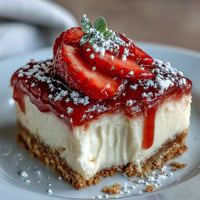
Other than the obvious (layering generously onto buttered toast), try folding a spoonful into yogurt or swirling it over freshly baked scones. My favorite hack is using it as a glaze for cakes or stirring it into the middle of thumbprint cookies—it makes everything feel like a special occasion with zero extra effort.
Sterilizing Jars Without Fuss
I used to think sterilizing jars was daunting until I realized you can just wash them well, then pop them (and their lids) in a preheated oven for ten minutes. As long as you fill them while both jam and jar are hot, you’re good to go for a month—and your kitchen will smell as welcoming as a bakery to boot.
Taking Your Jam to the Next Level
Occasionally I’ll tuck in a sprig of fresh thyme or basil for a herbal note that surprises everyone. Once, I drizzled the jam over lemon ice cream on a whim and the combination was magic. I even decorate the jars with bits of fabric and twine if giving them away—no label needed, everyone recognizes the homemade touch.
- Keep a thermometer handy if you’re nervous—precision helps.
- If you forget the vanilla, don’t stress, the berries shine on their own.
- Always test the set on a chilled plate, trust me—it’s worth the extra thirty seconds.
 Save Pin
 May your batch sparkle with the brightness of fresh strawberries and fill your kitchen with a happiness you can spoon onto anything. Here’s hoping each jar is the start of a new tradition.
Cooking Questions & Answers
- → How can I tell when the jam has set?
Use a chilled plate test: spoon a little jam onto a cold plate, push it with your finger—if it wrinkles and holds shape it's set. A candy thermometer reading around 105°C (220°F) also indicates the setting point.
- → Can I use frozen strawberries instead of fresh?
Yes. Thaw and drain any excess liquid, then proceed. Cooking time may be slightly shorter because frozen berries will release juices more quickly once heated.
- → Why let the berries sit with sugar before cooking?
Macerating for 10 minutes helps the sugar draw out juices and soften the fruit, improving texture and reducing overall cooking time while concentrating flavor.
- → Is a candy thermometer necessary?
It's helpful for precision, but not required. The chilled plate test is a reliable alternative if you don't have a thermometer.
- → How should I sterilize jars and store the finished jars?
Wash jars and lids in hot soapy water and either boil them or warm them in a hot oven. Fill jars with hot jam, seal immediately, cool at room temperature, then refrigerate. For shelf stability, process sealed jars in a 10-minute boiling water bath.
- → What flavor variations work well with this strawberry base?
Try adding a split vanilla bean for warmth, or a sprig of thyme or basil for herbal notes. Lemon zest or a touch of balsamic can heighten brightness and complexity.