 Save Pin
 My first lahmacun came straight from a street vendor in Istanbul, the kind of place where you watch them stretch the dough so thin it's almost translucent, then top it with that fragrant meat mixture that fills the entire lane with cumin and paprika. I was skeptical at first—it looked so delicate, almost like a pizza's younger sibling—but one bite and I understood why locals grab these by the handful. Years later, I finally cracked the code in my own kitchen, and honestly, homemade tastes even better when you nail that crispy-chewy balance.
I made these for a dinner party once, rolled them out assembly-line style while my friend chopped vegetables, and I'll never forget the sound of them hitting the hot stone—that immediate sizzle that meant everything was about to work out perfectly. The whole table went quiet for a moment, just eating, and then someone asked for seconds before finishing their first one.
Ingredients
- All-purpose flour (300 g): This is the foundation, and you want it fresh and dry—I learned the hard way that flour sitting open absorbs moisture and throws off your dough's texture completely.
- Warm water (180 ml): Temperature matters more than you'd think; too hot kills the yeast, too cold and nothing rises, so aim for that perfect bathwater feeling.
- Instant yeast (1 tsp): Don't skimp or substitute here—this is what gives you those magical bubbles that create the crispy-chewy contrast.
- Olive oil (2 tbsp for dough, 2 tbsp for topping): Good olive oil makes a real difference in both the dough's structure and the topping's richness.
- Ground lamb or beef (300 g): Lamb gives you that authentic, slightly gamey depth, but beef works beautifully too if that's what you prefer.
- Onion, garlic, tomato, and red bell pepper: Finely chopped, these become almost paste-like when cooked, adding sweetness and moisture to the meat.
- Tomato paste (2 tbsp): This concentrates the flavor and helps bind the topping, but a little goes a long way.
- Fresh parsley (2 tbsp): Adds brightness, so don't skip it or swap for dried.
- Cumin and paprika (1 tsp each): These are the soul of the dish—warm, slightly smoky, and absolutely essential.
- Chili flakes (optional): I add them for a gentle heat that builds as you eat, but leave them out if you prefer milder flavors.
Tired of Takeout? 🥡
Get 10 meals you can make faster than delivery arrives. Seriously.
One email. No spam. Unsubscribe anytime.
Instructions
- Bring your dough to life:
- Mix flour, sugar, and salt, then dissolve the yeast in warm water and combine everything with olive oil until a soft dough forms. Knead for about five to seven minutes—you'll feel it transform from shaggy to smooth and elastic under your hands. Cover it and let it rest for thirty minutes; you'll be amazed how it nearly doubles.
- Build your meat masterpiece:
- Combine the ground meat with all the finely chopped vegetables, tomato paste, herbs, and spices, then mix thoroughly until everything is evenly distributed. This is the flavor bomb that makes everything work, so don't rush it.
- Get your oven screaming hot:
- Preheat to 250°C (480°F), or whatever your oven's highest setting is, and place a pizza stone or heavy baking tray inside to get properly heated. This initial heat is what gives you that crispy, blistered bottom.
- Stretch your dough into thin dreams:
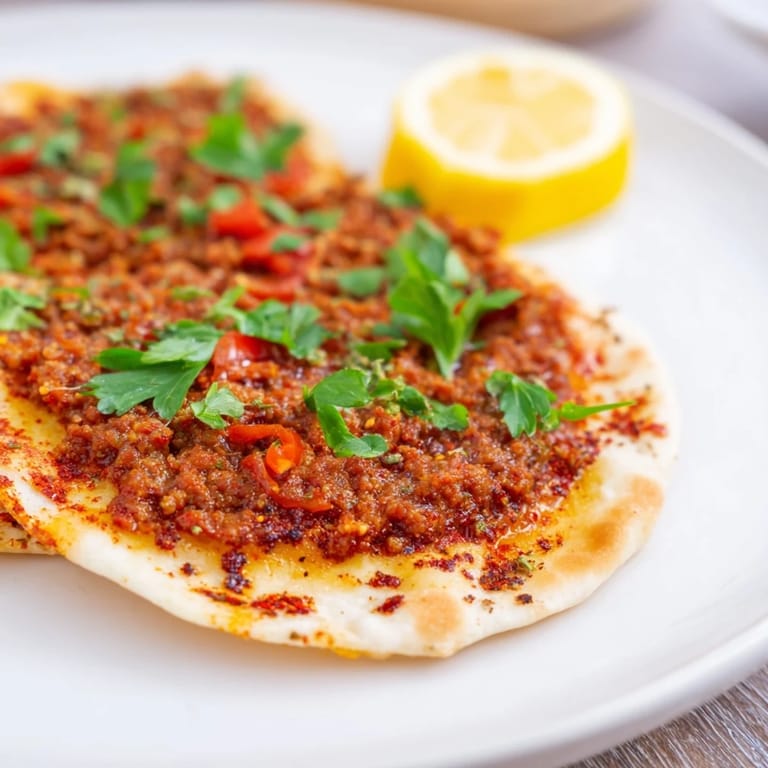
- Divide the risen dough into eight equal balls, then on a lightly floured surface, roll each one into a very thin oval or round about twenty centimeters across—the thinner you go, the crispier it gets. I use my knuckles as much as my rolling pin, almost like stretching pizza dough.
- Top with intention:
- Spread a thin, even layer of the meat mixture over each dough round, leaving a tiny border around the edges. Don't overload them or the topping won't cook through before the dough burns.
- Bake until magic happens:
- Carefully transfer to your hot baking tray or stone and bake for six to eight minutes, watching for the edges to turn golden and crispy while the topping firms up. You might work in batches depending on your oven size, and that's perfectly fine.
- Finish and serve immediately:
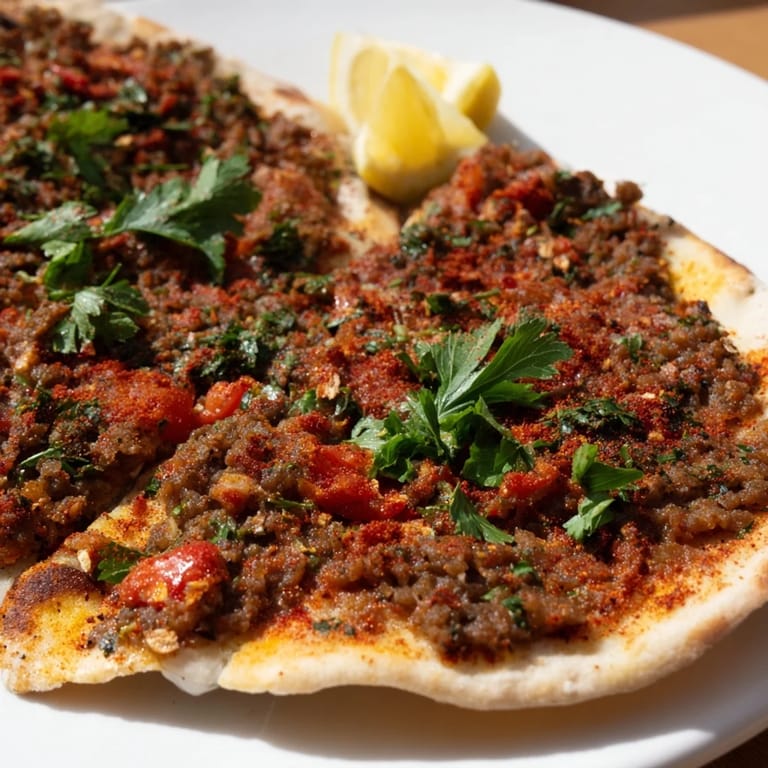
- Remove from the oven, garnish generously with fresh parsley and a squeeze of lemon, and optionally scatter some sliced onions and sumac on top. Serve right away while everything's still warm and the bottom is at peak crispiness.
 Save Pin
 I remember my Turkish friend's grandmother watching me pull the first batch out of the oven, nodding slightly when she tasted it, and saying something that translated roughly to "you finally understand." That small gesture meant more to me than any compliment because it meant the dish was speaking for itself, exactly as it should.
Rolling and Stretching Secrets
The stretching part intimidated me at first because I thought I'd accidentally tear the dough, but it's actually pretty forgiving once you get the feel for it. I found that letting the dough rest for a minute between rolls makes it cooperate better, and using the heel of my hand instead of just the rolling pin gives me more control. The goal is something you can almost see through—if you hold it up to the light, you should see the kitchen beyond it.
The Meat Mixture's Secret Life
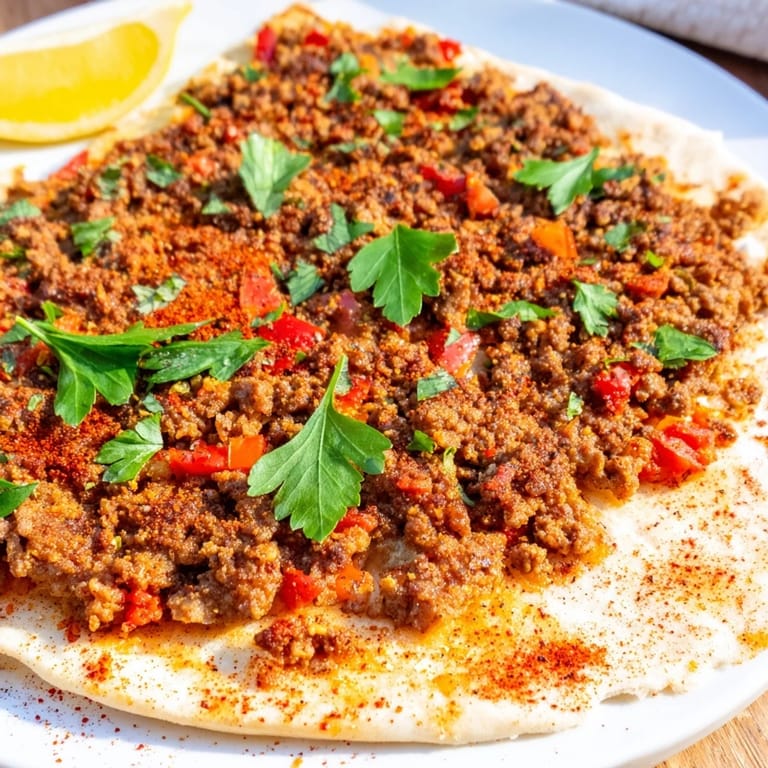
What makes the topping work is getting all those finely diced vegetables to break down slightly and create almost a paste-like consistency with the meat, rather than chunky bits. The combination of tomato paste, fresh tomato, and the natural juices from the onion creates this savory, umami-rich base that clings to every bite. One thing I noticed is that the spices taste more vibrant when you add them while the mixture is still raw, rather than cooking them separately first.
Serving and Variations That Actually Work
Lahmacun tastes best eaten fresh and warm, ideally with your hands, torn off piece by piece. You can roll them up Turkish-street-style with fresh herbs and sliced onions tucked inside, or eat them flat with a squeeze of lemon and a pinch of sumac. The tartness of the lemon cuts through the richness of the meat perfectly, and if you've never tried sumac, this is your moment to discover why it's worth keeping in your spice cabinet.
- Roll them up with fresh mint, parsley, and sliced onions for that authentic street-food experience.
- If you want to go vegetarian, swap the meat for a finely minced mushroom and walnut mixture with the same spices—it's genuinely delicious.
- Serve alongside ayran (that salty Turkish yogurt drink) or a chilled light red wine for something special.
 Save Pin
 Making lahmacun at home turns a casual weeknight into something that tastes like you know a secret. Once you nail the technique, you'll find yourself making these again and again, and suddenly you're the one people ask for the recipe.
Cooking Questions & Answers
- → What type of meat is traditional for lahmacun?
Ground lamb or beef is commonly used, offering a rich and savory flavor that pairs well with the spices and herbs.
- → How thin should the dough be rolled?
The dough should be rolled very thin, about 20 cm in diameter, to achieve a crisp and delicate texture after baking.
- → Can lahmacun be made vegetarian?
Yes, by substituting the meat with a mixture of minced mushrooms and walnuts, you can create a flavorful vegetarian alternative.
- → What oven temperature is ideal for baking lahmacun?
Baking at a very high temperature, around 250°C (480°F), ensures a quick bake resulting in crisp edges and a perfectly cooked topping.
- → What accompaniments enhance the flavors when serving?
Fresh lemon wedges, parsley, sliced onions, and sumac add brightness and balance the savory meat topping beautifully.