 Save Pin
 There's something about arranging a salad that feels more like creating than cooking. I discovered The Sunlit Glade on an afternoon when my farmer's market trip yielded an embarrassment of golden fruit—mangoes that seemed to glow under the kitchen lights, pineapples that smelled like summer itself. I started playing with the contrast of all that brightness against the deep, almost forest-like green of massaged kale, and suddenly I wasn't just making lunch, I was designing something I actually wanted to photograph.
I made this for my partner on a day when they'd been stuck inside working, and watching their face when I set down that bowl with the golden fruit glowing in the center—like tiny edible sunlight—made me realize food is really just a love language we can all understand. They called it restorative, which I think is the highest compliment a salad can receive.
Ingredients
- Ripe mango, diced: Choose ones that yield slightly to pressure and smell fragrant at the stem—this is where the sweetness lives, and it matters more than you'd think.
- Pineapple, diced: Fresh is non-negotiable here; the acidity cuts through richness and keeps the entire salad bright.
- Golden apple, diced: This adds a subtle tartness that keeps the fruit medley from tasting one-note.
- Yellow peach, sliced: Perfectly ripe peaches taste like they're already dessert, so don't settle for anything firm or mealy.
- Kale, stems removed, finely shredded: The massage step is where the magic happens—it transforms kale from tough to tender and coaxes out sweetness you didn't know was there.
- Baby spinach leaves: These provide delicate texture contrast and soften the intensity of the kale.
- Fresh parsley, chopped: The herbal backbone that keeps everything tasting fresh and alive.
- Fresh mint leaves, torn: Don't chop mint with a knife; tearing it by hand preserves the essential oils that make it taste like mint should.
- Fresh basil leaves, torn: Similar to mint, basil bruises easily—handle it gently and add it last.
- Extra-virgin olive oil: Taste it before committing; great oil tastes peppery and grassy and makes all the difference.
- Fresh lemon juice: Bottled will disappoint you; squeeze it fresh and strain out the pulp.
- Maple syrup: Balances the acid and adds depth without making anything taste sweet.
- Dijon mustard: The secret ingredient that brings everything into focus and emulsifies the dressing.
- Sea salt and freshly ground black pepper: Season as you taste; these aren't afterthoughts, they're what make flavors sing.
- Toasted pumpkin seeds: The textural anchor that turns this from salad into something you want to keep eating.
- Lemon zest: A shower of brightness that ties everything together visually and aromatically.
Tired of Takeout? 🥡
Get 10 meals you can make faster than delivery arrives. Seriously.
One email. No spam. Unsubscribe anytime.
Instructions
- Mix your dressing:
- In a small bowl, whisk together the olive oil, lemon juice, maple syrup, and Dijon mustard until they emulsify into something silky and cohesive. The mustard is doing more work than it seems—it's holding everything together. Season with salt and pepper, tasting as you go.
- Massage the kale:
- Pour half your dressing over the shredded kale in a large bowl and massage it with your hands for a minute or two until the leaves darken and soften. This isn't a polite toss; really work it, and you'll feel the texture change under your fingers.
- Build the green base:
- Add the spinach, parsley, mint, and basil to the kale and toss gently so the tender herbs don't bruise. The mixture should smell herbaceous and alive at this point.
- Compose the presentation:
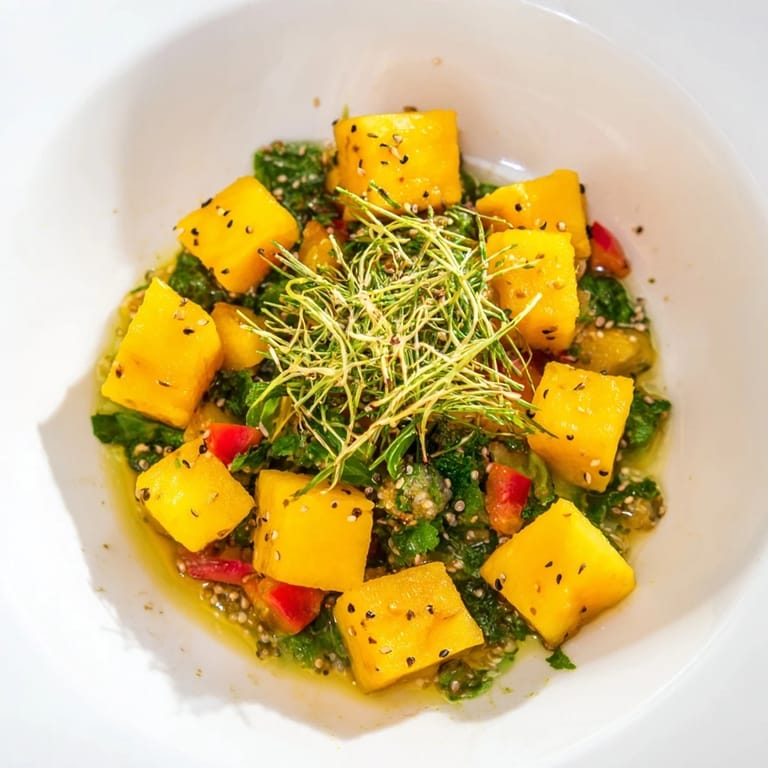
- Arrange the dressed greens around the outer edge of a wide, shallow serving bowl, creating a ring. This is where you get to play designer—make it as dense and forest-like as you want.
- Create the sunlit center:
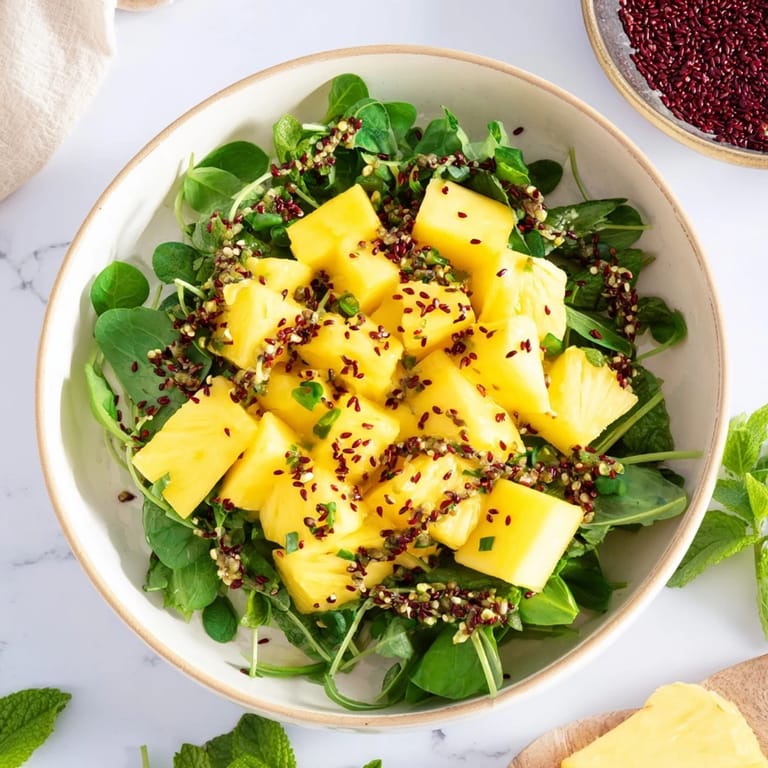
- Mound the diced mango, pineapple, apple, and peach in the middle, so the golden fruits glow against the green. The contrast is the whole point here.
- Finish and serve:
- Drizzle any remaining dressing over the fruit and greens, then scatter the toasted pumpkin seeds and lemon zest across everything. Serve right away so the kale stays tender and nothing gets soggy.
 Save Pin
 There was a moment while making this when sunlight actually hit the bowl and the whole thing lit up like it was glowing from within. That's when I understood why this salad works—it's not trying too hard, it's just being honest about what it is: simple, vivid, good.
The Art of Fruit Selection
The success of this salad hinges entirely on fruit that's ripe but still firm enough to hold its shape. A soft mango will collapse into mush, while an underripe one tastes like an insult. Spend the extra thirty seconds at the market squeezing and sniffing; your nose knows better than your eyes. The smell at the stem is non-negotiable—if it doesn't smell like the fruit, it's not ready. Ripe stone fruits like peaches should have some give when you press them gently, and the fragrance should be unmistakable. This isn't about perfection; it's about choosing fruit at its actual peak, not just close to it.
Why This Arrangement Matters
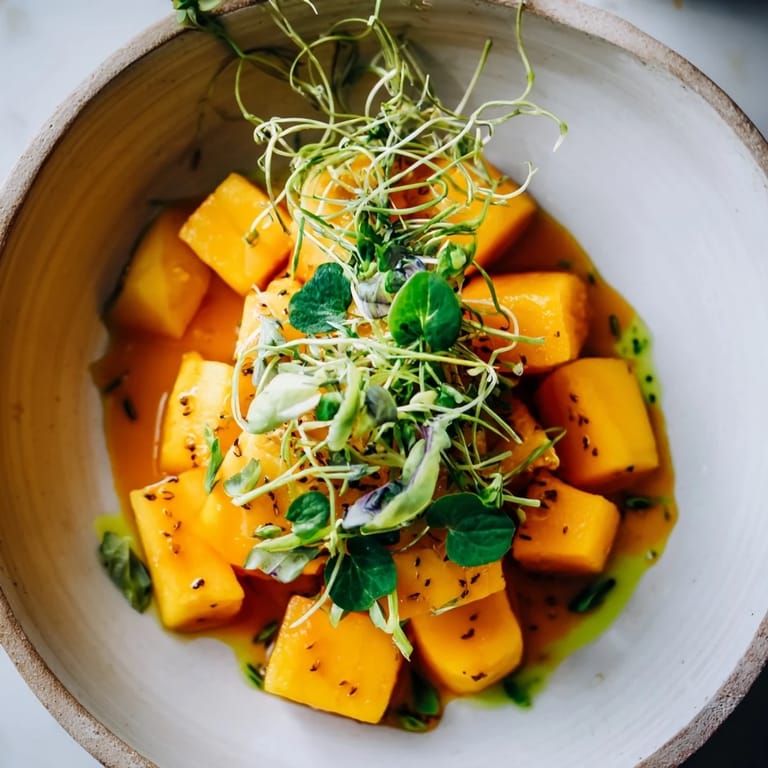
The presentation isn't decoration—it's actually functional. By nestling the fruit in the center surrounded by greens, you're creating a visual hierarchy that makes people want to eat it. The eye travels inward, which naturally guides your fork toward the sweetness first, then the greens. It also means the greens stay cooler and fresher longer because they're not buried under warm fruit. On a hot day, this small architectural choice keeps everything crisp and alive. There's also something about the way the colors work together that makes the whole thing taste better than if you'd just tossed everything in a bowl—your brain processes beauty before your mouth tastes anything.
Making It Work for Different Moments
This salad is endlessly flexible without losing its soul. If you can't find perfect yellow peaches, substitute yellow nectarines or even yellow watermelon chunks. Golden kiwi works beautifully, as does papaya if you can source it ripe. Some days I add creamy avocado slices for richness, especially when I want something more substantial. On cooler evenings, I've served it at room temperature, which lets the flavors blend differently. The herb mix can shift too—cilantro is wonderful if you're feeding people who love it, and extra basil never hurts. The only thing I wouldn't change is the kale; it's the structural foundation that makes everything else work.
- Keep fruit and greens separate if you're making this a few hours ahead, then toss together just before serving.
- Toast your pumpkin seeds yourself rather than buying pre-toasted; the flavor is brighter and the texture stays crisp longer.
- If you're serving this for a crowd, double the dressing recipe and let people dress their own portions so it stays fresh on their plate.
 Save Pin
 This salad reminds me that some of the best meals are the ones that don't require any real cooking, just attention and arrangement. Make it when you want to celebrate something, even if that something is just a Tuesday afternoon and really good fruit.
Cooking Questions & Answers
- → What fruits are used in the Sunlit Glade?
The dish features diced mango, pineapple, golden apple, and yellow peach to create a vibrant yellow fruit center.
- → How is the kale prepared for the dish?
The kale is finely shredded and massaged with part of the dressing to soften its texture and enhance flavors.
- → Can I substitute any ingredients for the yellow fruits?
Yes, yellow kiwi or papaya can be used as substitutes for any of the yellow fruits listed.
- → What type of dressing complements the ingredients?
A blend of olive oil, lemon juice, maple syrup, Dijon mustard, salt, and pepper creates a balanced dressing that harmonizes the fruits and greens.
- → Are there any suggested garnishes for extra texture?
Toasted pumpkin seeds and lemon zest can be sprinkled on top to add crunch and a fresh citrus note.