 Save Pin
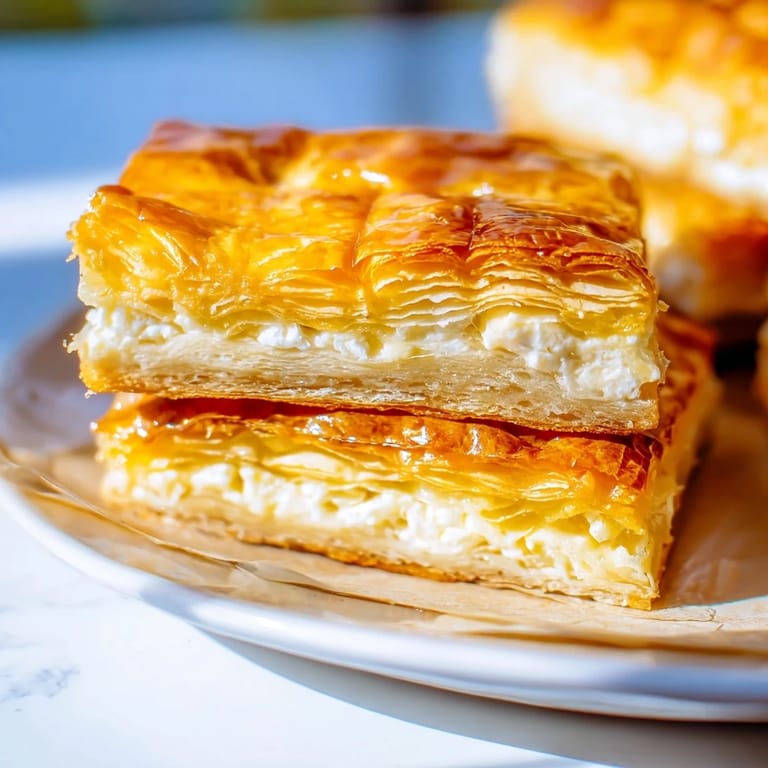
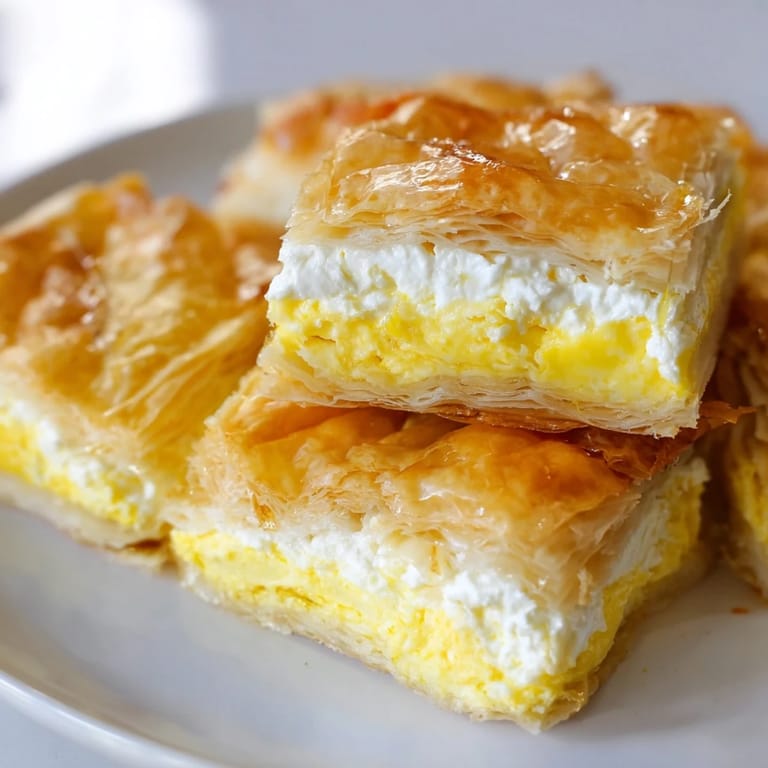
 My neighbor Marija taught me this recipe on a rainy Tuesday afternoon, standing in her kitchen while the smell of phyllo crisping in the oven made everything feel like a celebration. She moved the pastry brush with such deliberate care, creating this golden architecture of cheese and butter layers that seemed both simple and impossibly elegant. When I tasted that first warm square with its creamy filling and shattered pastry, I understood why gibanica appears at every Serbian table, from casual family dinners to holiday spreads. It's the kind of dish that tastes like it took hours, but your hands know better. Now I make it whenever I want to feel that same kitchen magic.
I brought this to a potluck last spring where everyone's contributions seemed to vanish into thin air, and somehow the gibanica sat there half-eaten while people hovered around it, taking small bites and looking surprised that a vegetarian dish could be this satisfying. A man who claimed he never ate cheese pie came back for seconds, and his wife nudged him with a knowing smile. That moment taught me that good food doesn't announce itself; it just quietly wins people over.
Ingredients
- Cottage cheese: The bulk of your filling, and it needs to be the kind with actual texture, not the ultra-smooth stuff that disappears into sadness when baked.
- Feta cheese: This is where the personality lives, so don't shy away from its saltiness; it's doing important work.
- Eggs: They bind everything together and somehow make the filling puff slightly in the oven, creating those little air pockets you'll love.
- Plain yogurt: The secret that makes the filling creamy without becoming greasy, and it adds a subtle tang that feta alone can't provide.
- Sunflower oil: Use good oil here because you'll taste it, especially on the phyllo where it becomes golden and crispy.
- Sparkling water: This seems strange, but it creates a lighter texture in the filling that sets it apart from heavier cheese pies.
- Phyllo dough: Thaw it completely and work gently; these sheets are delicate but more forgiving than people think once you accept that a few tears don't ruin anything.
Tired of Takeout? 🥡
Get 10 meals you can make faster than delivery arrives. Seriously.
One email. No spam. Unsubscribe anytime.
Instructions
- Prepare your workspace:
- Preheat to 180°C and grease your baking dish generously, then lay out all ingredients so you're not hunting for things mid-layer. Having everything ready makes this process feel calm instead of frantic.
- Mix the filling:
- Combine cottage cheese, feta, eggs, yogurt, oil, and sparkling water until smooth, letting the mixer do the work until there are no lumps. Taste it and adjust salt carefully, remembering that feta is already salty.
- Layer one:
- Brush three phyllo sheets with oil one at a time, letting each one settle into the dish before adding the next. This foundation prevents the filling from making the bottom layer soggy.
- Start the dance:
- Spread a generous spoonful of filling over the phyllo base, then add two or three more oil-brushed sheets, then more filling. You're essentially building a tower where each layer supports the next.
- Finish building:
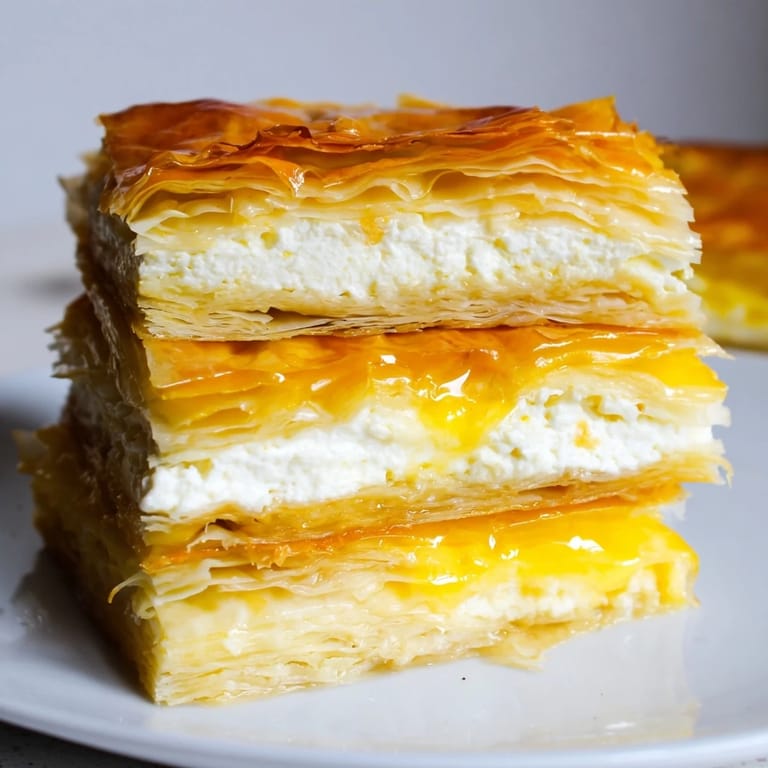
- Keep layering phyllo and filling until everything is used, ending with at least two phyllo sheets on top brushed with plenty of oil. If you want that restaurant finish, beat an egg yolk and brush it over the final layer.
- Score before baking:
- Cut the whole pie into squares or diamonds with a sharp knife now, before it bakes, so the heat can get into all the edges and crisp them. This also signals how big each serving will be, which matters more than you'd think.
- Bake until golden:
- Thirty-five to forty minutes at 180°C should give you edges that crackle when you touch them and a color somewhere between honey and amber. When you open that oven door, the smell alone will tell you if it's ready.
- Cool with patience:
- Ten minutes sounds short, but it lets the layers set so they don't collapse when you pick up a piece. Serve it warm or room temperature; both are right.
 Save Pin
 The first time I made this alone, I was convinced I'd somehow ruin it, but as the phyllo crisped and the filling puffed slightly, I realized I was standing in front of something I'd made with my own hands that actually looked professional. There's something quietly powerful about that moment when you open the oven and the dish looks like it belongs in a restaurant, not on your home stovetop.
Phyllo Dough: The Ingredient Everyone Overthinks
Phyllo intimidates people for no good reason. It's thin and delicate-looking, sure, but it's tougher than you think, and the oil you brush between layers is there specifically to forgive small mistakes. If a sheet tears, you cover it with filling or another layer of phyllo and move forward. The pastry is forgiving as long as you're gentle and confident. Thaw it properly, keep unused sheets covered with a damp towel so they don't dry out, and remember that brushing with oil is easier and more effective than you probably think it'll be.
Serving and Pairing Ideas
This pie is at home on a breakfast table next to coffee, in a lunch box wrapped in foil, or on a dinner plate with a simple salad. It's one of those remarkable dishes that works everywhere, and people always seem surprised by how satisfying it is. Pair it with cool yogurt on the side, a fresh tomato and cucumber salad, or just eat it plain and let the cheese and phyllo do all the talking.
Storage and Make-Ahead Notes
Leftovers live well in the fridge for three or four days, and reheating them in a low oven brings back much of that crispy edge. You can even assemble this the night before and bake it in the morning, which is useful for people who like having dinner almost ready when hunger actually strikes. There's something wonderful about walking into a kitchen and knowing something delicious is mostly done already.
- Wrap cooled pieces individually in foil to keep them fresh and make grab-and-go moments possible.
- Reheat at 160°C for about ten minutes to restore some crispness without drying things out.
- Freeze unbaked assembled pie for up to a month, then bake directly from frozen, adding five or ten minutes to the cooking time.
 Save Pin
 Gibanica is one of those dishes that tastes like home and celebration at once, and making it yourself means you'll always have something warm and golden to share. Once you've made it once, you'll find reasons to make it again.
Cooking Questions & Answers
- → What type of cheese is used in the filling?
The filling blends cottage cheese and crumbled feta for a creamy and tangy texture.
- → Can I use a different type of dough?
Phyllo dough is traditional, but gluten-free phyllo sheets work as an alternative for dietary needs.
- → How do I achieve a crispy top layer?
Brushing sunflower oil on each phyllo layer and optionally glazing with egg yolk before baking creates a crisp, golden top.
- → What is the best way to serve this dish?
Serve warm or at room temperature, paired well with fresh tomato and cucumber salad for a refreshing contrast.
- → Can leftovers be stored and reheated?
Yes, leftovers can be refrigerated and gently reheated while keeping the layers tender and flavorful.