 Save Pin
 I discovered the magic of a proper charcuterie moment not in a fancy restaurant, but standing in my kitchen on a random Tuesday, staring at a collection of beautiful meats and cheeses I'd picked up at the market. The idea hit me: why serve them scattered on a board when I could turn flatbread into edible vessels? That first attempt felt like creating something between appetizer and interactive art, and watching guests break off warm, crispy pieces topped with their own flavor combinations changed how I think about sharing food.
I remember bringing this to a dinner party where the host had specifically asked for something "not fussy." Within minutes, the platter transformed into this beautiful chaos of hands reaching, people laughing about which salami paired best with the blue cheese, someone discovering that honey and prosciutto together was basically life-changing. That's when I realized this wasn't just food—it was permission to slow down and actually taste what you're eating.
Ingredients
- Flatbreads (3 large rectangular): Lavash, naan, or ciabatta work beautifully because they crisp without shattering, creating the perfect structural raft that won't collapse under toppings.
- Olive oil (2 tbsp): This isn't just for brushing—it's what turns the bread golden and makes those garlic notes shine.
- Garlic clove (1 small, minced): One clove is enough; too much overpowers the delicate meats and cheeses.
- Prosciutto (120 g): Paper-thin slices drape beautifully and their subtle saltiness balances sweet fruit perfectly.
- Salami (120 g): Choose a quality salami with good marbling because it's your flavor backbone.
- Smoked turkey breast (120 g, thinly sliced): This adds lightness and prevents the whole thing from feeling too heavy with cured meats.
- Soppressata or chorizo (120 g): Pick one based on your mood—soppressata is elegant, chorizo is bold.
- Brie (120 g, sliced): It softens from the warm bread underneath, becoming almost spreadable in the best way.
- Aged cheddar (120 g, sliced): The sharpness cuts through the richness of the meats like it was designed for this moment.
- Manchego (120 g, sliced): Its nutty undertones add complexity without demanding attention.
- Blue cheese (100 g, crumbled): Less is more here—use it as a flavor accent, not the main event.
- Seedless grapes (1 cup, halved): They burst slightly when warmed by the flatbread, releasing their sweetness right when you need it.
- Cherry tomatoes (1 cup, halved): Their acidity wakes up every other ingredient around them.
- Marinated olives (1/2 cup): Their brine is seasoning in a tiny package.
- Roasted red peppers (1/2 cup, sliced): They add gentle sweetness and a silky texture that contrasts nicely with crispy bread.
- Fresh basil (1/4 cup leaves): Tear it by hand right before serving so it stays vibrant and doesn't bruise.
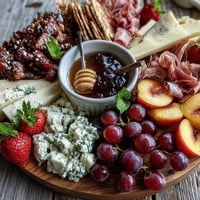
- Honey or fig jam (1/4 cup): Serve on the side so people can control their own level of sweetness—some will want none, others will drizzle generously.
Tired of Takeout? 🥡
Get 10 meals you can make faster than delivery arrives. Seriously.
One email. No spam. Unsubscribe anytime.
Instructions
- Heat your oven and prepare the flatbreads:
- Set the oven to 200°C (400°F) and brush each flatbread lightly with olive oil, then scatter the minced garlic across them like you're being generous but not wasteful. Warm them in the oven for 5–7 minutes until they're just beginning to crisp at the edges and smell absolutely irresistible.
- Arrange your edible rafts:
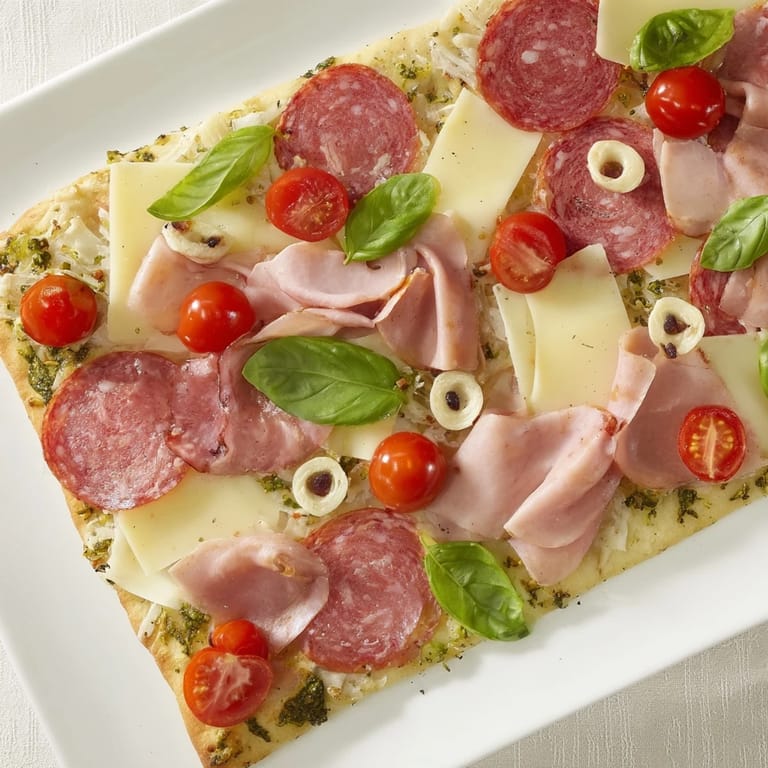
- Transfer the warm flatbreads to your largest wooden board or platter, spacing them a few inches apart so they're clearly individual rafts but still part of one cohesive landscape. The warmth will last just long enough for the next steps if you work quickly.
- Build your layers with intention:
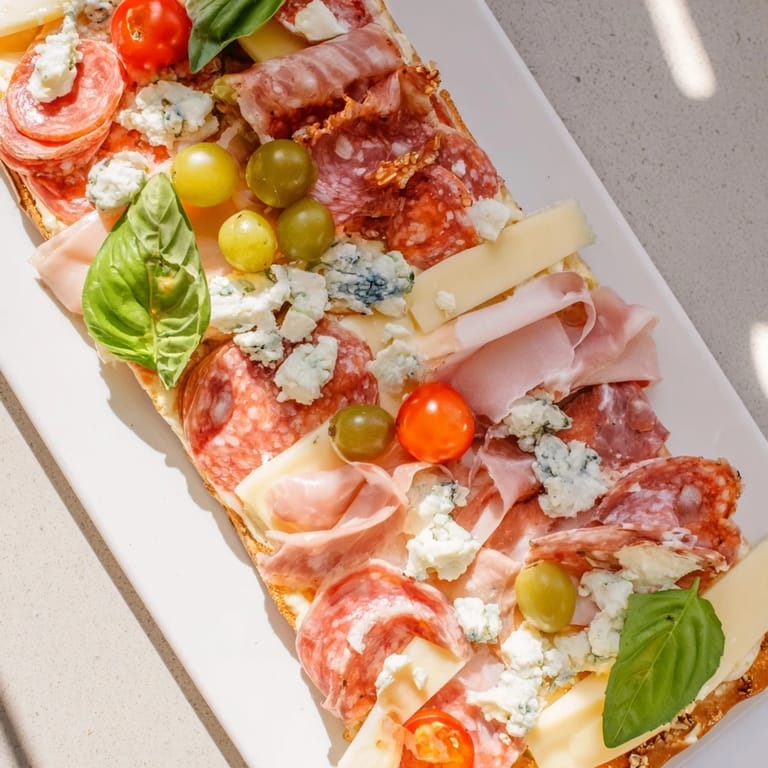
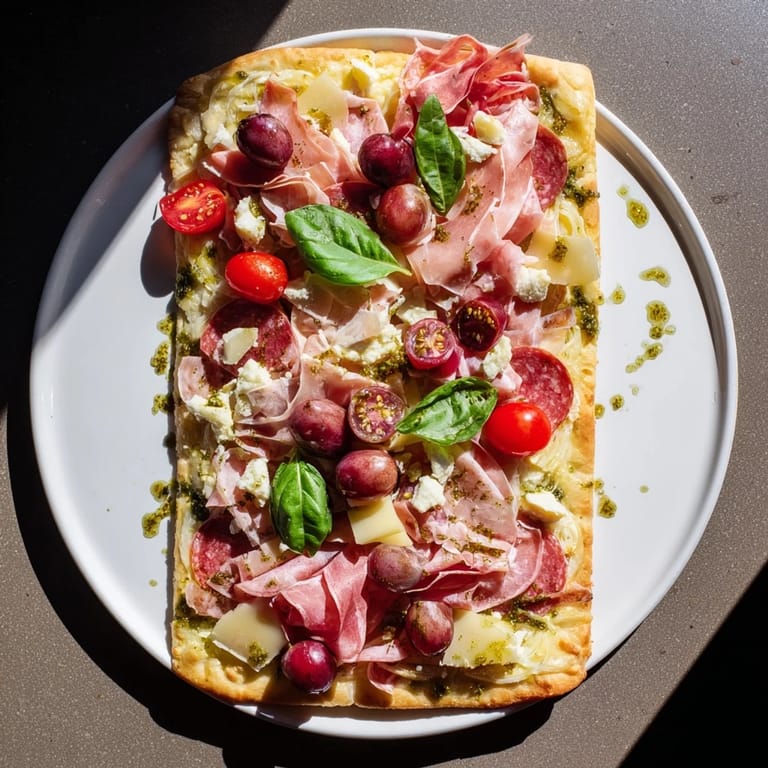
- Start layering meats and cheeses across each raft, alternating colors and textures as you go—this is where it becomes visual art, not just food. The warm bread will soften the cheese slightly, creating this perfect bind between layers.
- Fill the spaces between your rafts:
- Nestle grapes, cherry tomatoes, olives, and roasted red peppers into the spaces between the flatbread rafts, letting some rest on top of the cheese and meats too. This creates pockets of brightness and texture that keep every bite interesting.
- Finish with fresh herbs and serve:
- Tear fresh basil leaves and scatter them across everything, then set small bowls of honey or fig jam nearby for drizzling. Invite your guests to break off pieces and build their perfect bites, making it an experience rather than a plated appetizer.
 Save Pin
 There's something profound about watching strangers and friends become comfortable with each other over this dish. Someone always experiments with a flavor combination nobody would have suggested, discovers something magical, and suddenly the whole group wants to try it. Food becomes conversation, and conversation becomes connection.
Customizing Your Raft
The beauty of this recipe is that it's genuinely flexible without losing its identity. If you don't have manchego, aged gouda works just as well, bringing its own sweetness to the party. If blue cheese isn't your thing, swap it for something milder—creamy goat cheese creates a completely different vibe but tastes equally good. Some people add Marcona almonds for crunch, others layer in pickled vegetables for tang. The core idea stays the same: warm bread, quality proteins, interesting textures, and the freedom to make it yours.
Wine and Pairing Moments
I've learned through experience that this dish thrives with the right drink beside it. A crisp white wine like Sauvignon Blanc or Albariño cuts through the richness of the cheese and makes every bite feel lighter somehow, while a light-bodied red like Pinot Noir or Grenache lets the meats shine without overwhelming them. The key is choosing something you actually enjoy drinking, not something that feels like it should go with charcuterie. Your guests will be sipping and eating at their own pace, so having a bottle open that makes them happy is more important than following some rule book.
Making It Feel Like a Celebration
This recipe transforms a regular gathering into something memorable because it puts people in a different mindset—one where they're not just eating, but building, tasting, and sharing discoveries. The wooden board becomes a centerpiece, the act of choosing becomes interactive, and suddenly your kitchen feels like a gathering place instead of just a room where food appears. I've found that the smaller the group and the more time you let people linger over this, the better the memories that stick around afterward.
- Serve this when you want your guests to feel celebrated, not when you're rushing through meal preparation.
- Let the board sit in the center of the table so people keep grazing and discovering new combinations throughout the meal.
- Keep extra honey or fig jam nearby because at least one person will fall in love with that combination and want more.
 Save Pin
 This recipe reminds me that the most impressive dishes often feel effortless because they let good ingredients speak for themselves. You're not fighting in the kitchen or stressing about timing; you're creating a moment where food becomes permission to slow down together.
Cooking Questions & Answers
- → What types of flatbreads work best?
Rectangular flatbreads like lavash, naan, or ciabatta provide a sturdy yet tender base ideal for layering ingredients and easy sharing.
- → Can I substitute the meats and cheeses?
Absolutely, use your preferred cured meats and cheeses to suit taste or availability, ensuring a balanced combination of savory and creamy flavors.
- → How do I prepare the flatbreads before topping?
Brush them lightly with olive oil and minced garlic, then warm in the oven at 200°C (400°F) until just crisped, enhancing flavor and texture.
- → What accompaniments complement the meats and cheeses?
Fresh grapes, cherry tomatoes, marinated olives, roasted peppers, and basil bring bright colors and fresh tastes that contrast the rich toppings.
- → Is there a suggested way to serve this dish?
Arrange the flatbreads on a large board spaced apart, allowing guests to break off pieces topped with their choice of meats, cheeses, and sides.
- → What drinks pair well with this dish?
Crisp white wines or light-bodied reds complement the rich and savory layers, balancing the palate for an enjoyable experience.