 Save Pin
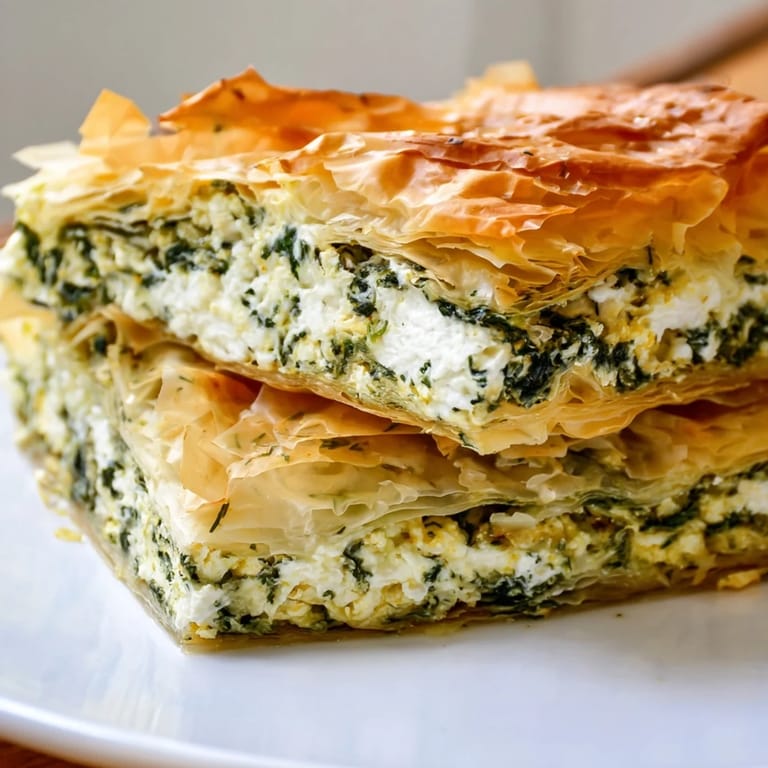
 There's something about watching phyllo sheets crackle in the oven that takes me straight to a small taverna in Athens, where an older woman named Maria would emerge from the kitchen with a tray of spanakopita still steaming, the golden edges catching the afternoon light. I tried making it once without thawing the phyllo properly, and the whole thing turned into a stuck, crumbly mess—but that failure taught me everything I needed to know about patience and preparation. Now, years later, this savory spinach and feta pie has become the dish I make when I want to feel like I'm cooking something both impressive and genuinely comforting.
I once brought a spanakopita to a friend's potluck completely worried nobody would touch it, only to find the platter empty before the main course was even served. My neighbor kept asking what was in it because she couldn't stop eating—she expected something heavy, but instead found this light, fragrant pastry that made her feel like she was tasting something from a Greek island.
Ingredients
- Fresh spinach: Use 2 lbs if you can find tender, fresh bunches at a farmers market—they wilt down beautifully and taste alive. If frozen is all you have, don't hesitate; just squeeze every last drop of moisture out so the pie stays crisp.
- Yellow onion and scallions: The onion becomes sweet and mellow as it cooks, while scallions add a subtle sharpness that keeps things from tasting too heavy.
- Fresh dill and parsley: This is where the soul of the filling lives—fresh herbs make the difference between ordinary and something you'll remember eating.
- Feta cheese: Buy it from a good source if you can; creamy, slightly salty feta changes everything about the final taste.
- Ricotta or cottage cheese: Optional, but I add it because it makes the filling tender and binds everything together without drying things out.
- Eggs: They're your binder—use just enough to hold the filling together without making it dense.
- Ground nutmeg: A whisper of it, no more, adds a warmth that somehow feels both unexpected and essential.
- Phyllo dough: Thaw it in the refrigerator overnight, and keep it covered with a damp towel while you work so it doesn't dry out and shatter.
- Olive oil or melted butter: For brushing between layers—this is where the crispness comes from, so don't skimp.
Tired of Takeout? 🥡
Get 10 meals you can make faster than delivery arrives. Seriously.
One email. No spam. Unsubscribe anytime.
Instructions
- Preheat and prepare:
- Set your oven to 350°F and grease a 9x13-inch baking dish. Getting this done first means you're not scrambling later when your hands are oily.
- Cook the aromatics:
- Heat 2 tablespoons of olive oil in a large skillet and add your chopped onion and scallions. Watch them soften into something golden and sweet, about 5 minutes—you'll smell when they're ready.
- Wilt the spinach:
- Add your chopped spinach in batches if it's fresh, stirring as it reduces down to almost nothing. This takes patience, but you're driving off all the excess water that would make your pie soggy.
- Cool and squeeze:
- Let the spinach mixture cool to room temperature, then squeeze out any remaining moisture using a clean kitchen towel. This step feels tedious but changes everything about the texture.
- Mix the filling:
- Combine the cooled spinach mixture in a large bowl with dill, parsley, crumbled feta, ricotta if using, beaten eggs, black pepper, nutmeg, and salt. Taste it and adjust—the filling should taste bold and herbaceous, not bland.
- Layer the phyllo base:
- Lay one sheet of phyllo in your prepared dish, letting the edges overhang slightly. Brush it lightly with olive oil or butter, then repeat with 6 to 7 more sheets, brushing each one as you go. The phyllo will be thin and delicate; handle it gently but don't worry about small tears.
- Spread the filling:
- Pour your spinach-feta mixture evenly over the phyllo base. Press it down gently so it's in one even layer, not piled in the center.
- Top with phyllo:
- Layer the remaining phyllo sheets on top, brushing each with oil or butter just as you did with the base. Tuck the overhanging edges down into the dish so everything is contained and sealed.
- Score and bake:
- Using a sharp knife, score the top into squares or diamonds without cutting all the way through—this helps it bake evenly and makes serving later much easier. Slide it into the oven for 35 to 40 minutes until the top is deep golden and you can hear a faint crackle when you listen closely.
- Rest and serve:
- Let it cool for 10 minutes before cutting—this gives the filling time to set so your pieces stay together instead of crumbling apart.
 Save Pin
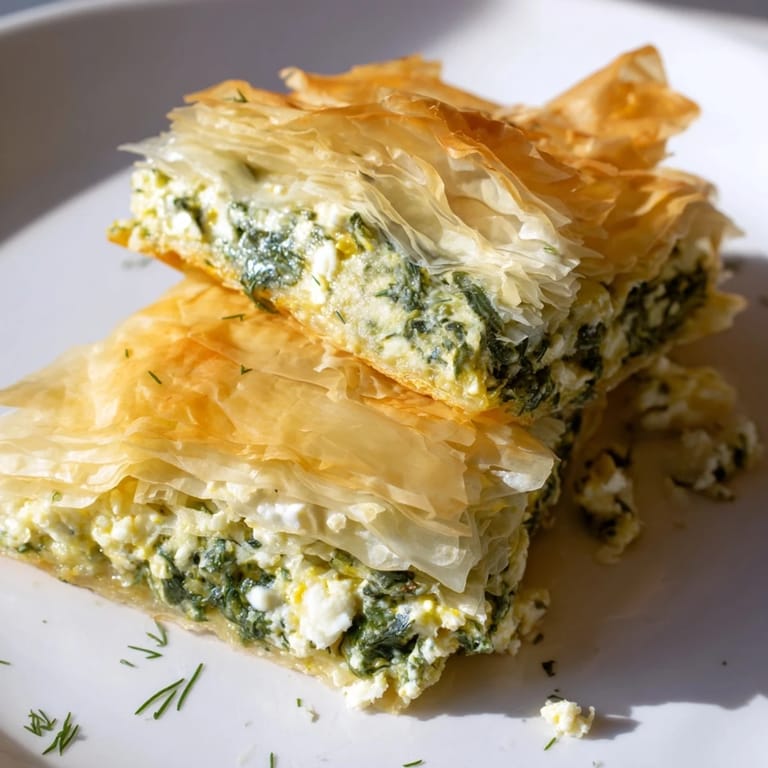
 The first time someone at my table described it as tasting like Greece, I felt something shift—it wasn't just food anymore, but a small edible memory of a place and a feeling I wanted to bring home.
Why This Dish Stays in Rotation
Spanakopita has a way of fitting into almost any occasion—it's elegant enough for a dinner party, casual enough for lunch with friends, and hearty enough to feel substantial without weighing you down. The phyllo-to-filling ratio, when done right, creates this perfect textural contrast that keeps you interested all the way through. It also reheats beautifully, making it one of the few pastry dishes that tastes nearly as good the next day as it does fresh from the oven.
Working with Phyllo: The Mindset Shift
Phyllo intimidates a lot of people because it looks so delicate and unforgiving, but the truth is that it's incredibly forgiving—small tears don't matter, slight crumples disappear once it's baked and brushed with oil. What matters is keeping it from drying out and being generous with your oil or butter between layers. Think of it less as a precision task and more as an assembly process where you're building layers of flavor and texture, not trying to achieve perfection.
Variations and Personal Touches
I've made this with chard instead of spinach when spinach wasn't available, and honestly, it was just as good—the earthiness of the chard added a different dimension. Some years I add a pinch more nutmeg, other years I swap in a little crumbled mint for an unexpected brightness. The beauty of this recipe is that it has enough personality of its own that small changes feel like additions rather than fixes.
- Try mixing in a handful of pine nuts for crunch, or swap cottage cheese for ricotta if that's what you have.
- A squeeze of fresh lemon juice in the filling adds a subtle brightness that makes everything taste fresher.
- Serve it warm or at room temperature—it's genuinely excellent either way.
 Save Pin
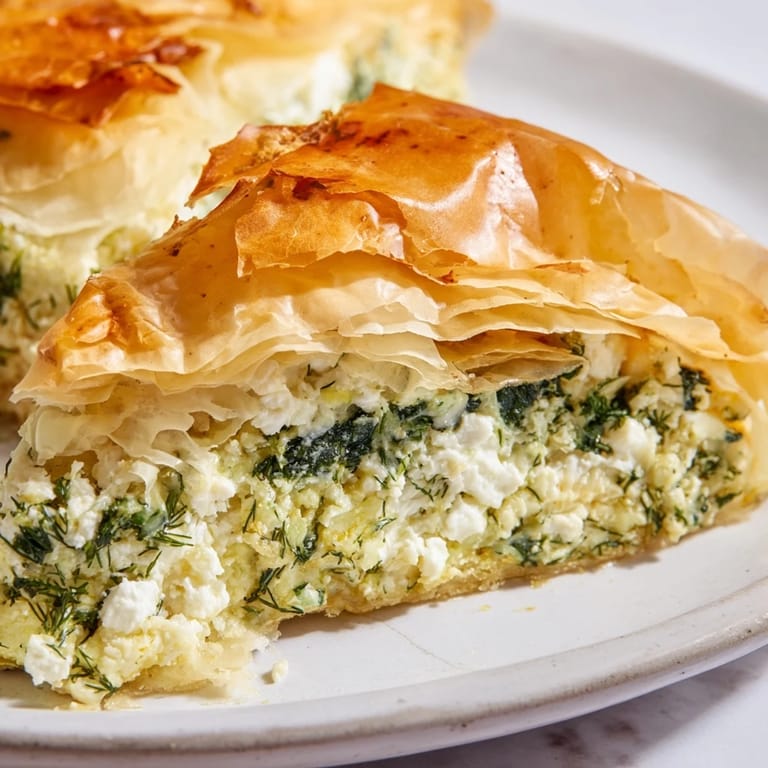
 Make this when you want to feel like you've cooked something beautiful and a little bit impressive, because you have. It's the kind of dish that makes people ask for the recipe and then thank you weeks later for introducing them to something they keep making.
Cooking Questions & Answers
- → Can I use frozen spinach instead of fresh?
Yes, frozen spinach works well if thawed thoroughly and excess water is squeezed out to avoid soggy filling.
- → What cheese complements the spinach filling best?
Feta provides a tangy, salty flavor, and adding ricotta softens the texture for creaminess.
- → How do I prevent the phyllo from drying out during preparation?
Keep the phyllo sheets covered with a damp towel and brush each layer with olive oil or melted butter to maintain moisture and crispness.
- → Can I prepare this dish ahead of time?
Yes, assemble and refrigerate it a few hours before baking; just add a few extra minutes to the baking time if chilled.
- → What are good beverage pairings with this savory pie?
Crisp white wines like Assyrtiko or Sauvignon Blanc complement the rich, herby flavors beautifully.