 Save Pin
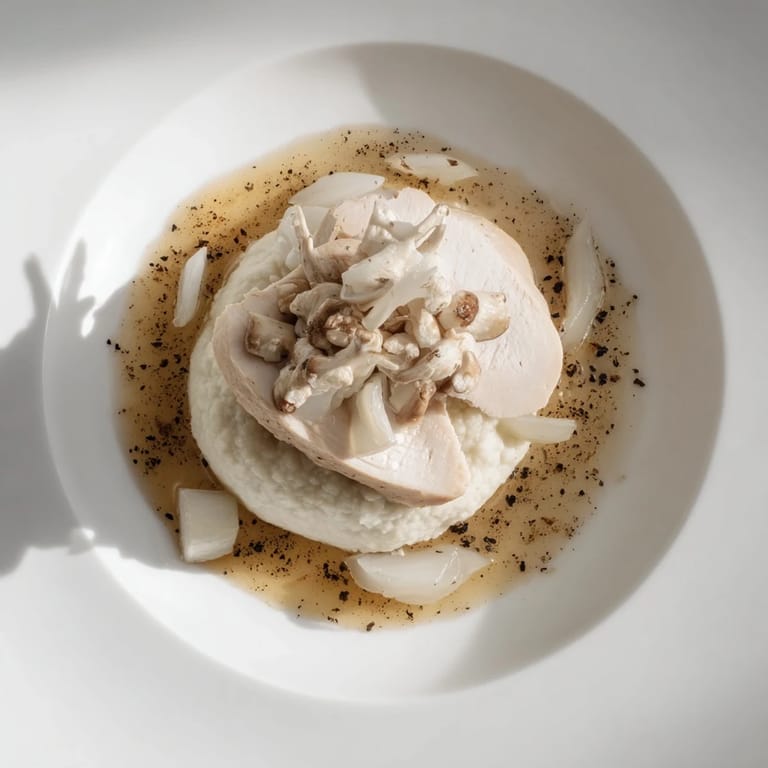
 I discovered this dish on an unexpectedly quiet weeknight when I wanted to impress myself more than anyone else. White-on-white plating had always seemed intimidating, too precious, but something about the contrast of that dramatic pepper dust made it feel approachable and theatrical at once. The chicken poaches so gently it practically melts, and the cauliflower becomes something luxurious without pretension. It's the kind of meal that looks like you've been cooking all day when really you've just paid attention to a few simple things.
I made this for a friend who'd been having a rough week, and watching her face when the plate arrived—that moment of delighted surprise—told me everything. She said it tasted like clarity, which I didn't quite understand until I tasted it myself. There's something about all those pale, soft textures that makes you slow down and actually chew.
Ingredients
- Chicken breasts: Choose smaller ones (around 150g each) so they poach evenly and stay tender rather than drying out at the edges.
- Cauliflower: A medium head gives you enough for a generous, billowing purée on each plate—don't skimp or you'll end up with thin, sad mounding.
- White button mushrooms: The pale ones matter here; cremini or portobello would read wrong visually and shift the whole mood of the dish.
- Heavy cream and cream cheese: Together they create that silky texture that makes the purée feel like clouds you can eat.
- Chicken broth: Low-sodium is crucial so you control the salt and the broth stays clear and delicate-looking.
- Extra-virgin olive oil: Use something you actually like; it flavors the mushrooms in subtle ways.
- Black pepper: Freshly cracked, not ground—you want visible flecks, almost like shadows falling across the plate.
Tired of Takeout? 🥡
Get 10 meals you can make faster than delivery arrives. Seriously.
One email. No spam. Unsubscribe anytime.
Instructions
- Poach the chicken gently:
- Bring your broth to that barely-there simmer where tiny bubbles kiss the bottom and sides of the pan. Add the chicken and let it barely move for 12 to 15 minutes—you're looking for just-cooked through, pale and tender, not the slightest hint of pink inside.
- Build the cauliflower cloud:
- Boil it until it's genuinely soft enough to break apart with a wooden spoon, then drain it really thoroughly because excess water thins your purée. Blend it with the cream, butter, and cream cheese until it's completely smooth and silky—any graininess and the whole dish loses its ethereal quality.
- Sauté the mushrooms to pale gold:
- This is where patience matters; let them brown slowly and gently so they stay pale but develop flavor. Watch for the moment they turn translucent and the edges just barely catch color, then stop—overcooking makes them weep and turn gray.
- Compose the plate:
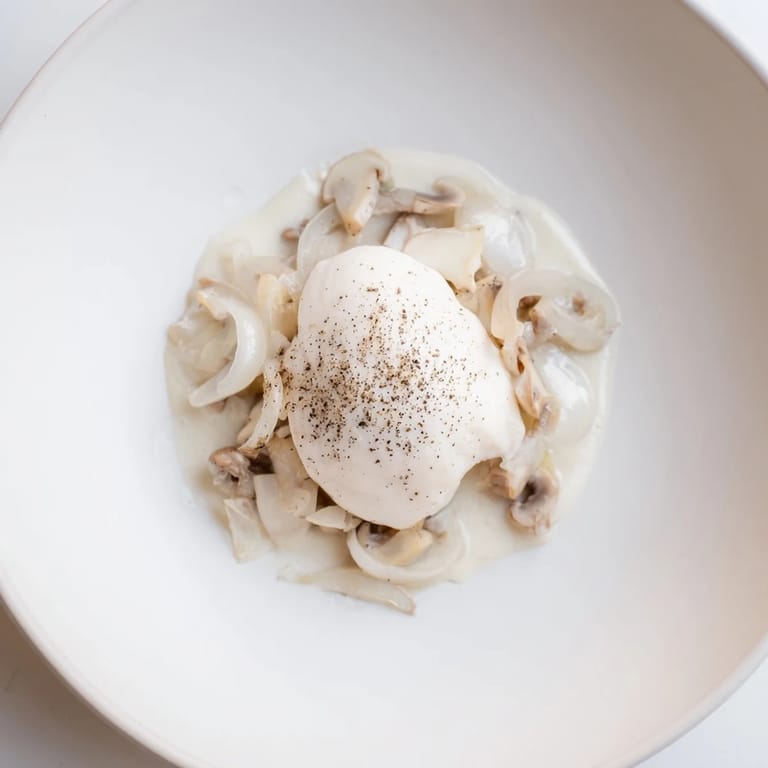
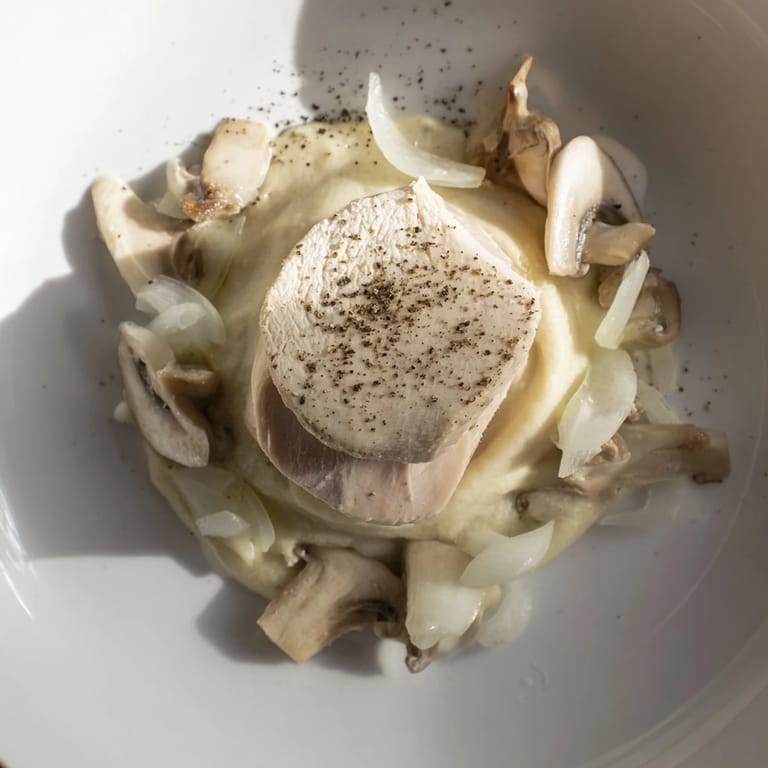
- Spoon the purée first, making a generous nest that looks intentional. Top with the chicken, then scatter mushrooms around it like you're telling a story with shapes. The pepper dust goes last, around the edges like shadows, giving the eye somewhere to travel.
 Save Pin
 There's a moment when everything comes together on the plate that feels almost ceremonial, even when you're cooking alone. The white absorbs light differently depending on how you look at it, and suddenly you understand why people have strong feelings about minimalist plating. It's not about being fancy; it's about letting simple, good ingredients speak.
The Story of White-on-White
All-white dishes used to feel cold to me, like something served at the kind of restaurant where you're afraid to touch anything. But this one changed my mind because the textures save it—soft chicken, silky purée, tender mushrooms, and that impossible pepper dust that makes you look twice. It's monochromatic without being monotonous, which is harder than it sounds.
Timing and Temperature Matter
The magic here is restraint: poaching instead of searing, simmering instead of boiling, pale sautéing instead of aggressive browning. If anything rushes, the visual story breaks down and you're left with overcooked chicken and gray mushrooms. But if you trust the gentle approach, each element stays exactly what it's supposed to be—tender, creamy, pale, and composed.
Plating and Finishing Touches
The pepper dust is your chance to be bold after cooking so quietly. Scatter it around the plate with intention—not timid, not aggressive, but like you've thought about where shadows would naturally fall. Some people sprinkle a tiny pinch of fleur de sel too, and it catches the light in a way that makes the whole plate suddenly three-dimensional.
- Use a microplane or your fingers to crack pepper fresh onto the plate, never from a pre-ground container.
- Warm your plates in the oven for two minutes before plating so nothing cools down before it reaches the table.
- Serve this with a crisp white wine—Sauvignon Blanc or dry Riesling cuts through the cream beautifully and feels right alongside the minimalist aesthetic.
 Save Pin
 This dish proved to me that elegance doesn't require complexity, just intention and care. Make it when you want to feel a little special, or when someone else deserves to be reminded that they are.
Cooking Questions & Answers
- → How is the chicken prepared to remain tender?
The chicken breasts are gently poached in a seasoned broth at a low simmer, ensuring they stay moist and tender without drying out.
- → What gives the cauliflower purée its creamy texture?
Heavy cream, unsalted butter, and cream cheese are blended into the cooked cauliflower to create a rich and silky purée.
- → Why are white mushrooms sautéed until pale golden?
Sautéing mushrooms until just lightly golden enhances their flavor while maintaining a delicate color that fits the dish’s all-white aesthetic.
- → How does the cracked black pepper enhance the dish?
Sprinkled around the plate rather than on the food, the cracked black pepper creates striking shadow-like effects that elevate the visual presentation.
- → Can this dish be adapted for a vegetarian preference?
Yes, replacing the chicken with roasted celeriac or tofu poached in vegetable broth offers a satisfying plant-based alternative.