 Save Pin
 Last spring, I found myself staring at a farmers market haul of fresh peas and broad beans, suddenly inspired to transform them into something warm and communal. There's something about shakshuka that just demands to be shared, the way those runny yolks break into the spiced tomato sauce like little gifts. I'd made shakshuka before, sure, but always with the same tired tomatoes and onions. This time felt different, brighter, more alive. My kitchen filled with the smell of cumin and paprika hitting hot oil, and I knew I was onto something special.
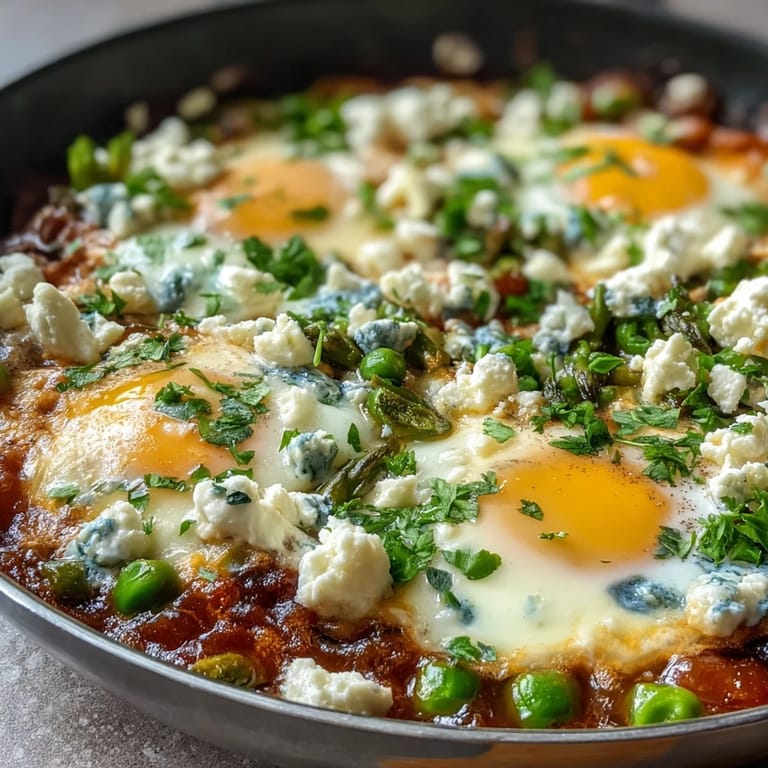
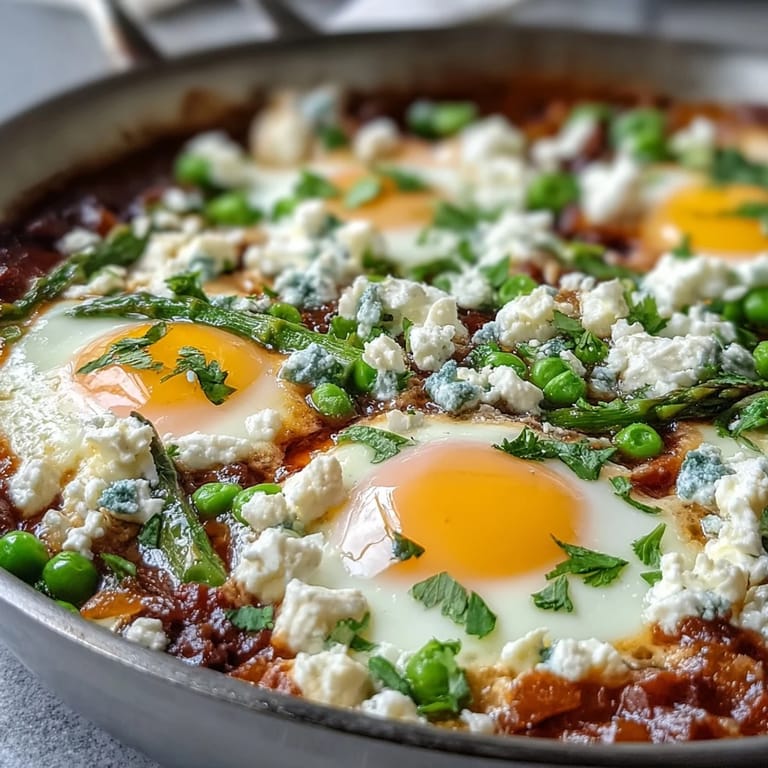
I remember making this for a Sunday lunch with friends who'd just moved to the neighborhood, back when we were still navigating that awkward territory between friendly acquaintances and actual friends. Setting this skillet down in the middle of the table, steam rising off those golden egg yolks nestled in crimson sauce, something shifted. Everyone leaned in at once, and suddenly we weren't strangers anymore, just people passing bread and squeezing lemon into a dish that tasted like possibility.
Ingredients
- Olive oil: Just one tablespoon might seem humble, but it's enough to coax out the sweetness of your onions without making the sauce heavy, something I learned after one too many greasy attempts.
- Medium onion: Finely chopped means it'll dissolve into the sauce rather than bite through every spoonful, creating a foundation that tastes like it took hours.
- Garlic cloves: Minced rather than sliced, they distribute their perfume evenly and won't catch on your teeth.
- Red bell pepper: Diced small enough to cook through but visible enough to add actual color and sweetness to every bite.
- Asparagus: Cut into 2 cm pieces so they stay tender but don't disappear entirely, still offering that satisfying bite.
- Fresh or frozen peas: Frozen ones are often fresher tasting than fresh market peas anyway, a secret that changed everything for me.
- Fresh or frozen broad beans: These are the soul of this dish, with their creamy interior and slightly peppery flavor that regular green beans could never replicate.
- Canned chopped tomatoes: Better than fresh tomatoes out of season, and the liquid they come in becomes part of your sauce.
- Tomato paste: Two tablespoons concentrate the flavor without making things acidic, lending umami depth that makes people ask if you simmered this for hours.
- Ground cumin: Warm and slightly nutty, it's the backbone of the spice profile and worth buying fresh rather than using the stuff that's been sitting in your cupboard.
- Smoked paprika: This isn't regular paprika, and yes, it matters enormously, bringing a whisper of smoke that makes people think you're far more adventurous than you are.
- Ground coriander: Subtle and slightly citrusy, it rounds out the spice blend without announcing itself loudly.
- Chili flakes: Optional but essential if you like any heat at all, and I learned this after making a bland version for someone who was politely too kind to complain.
- Salt and black pepper: Taste as you go because dried spices and tomato paste can be surprisingly variable in their intensity.
- Large eggs: Four to six depending on whether you're feeling generous or if you have guests with appetites that could challenge a professional eater.
- Fresh parsley or mint: Chopped fresh at the very end, a brightness that cuts through the richness and makes the whole dish sing.
- Feta cheese: Crumbled over top, it adds a salty tang that's entirely optional but absolutely transformative if you have it on hand.
- Lemon wedges: Squeezed over everything, they're the final flourish that brings all the flavors into focus.
Tired of Takeout? 🥡
Get 10 meals you can make faster than delivery arrives. Seriously.
One email. No spam. Unsubscribe anytime.
Instructions
- Build your base:
- Heat olive oil in a large, deep skillet over medium heat, then add your finely chopped onion. You're looking for that moment when the onion turns translucent and begins to smell impossibly sweet, around 4 to 5 minutes. This patience pays dividends later.
- Deepen the flavors:
- Stir in minced garlic and diced red bell pepper, cooking for another 2 to 3 minutes until the pepper softens slightly and releases its fragrance. The kitchen should smell incredible by now, almost fragrant enough to eat straight from the air.
- Bloom the spices:
- Add your cumin, smoked paprika, ground coriander, and chili flakes if using them, frying for just 1 minute until you can smell the transformation and they're coating everything with a thin layer of spiced oil. Don't skip this step or walk away, because that single minute is where dried spices wake up and become something remarkable.
- Create the sauce:
- Stir in your tomato paste first, letting it fry for about 30 seconds until it darkens slightly, then add your canned tomatoes with a pinch of salt and pepper. Simmer uncovered for 10 minutes, stirring occasionally, until the sauce thickens and loses that raw tomato sharpness you get right out of the can.
- Add the vegetables:
- Pour in your asparagus, peas, and broad beans, then cover and cook gently for 7 to 8 minutes until everything is just tender but still has a whisper of structure. This is where you taste and adjust your seasoning because vegetables can absorb salt unevenly.
- Nestle the eggs:
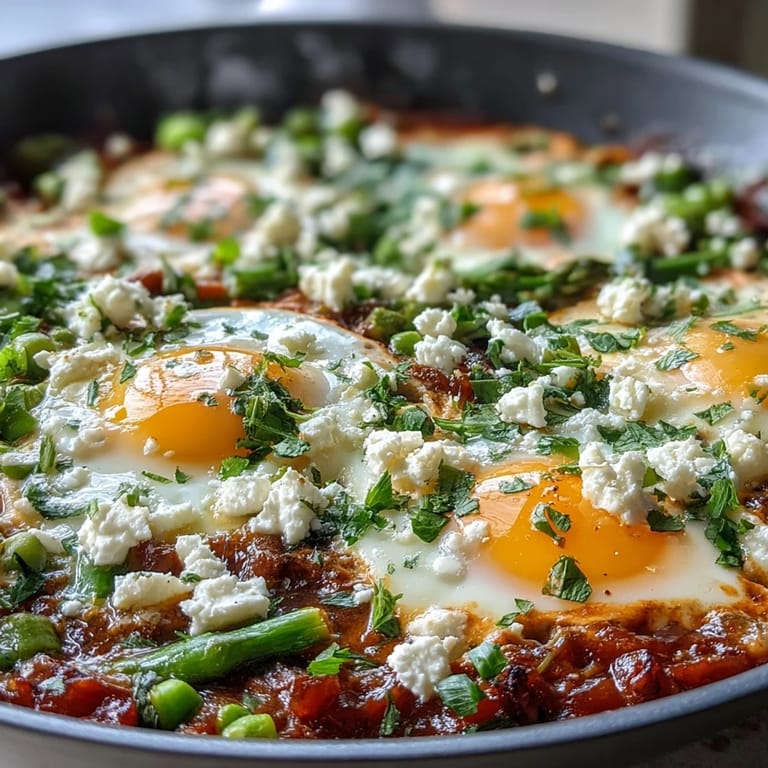
- Using the back of a spoon, make small wells in the sauce, spacing them so each person will get one or possibly two eggs depending on your generosity. Crack your eggs directly into these wells, then cover the pan and cook gently for 5 to 7 minutes, depending on how runny you like your yolks and how hot your stove actually runs.
- Finish and serve:
- Remove from heat and scatter your fresh parsley or mint over the top, followed by crumbled feta if you're using it. Serve immediately with lemon wedges and bread while everything is still hot and those yolks are still threatening to spill across the plate.
 Save Pin
 There's a specific moment when this dish becomes more than just dinner, and it happened the first time my daughter actually ate vegetables without negotiation. She was four, and she watched as I cracked an egg into the sauce, waited impatiently while it cooked, then dipped a piece of bread into that golden yolk and scarlet sauce. She's twelve now and still prefers this to almost anything else I make, which says everything about the quiet power of vegetables prepared with care and intention.
The Springtime Magic of Tender Vegetables
There's something distinctly spring about this shakshuka that has nothing to do with the actual calendar and everything to do with the moment when you realize those frozen peas taste better than almost any fresh vegetable available in winter months. Fresh asparagus and broad beans signal the turning of seasons in the most delicious way, but the real secret is that you don't have to wait for spring to make this. Winter peas frozen at their peak ripeness often taste better than anything you'll find in a market in November, a realization that changed how I think about seasonal eating entirely.
Why This Works as a Sharing Dish
Shakshuka by its very nature demands community, the way it sits steaming in the center of a table inviting people to lean in close and eat directly from the pan if there's enough trust between you. The eggs mean it's not quite vegetable stew and not quite eggs, existing in that perfect gray area between courses where everyone forgets they're supposed to follow rules about what comes when. I've watched stern dinner guests soften when their spoon breaks into a runny yolk, suddenly remembering why food matters more than small talk.
Variations and Improvisations
The beauty of shakshuka is that it welcomes improvisation the way a good friend accepts you showing up late with a reasonable excuse. Spinach wilts into nothing if you add it during the last minute, creating pockets of green throughout. Zucchini adds substance without overpowering anything else, and honestly, if you have leftover roasted vegetables from last night's dinner, they probably belong in here too. For anyone who doesn't eat eggs, those same chickpeas mentioned in the original notes work brilliantly, adding protein and texture that's entirely satisfying.
- Spinach or zucchini add volume without changing the essential character of the dish.
- Chickpeas make an excellent protein swap for anyone avoiding eggs, lending creaminess where yolks would have.
- Extra fresh chili or increased chili flakes transform this into something with actual heat rather than background warmth.
 Save Pin
 This is the kind of dish that improves your entire day just by cooking it, filling your kitchen with scent and promise long before anyone sits down to eat. Make it once and you'll be making it forever.
Cooking Questions & Answers
- → Can I make this vegan?
Yes, simply omit the eggs and feta cheese. Add drained canned chickpeas during the vegetable cooking step for protein. You can also top with avocado or a dairy-free yogurt alternative.
- → Can I use frozen vegetables instead of fresh?
Absolutely. Frozen peas and broad beans work beautifully in this dish. No need to thaw first—just add them directly to the sauce. They may need 1-2 extra minutes to cook through.
- → How do I know when the eggs are done?
Cook covered for 5-7 minutes. The whites should be completely opaque and set, while the yolks remain slightly jiggly when you gently shake the pan. For firm yolks, cook 2-3 minutes longer.
- → What should I serve with this?
Warm pita bread, flatbread, or crusty sourdough is essential for soaking up the sauce. A simple green salad with lemon vinaigrette makes a nice accompaniment to balance the rich, spiced flavors.
- → Can I prepare this ahead?
The vegetable base can be made up to a day in advance and refrigerated. When ready to serve, reheat gently until bubbling, then proceed with adding the eggs. Fresh herbs and feta should be added just before serving.
- → How can I adjust the spice level?
Start with the suggested amount of chili flakes. For more heat, add extra chili flakes or a fresh chopped chili when cooking the aromatics. For a milder version, omit the chili flakes entirely.