 Save Pin
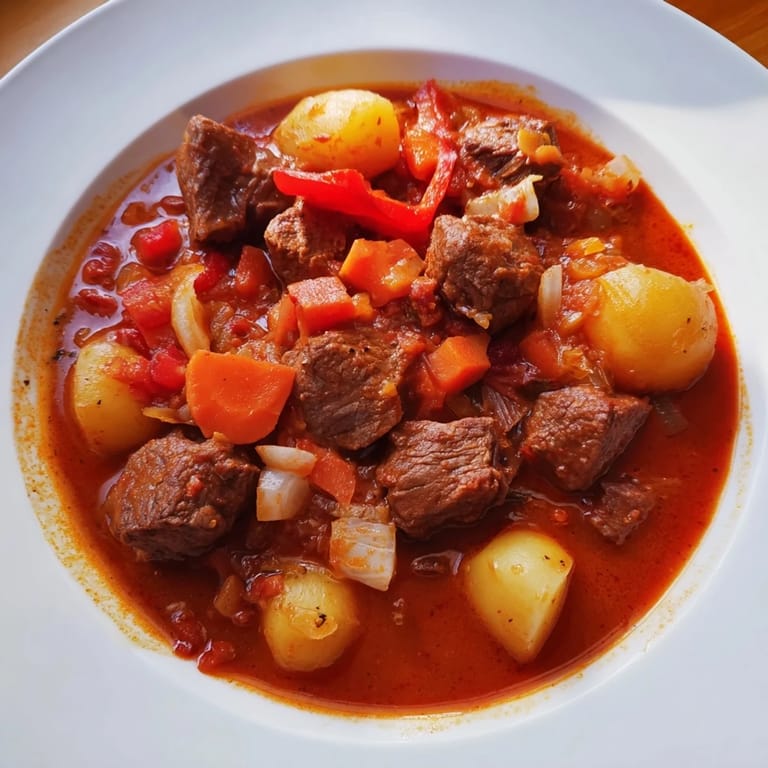
 My neighbor Stefan handed me a steaming bowl of goulash one winter evening, still wearing his snow-dusted coat, and I understood immediately why this dish has survived centuries in Hungarian kitchens. The aroma alone—paprika and beef mingling with caramelized onions—made me forget every other meal I'd eaten that week. He wouldn't share his recipe, of course, but after months of tinkering, I finally cracked the code: it's about patience, not technique. This stew rewards slow cooking and honest ingredients in equal measure.
I made this for my sister the night she told me about her new job, and we sat at my kitchen table eating directly from the pot like we were kids again, talking until the stew went cold. She said it tasted like home, which made me realize that the best dishes aren't the ones that impress—they're the ones that comfort.
Ingredients
- Beef chuck: Two pounds of well-marbled chuck gives you meat that becomes silk-soft rather than stringy; avoid leaner cuts that dry out.
- Onions: Three large ones might seem excessive, but they melt into the sauce and create the sweet, golden base everything else rests on.
- Hungarian sweet paprika: This is non-negotiable—regular paprika tastes like cardboard in comparison, so seek out the real thing from a Hungarian market if possible.
- Caraway seeds: A teaspoon feels tiny, but it unlocks an earthy, almost mysterious depth that makes people ask what your secret is.
- Beef broth: Homemade changes everything, but good store-bought broth works; just taste it first to avoid over-salting.
- Tomato paste: A small amount concentrates the savory notes without making the stew acidic.
- Potatoes: Optional, but they soak up flavor beautifully and make the stew more filling.
Tired of Takeout? 🥡
Get 10 meals you can make faster than delivery arrives. Seriously.
One email. No spam. Unsubscribe anytime.
Instructions
- Build your aromatics:
- Heat oil in your heaviest pot over medium heat and add chopped onions, letting them turn golden and soft for about eight minutes. You'll know they're ready when the kitchen smells like caramel and they've surrendered completely to the heat.
- Wake up the garlic:
- Stir in minced garlic and cook for just a minute—you want fragrant, not burned.
- Brown the beef:
- Add your beef cubes and let them sit undisturbed for a couple minutes before stirring; this creates a golden crust that holds all the beefy flavor.
- Toast the paprika:
- Sprinkle paprika over the meat and stir quickly for about thirty seconds—paprika can turn bitter if it scorches, so move fast.
- Layer in flavor:
- Add tomato paste, caraway seeds, marjoram, pepper, and salt, stirring everything into a fragrant paste that coats the meat.
- Add your vegetables and liquid:
- Stir in carrots, bell pepper, and bay leaf, then pour in broth while scraping the bottom of the pot to capture every caramelized bit. Bring to a simmer.
- Braise gently:
- Cover and reduce heat to low, letting the stew bubble gently for an hour, stirring occasionally so nothing sticks. The beef should be getting tender, and the liquid should smell incredible.
- Finish strong:
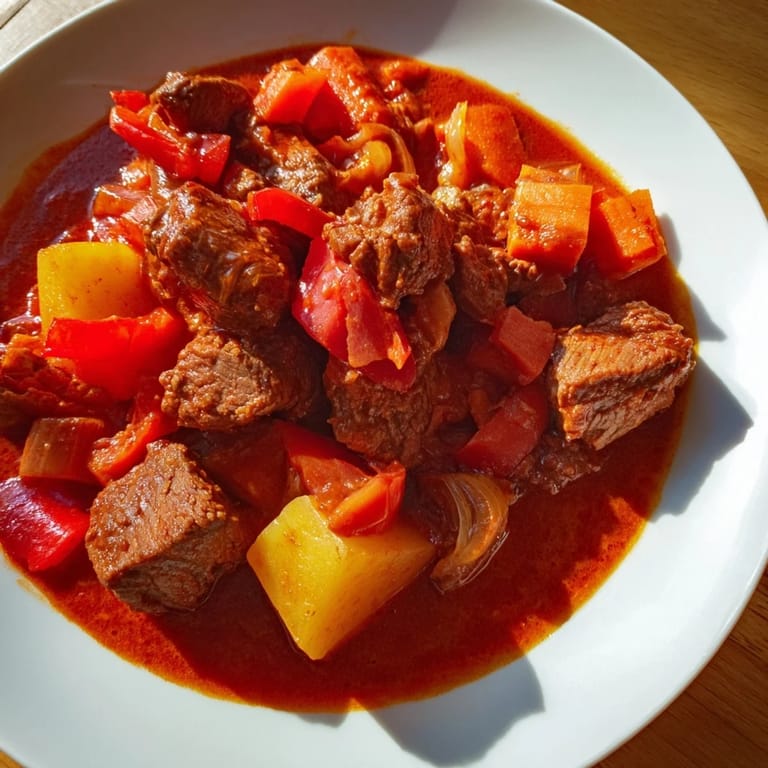
- Add potatoes if using them, and continue simmering uncovered for forty-five to sixty minutes until the beef falls apart at the gentlest touch and the stew has thickened slightly.
- Taste and adjust:
- Fish out the bay leaf, then taste and add salt or pepper as needed—your stew should taste like pure comfort.
 Save Pin
 On the third day of eating this stew—leftovers reheated gently on the stove—I realized that's when it truly became itself. The flavors had settled into an almost meditative harmony, and my kitchen smelled like a place where good things happen.
When to Serve This Stew
This is winter food in the best sense—something that warms you from inside out when the air is sharp and the nights are long. I make it for people I want to feel cared for, which sounds simple until you realize that feeding someone well is its own kind of honesty. It's equally at home on a weeknight as it is at a dinner party where you want to seem effortless.
What to Serve Alongside It
Crusty bread is the obvious choice, and it's obvious because it works perfectly—tear off chunks and use them to soak up every drop of sauce. Egg noodles turn it into something almost luxurious, catching little bits of beef and absorbing the rich broth. Hungarian csipetke dumplings are traditional if you want to go authentic, though I've made it with simple boiled potatoes and nobody complained.
The Magic of Day-Old Goulash
There's something about letting this stew sit overnight in the refrigerator—the flavors seem to find each other, and the whole thing tastes deeper and more confident. When you reheat it gently on the stove, adding a splash of broth if needed, you get something that tastes like you spent all day cooking, even if you're just finishing what you started yesterday. This is the kind of dish that gets better with a little time, which feels like a metaphor for something, though I'll let you decide what.
- For extra heat, stir in a pinch of hot paprika or fresh chopped chili when you serve it.
- Leftovers freeze beautifully for up to three months—thaw overnight and reheat gently.
- A dollop of sour cream on top is traditional in Hungary and adds a cooling contrast that makes everything taste brighter.
 Save Pin
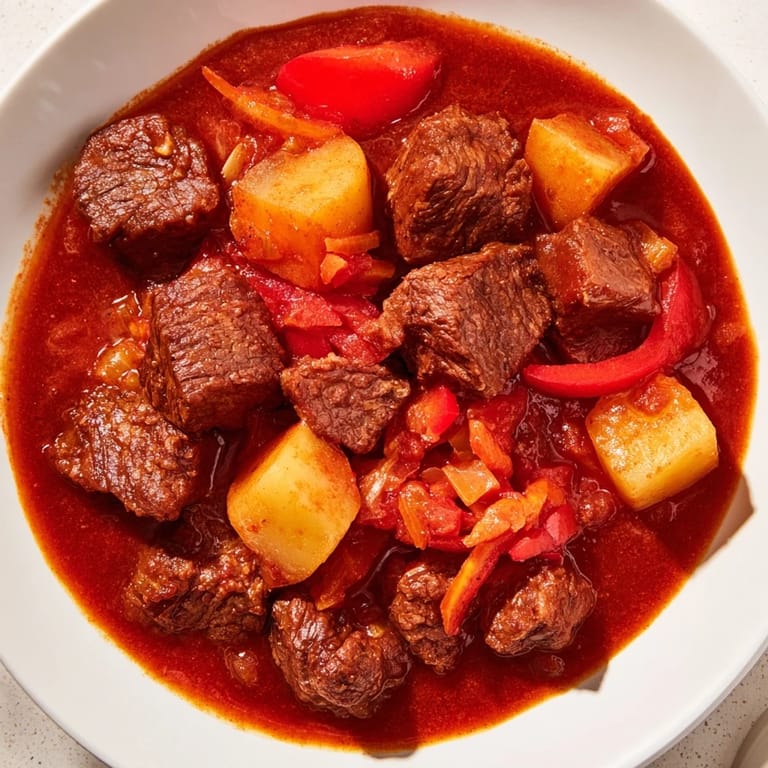
 This stew is proof that the best meals come from showing up, taking time, and trusting that good ingredients with a little patience will never let you down. Make it for someone you love, or make it for yourself on a day when you need to feel taken care of.
Cooking Questions & Answers
- → What cut of beef is best for this stew?
Beef chuck is ideal for this dish as it becomes tender and flavorful when slowly simmered.
- → Can I adjust the spiciness?
Yes, adding a pinch of hot paprika or chopped chili will give the stew a spicier kick.
- → Is it necessary to use Hungarian sweet paprika?
Hungarian sweet paprika provides authentic flavor, but any good-quality paprika can be used.
- → Can potatoes be omitted?
Potatoes are optional and can be added for extra thickness but can be left out if preferred.
- → What dishes pair well with this stew?
Rustic bread, egg noodles, or traditional Hungarian csipetke dumplings complement this dish beautifully.