 Save Pin
 Last Tuesday, I was standing in front of my open fridge at 5:45 p.m., staring down the reality of a workday that had run long and a hungry family waiting to be fed. I spotted a beautiful salmon fillet I'd picked up that morning, some bell peppers starting to wrinkle slightly at the edges, and thought: what if I just threw it all on one pan and let the oven do the work? Twenty-five minutes later, my kitchen smelled incredible, and everyone was asking for seconds before I'd even sat down. That's when I realized this sheet pan dinner wasn't just convenient—it was actually the kind of meal that makes you feel like you've done something right.
I made this for my sister when she came to visit last spring, and she kept asking if I'd ordered it from somewhere because she couldn't believe how good it tasted. Watching her plate up with extra parsley and lemon, I realized that sometimes the simplest meals leave the biggest impression. She's asked me to send her the recipe at least five times since.
Ingredients
- Salmon fillets (4, about 5–6 oz each): Look for fillets that are bright pink and smell like the ocean, not fishy—that's your sign they're fresh and will cook beautifully without any off flavors.
- Olive oil (3 tablespoons total): I learned the hard way that skimping on oil here means dry vegetables and sad salmon, so don't be shy with it.
- Lemon zest: Microplane it fresh right before cooking so it doesn't dry out and lose its brightness.
- Red onion (1 medium): The edges caramelize into something almost sweet, balancing the richness of the salmon in a way that feels intentional.
- Carrots (2 medium): Slice them into rounds so they cook evenly and get those little caramelized edges that make you want to eat them straight off the pan.
- Bell peppers (1 red, 1 yellow): The color matters here—it's not just pretty, it's also how you know they're cooked through when they start to blister slightly.
- Zucchini (1 small): Cut into half-moons so they don't disappear into mush, and aim for consistency so everything finishes at the same time.
- Cherry tomatoes (1 cup, halved): Halving them prevents them from rolling around and gives you more surface area to caramelize, which concentrates their sweetness.
- Italian herbs (1 teaspoon): Dried herbs work better here than fresh because they distribute evenly and won't burn at high heat.
- Fresh parsley (2 tablespoons): Chop this just before serving so it stays bright green and aromatic instead of turning dark and bitter.
- Salt, pepper, and lemon wedges: Season as you go, and save the lemon wedges for the table so everyone can adjust their own brightness level.
Tired of Takeout? 🥡
Get 10 meals you can make faster than delivery arrives. Seriously.
One email. No spam. Unsubscribe anytime.
Instructions
- Get your pan ready:
- Preheat your oven to 425°F and line a large sheet pan with parchment paper or foil—trust me, this is the one step that saves you from scrubbing for twenty minutes later.
- Toss and spread the vegetables:
- In a bowl, coat your onion, carrots, peppers, zucchini, and tomatoes with 2 tablespoons olive oil, the Italian herbs, and a generous amount of salt and pepper. Spread everything in an even layer on the pan so nothing's crowded or overlapping, then slide it into the oven for 10 minutes.
- Prepare the salmon:
- While the vegetables get a head start, pat your salmon fillets dry with paper towels—moisture is the enemy of crispy skin texture, and even though these fillets are skinless, you want them to cook evenly. Brush each fillet lightly with olive oil and season generously with lemon zest, salt, and pepper, letting the flavors sit on the fish for a moment.
- Combine and finish cooking:
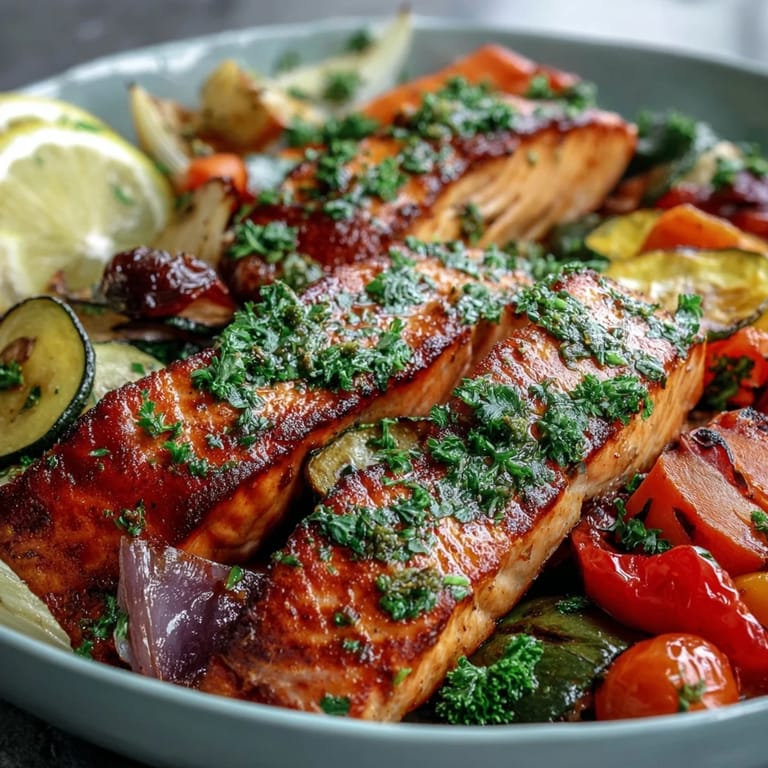
- After the vegetables have had their 10-minute head start, pull the pan out, gently move the vegetables around to create little pockets, and nestle the salmon fillets among them. Pop everything back in for 12–15 minutes until the salmon flakes easily when you test it with a fork and the vegetable edges are starting to caramelize and char slightly.
- Finish with freshness:
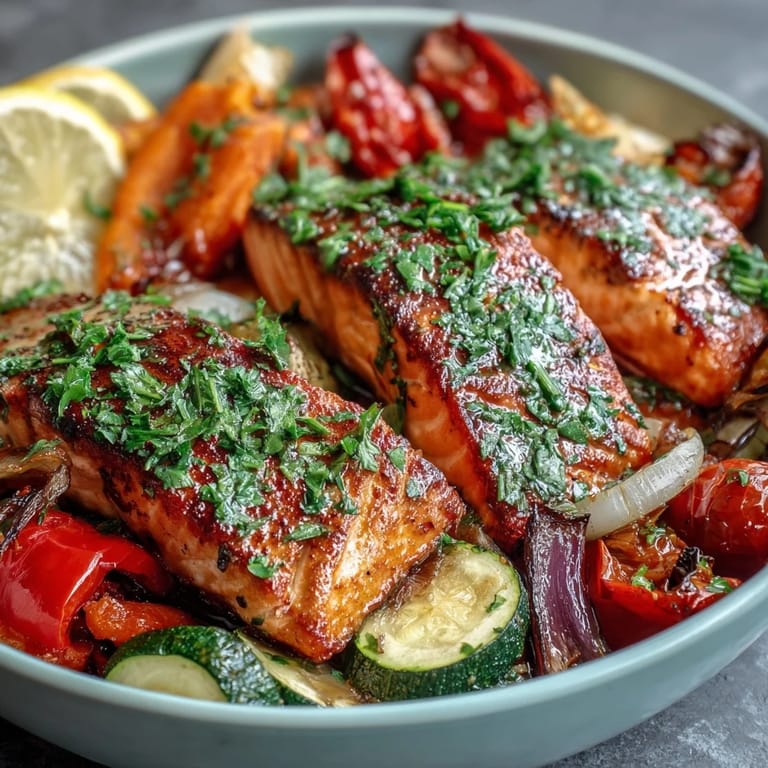
- The moment it comes out of the oven, sprinkle everything with chopped fresh parsley and set lemon wedges around the pan so people can squeeze them over their plates however they like.
 Save Pin
 There's something almost meditative about watching all these different colors and textures come together on one pan, knowing that in less than an hour you'll have a complete, balanced meal without having dirtied a single burner. That shift from stressed to satisfied is exactly why I keep coming back to this recipe.
Why This Meal Works
The beauty of a sheet pan dinner is that roasting concentrates flavors through caramelization, especially with vegetables that release their natural sugars. The salmon cooks gently at a moderate temperature, staying moist while the vegetables around it get just enough heat to soften and develop those caramelized edges. You're also building in natural acidity with the lemon, which cuts through the richness of the salmon oil and makes every bite feel bright instead of heavy.
Swapping Things Out
I've made this same sheet pan recipe in autumn with cubed sweet potatoes and asparagus, in winter with Brussels sprouts and carrots, and in summer with just zucchini and snap peas. The formula stays the same—hearty vegetables that can handle high heat, one good protein, oil, heat, and time—which means you can follow your market trips and seasons instead of your recipe. The key is thinking about cooking time: hard vegetables like sweet potatoes or beets need that 10-minute head start, while delicate things like asparagus or snap peas should go in with the salmon so they don't turn to mush.
Making It Your Own
Once I understood how this dish actually worked, I stopped treating it like a rigid recipe and started using it as a template for whatever looked good at the farmers market or was already in my crisper drawer. My partner likes to finish his with a tiny drizzle of balsamic glaze, my daughter requests feta crumbles scattered over the top, and I'm always happy with just the parsley and lemon. The foundation is strong enough to support whatever you want to add, so play with it and make it speak to your own tastes.
- Crumble feta cheese over the top just before serving for a Mediterranean twist that adds richness and a little salty tang.
- A light drizzle of balsamic glaze right before eating brings depth and a subtle sweetness that rounds everything out.
- Fresh herbs like dill, tarragon, or cilantro work beautifully if Italian herbs don't match your mood.
 Save Pin
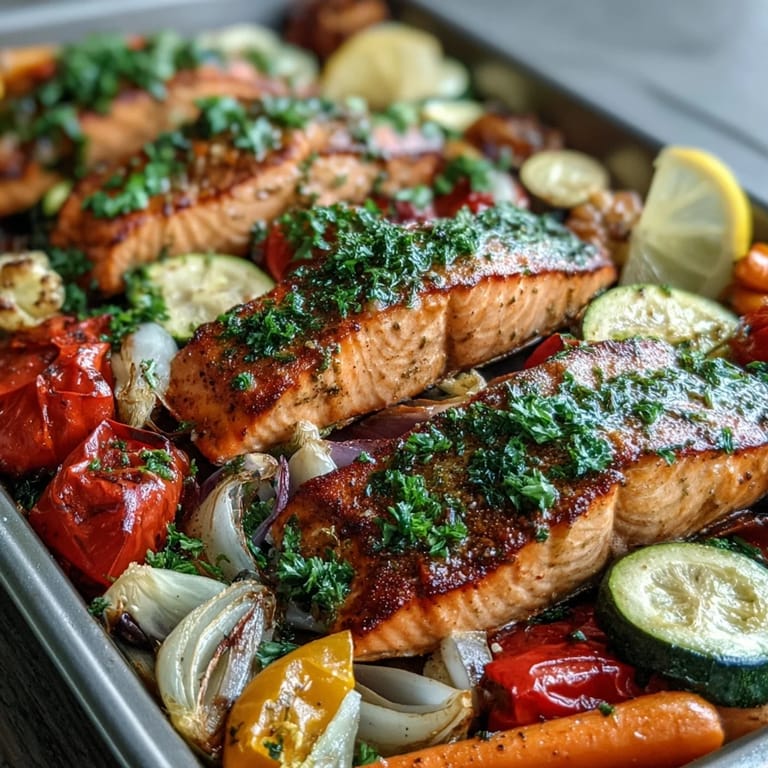
 This is the kind of meal that makes weeknight cooking feel possible instead of like another task on your to-do list. Serve it warm with crusty bread and maybe a cold glass of something light, and let everyone serve themselves straight from the pan.
Cooking Questions & Answers
- → What vegetables work best for sheet pan cooking?
Root vegetables like carrots, onions, and sweet potatoes hold up well to high-heat roasting. Bell peppers, zucchini, and cherry tomatoes add sweetness and color. Asparagus, broccoli, and green beans also work beautifully—just adjust cooking times accordingly.
- → How do I know when the salmon is fully cooked?
The salmon is done when it flakes easily with a fork and reaches an internal temperature of 145°F (63°C). The flesh should turn opaque and slightly pink, with a gentle resistance when pressed. Avoid overcooking to keep the fish moist and tender.
- → Can I prepare this bowl ahead of time?
Cut the vegetables and season the salmon up to a day in advance, storing them separately in the refrigerator. When ready to cook, simply assemble on the sheet pan and roast. Leftovers keep well for 2–3 days and can be enjoyed cold or gently reheated.
- → What temperature should the oven be set to?
Preheat your oven to 425°F (220°C) for optimal roasting. This high heat creates caramelized edges on the vegetables while ensuring the salmon cooks through evenly without drying out. A hot oven is key to achieving that perfect tender-crisp texture.
- → Can I use frozen salmon fillets instead of fresh?
Yes, frozen salmon works well—just thaw completely first and pat very dry before seasoning. Thaw overnight in the refrigerator or run under cold water for quicker results. Excess moisture should be removed to ensure proper roasting and crispy edges.
- → What sides or toppings complement this bowl?
Fresh herbs like parsley, dill, or basil add brightness. A dollop of Greek yogurt, crumbled feta, or a drizzle of balsamic glaze elevates the flavors. Serve over cooked quinoa, rice, or greens for a heartier meal, or enjoy as-is for a lighter option.