 Save Pin
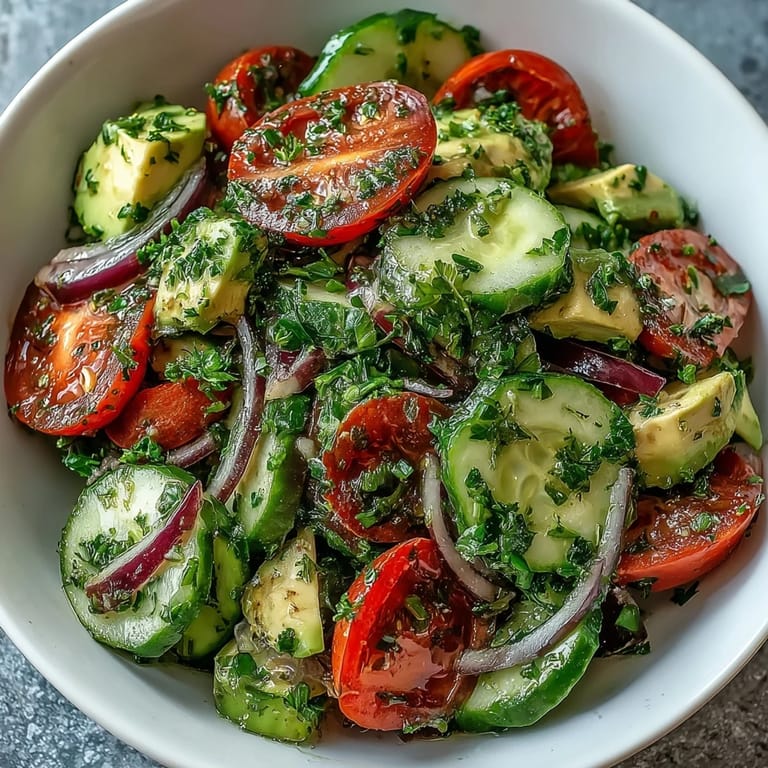
 There's something about assembling a salad on a warm afternoon that feels less like cooking and more like creating something alive on your plate. Years ago, I'd make sad desk lunches until a friend casually tossed together cucumbers, tomatoes, and avocado with lemon juice while chatting, and I realized I'd been overthinking salads my entire life. This one has stayed in my regular rotation ever since—it's the kind of dish that tastes better than it has any right to be, given how little effort it demands.
I made this for a picnic last summer where everyone was supposed to bring something, and I almost didn't go because I thought a salad was too plain. But when people kept circling back for seconds while sitting in the grass, I understood that sometimes the simplest things hit differently when they taste this fresh.
Ingredients
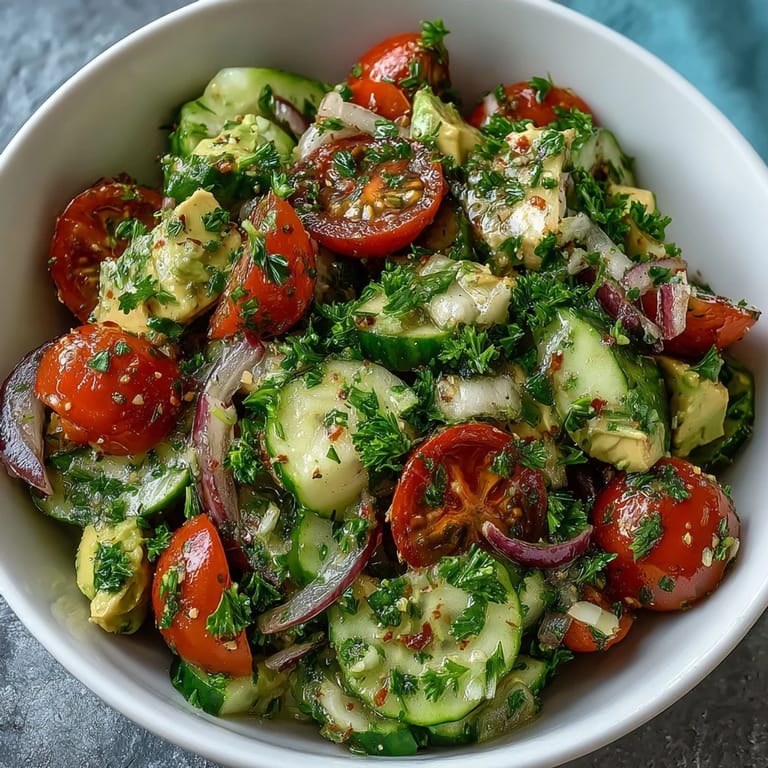
- Cucumber: Use one large or two medium—the watery crunch is what makes this salad feel alive, so don't skip it or use hothouse cucumbers that've been sitting around.
- Cherry tomatoes: Halving them keeps them from rolling around and bleeding too much juice into the bowl before you're ready.
- Avocados: Pick them so they yield gently to pressure; if they're still hard, give them a day on the counter and they'll be perfect.
- Red onion: Slice it thin enough that you taste the sharpness without it taking over—this is a supporting character, not the lead.
- Fresh parsley: It's there to brighten everything else, so don't use the dried stuff if you can help it.
- Extra-virgin olive oil: This is tasted directly in the dressing, so use something you'd actually want to eat.
- Freshly squeezed lemon juice: The bottled version tastes tired; fresh lemon takes thirty seconds and changes everything.
- Dijon mustard: Just a teaspoon acts as an emulsifier and adds a gentle tang that makes the dressing feel complete.
- Sea salt and black pepper: Taste as you go because salt distribution matters more than you'd think.
Tired of Takeout? 🥡
Get 10 meals you can make faster than delivery arrives. Seriously.
One email. No spam. Unsubscribe anytime.
Instructions
- Gather your vegetables and get them prepped:
- Cut everything into bite-sized pieces—nothing too fine, nothing too chunky. The goal is pieces that feel substantial on your fork, not a mush.
- Build the salad bowl:
- Toss the cucumber, tomatoes, avocado, red onion, and parsley together gently in a large bowl. You're combining, not mashing, so use a light hand especially around the avocado.
- Whisk the dressing:
- In a separate small bowl or jar, combine the olive oil, lemon juice, Dijon mustard, salt, and pepper. Whisk or shake until the dressing turns slightly cloudy and creamy—that's the emulsion happening, and it matters.
- Dress the salad:
- Pour the dressing over everything and toss gently until each piece is coated. Don't wait to serve if you can help it; the longer it sits, the soggier it becomes.
- Taste and adjust:
- Take a bite and see if you want more salt, more lemon, or more mustard. This is your moment to make it exactly what you want.
 Save Pin
 My neighbor once asked why I was making salad for dinner instead of something 'real,' and I brought her a bowl while we both stood in the backyard. She ate the entire thing without saying a word, then asked if she could have the dressing recipe. That's when I knew this dish had crossed over from side salad into something worth making intentionally.
Why This Salad Works as a Main Course
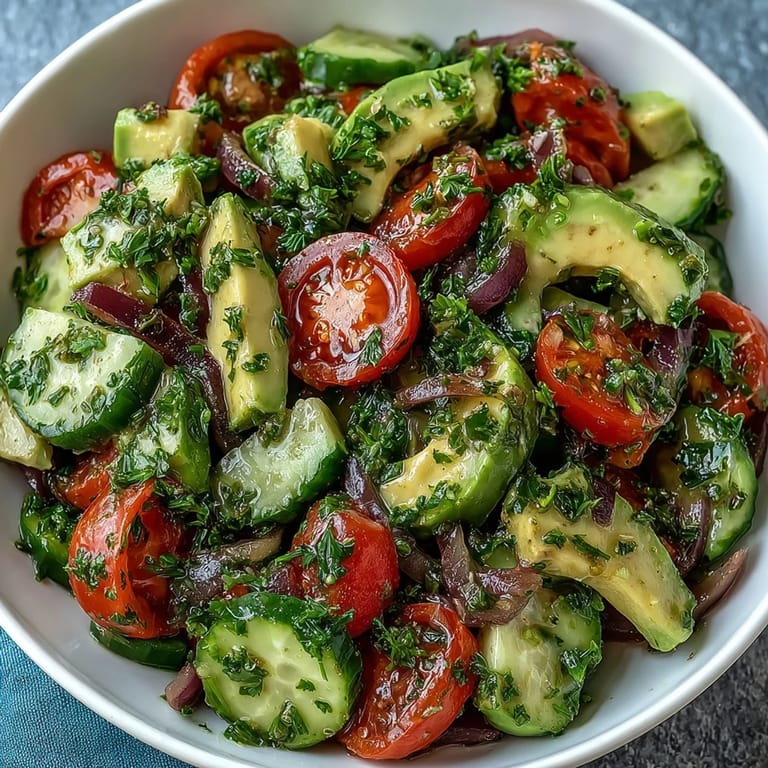
The combination of cool vegetables and creamy avocado creates a texture contrast that keeps you interested through the whole bowl, which doesn't happen with leafy salads in my experience. Add a piece of grilled chicken or some chickpeas if you need the protein, but honestly, the salad is substantial enough on its own for a summer lunch.
The Science Behind the Lemon Dressing
That tiny bit of Dijon mustard is an emulsifier, which means it helps oil and acid stay together instead of separating into layers. It's the same principle that makes mayonnaise work, except here you're tasting the lemon and oil rather than eggs and oil—lighter, brighter, and somehow more elegant.
Making It Your Own
The base is solid and doesn't need tinkering, but this salad is also forgiving if you want to add your own spin. Crumbled feta softens everything in a good way, sliced olives add briny depth, and fresh basil or cilantro work if parsley isn't calling to you.
- Add feta cheese or olives if you want richness, but keep the dressing the same amount so you don't drown it.
- Cilantro works beautifully if you're not a parsley person, though it does change the personality slightly.
- Make the dressing ahead and keep it separate, only tossing everything together right before you eat.
 Save Pin
 This salad taught me that not every meal needs to be complicated to be meaningful. Make it when the vegetables are good and your time is short, and you'll have something that tastes like care without requiring any.
Cooking Questions & Answers
- → What is the best way to keep avocado from browning?
Adding the lemon-based dressing just before serving helps slow oxidation, keeping avocado fresh and green longer.
- → Can I substitute ingredients in the salad?
Yes, fresh herbs like basil or cilantro can replace parsley, and toppings such as crumbled feta or sliced olives add extra flavor.
- → How should the dressing be combined?
Whisk olive oil, lemon juice, Dijon mustard, salt, and pepper until emulsified to create a bright, balanced dressing.
- → Is this salad suitable for special diets?
The combination is vegan, gluten-free, and dairy-free, making it suitable for various dietary preferences.
- → How do I maintain the salad's texture when mixing?
Gently toss ingredients to avoid mashing avocado, ensuring a light, fresh mouthfeel.